Stockholm does not exclude the possibility of NATO involvement in the reopening of the strategic Strait of Hormuz, Swedish Foreign Minister Maria Malmer Stenergard told POLITICO.
“It is definitely in the interest of Sweden and all of Europe to keep the strait open and prevent Iran from using it as a tool of pressure again,” she said in an interview before Friday's meeting of NATO foreign ministers. — So I am open to talks about various possible formats of action.
NATO out of play
Some European countries, such as France, Spain, Italy and Great Britain, have limited the United States' access to their airspace or military bases.
As a result, the main forum for activities aimed at reopening the strait became a loose coalition of approximately 40 countries led by France and Great Britain. However, the condition for its actions is the end of hostilities.
The Alliance is debating intervention
Some NATO countries, however, would prefer the alliance to take over a more formal role – either replacing the current coalition or creating its own mission.
That's what two NATO diplomats say. According to them, it could also help show Donald Trump the real value of NATO, as the American president has repeatedly questioned the United States' commitment to the alliance.
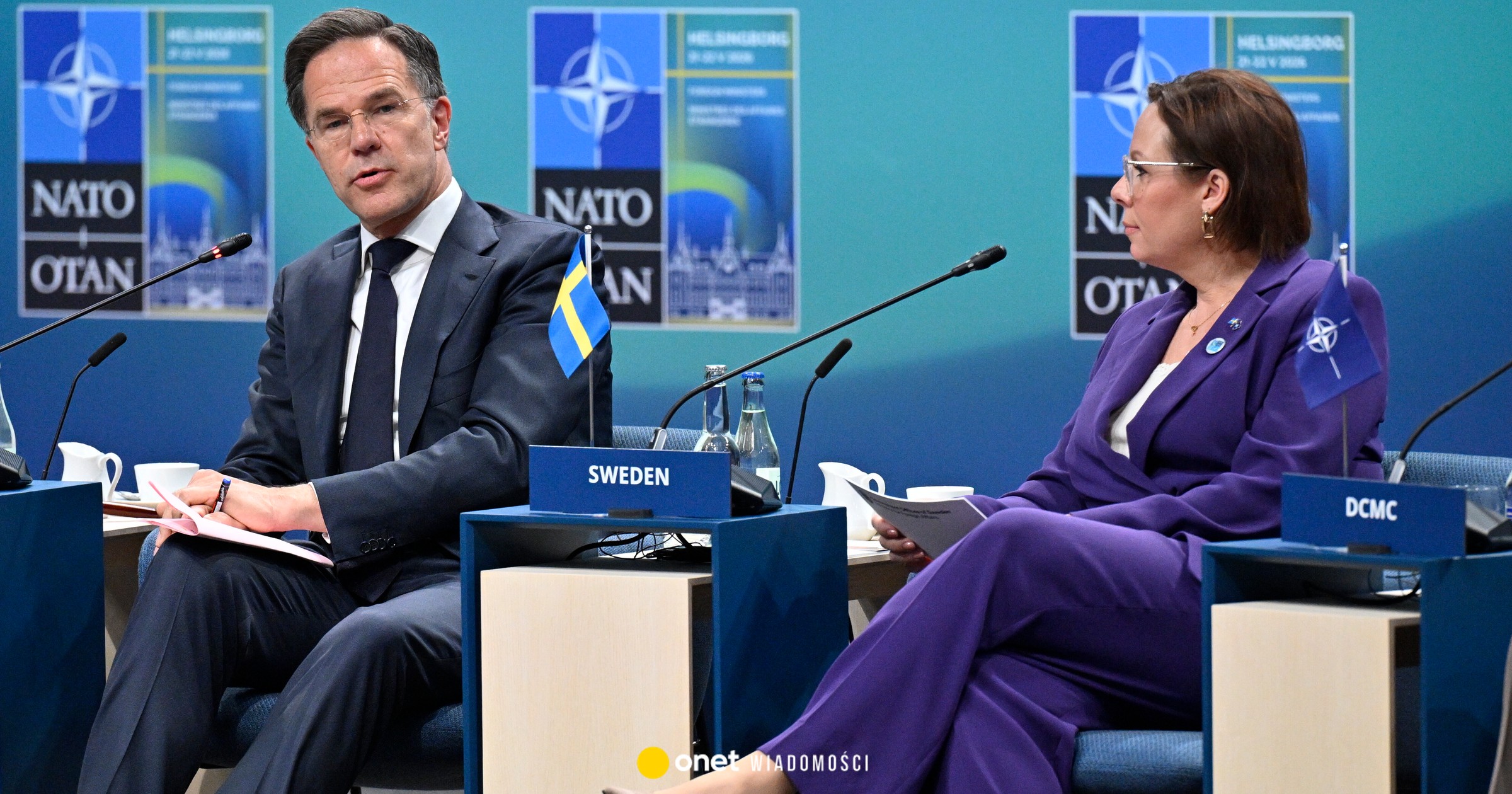
“This will definitely be discussed at this meeting,” Stenergard said in Helsingborg, a city in southern Sweden.
Swedish Minister of Foreign Affairs Maria Malmer Stenergard during a meeting of the North Atlantic Council in Helsingborg, Sweden, May 22, 2026.PAP/EPA/Johan Nilsson/TT
She also added that while NATO should “always be cautious about setting new precedents” when it comes to possible involvement in the Middle East, “it is extremely important to guarantee freedom of navigation because it is the foundation of free trade.”
Not everyone wants a mission
However, an operation conducted directly by NATO would require the unanimity of all 32 member states – a some allies still draw a clear red line against any form of involvement.
— The North Atlantic Treaty concerns the North Atlantic area, Pascal Confavreux, spokesman for the French Foreign Ministry, told POLITICO. — NATO was not designed to deal with the situation in the Middle East or the Strait of Hormuz, and is not the right alliance to do so.