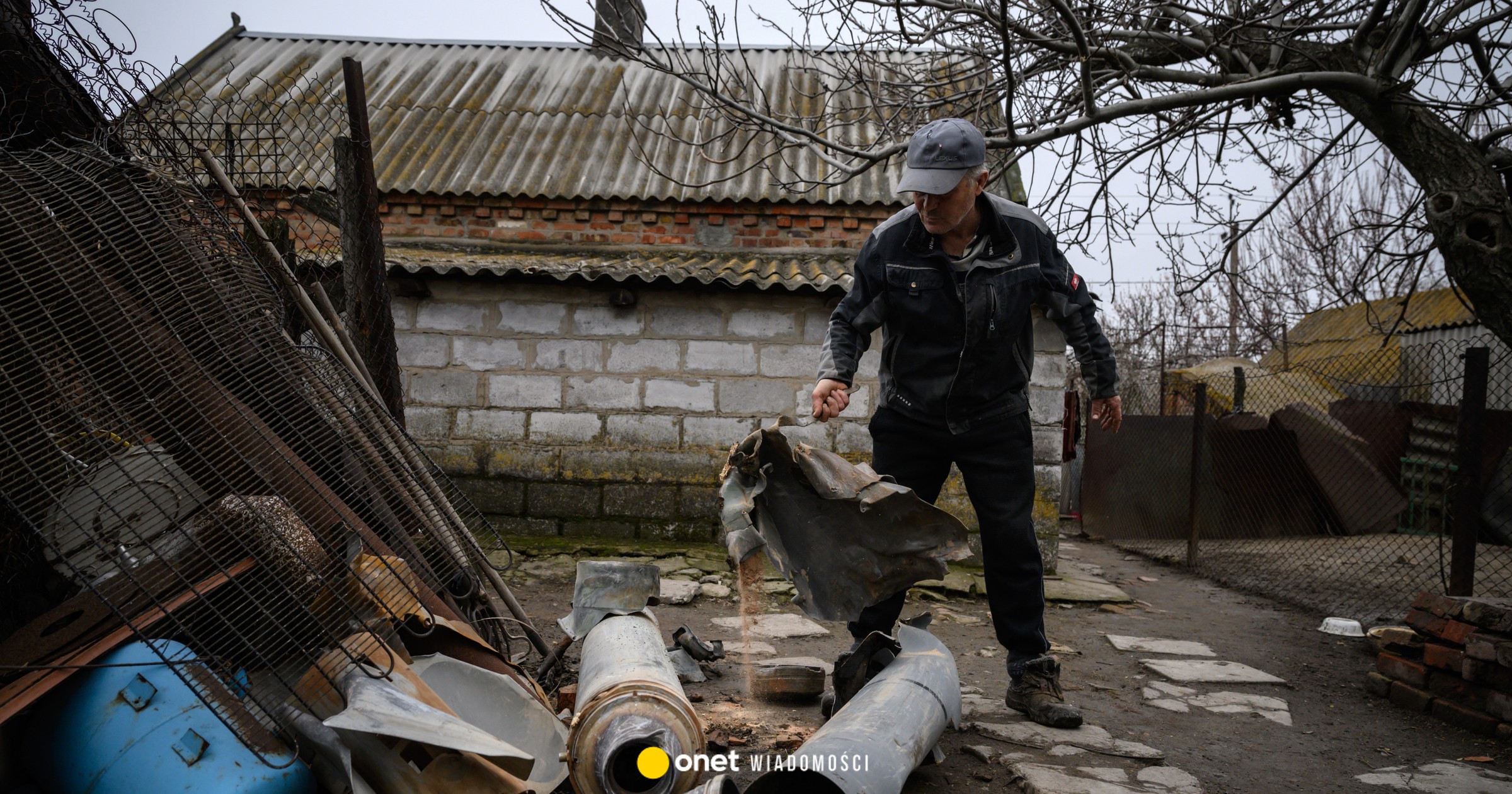
From the very beginning of the full-scale invasion, Vladimir Putin's army has been fighting fiercely for the village of Mala Tokmachka, where about 10 inhabitants remain.
For some observers of Russia's war in Ukraine, the name Little Tokmachka has appeared so frequently in Russian military reports and pro-war Telegram channels lately that it has begun to seem as if it was the key to victory in the entire war.
The long-running battle for a small Ukrainian village in the southeastern part of Zaporizhia Oblast – and Moscow's repeated claims of progress and victory in the area – has become meme.
It all started when a compilation of videos began circulating on the Russian Internet containing repeated comments over the past year by pro-Kremlin military commentator Boris Rozzhin that Russian forces “continue to press” near the village.
Even pro-Kremlin military bloggers joined in the discussion about the film. “Here are the results of the 'Kyiv in three days' campaign” — joked the pro-war Telegram channel Alex Parker Returns.
Mała Tokmaczka, whose pre-war population was approximately 3,000. inhabitants, lies on the route leading to Orichiwa, a key Ukrainian defense center in the Zaporizhia sector.
Ukrainian forces built fortified positions and defensive lines around the village, turning it into a fortress blocking Russian advances in the area. By 2025, according to the authorities installed by Russia, only 10 inhabitants remained in the town.
Fight for the countryside
The Russian Defense Ministry first announced it was taking control of the village in March 2022, during the initial phase of a full-scale invasion. Later reports said Ukrainian troops had returned to the area.
From that moment on, Little Tokmachka became a permanent element of Russian military communications, and both the Ministry of Defense and war correspondents repeatedly reported attacks on Ukrainian positions in this area.
In May 2024, the Ministry of Defense even organized an exhibition displaying what it described as Ukrainian military trophies captured at the site.
In 2025, Russian military briefings reported that troops began direct combat operations in the village and its surroundings.
Then, in November, the Ministry of Defense announced the liberation of the village for the second time since the beginning of the war.
Defense Minister Andrei Belousov congratulated the 42nd Guards Mechanized Rifle Division and called the capture of the village “an important step towards victory.”
However, by 2026, Russian officials and military commentators quietly stopped mentioning that the village was under Russian control.
The article continues below the video
Far from success
In April, pro-Kremlin media reported that fighting was taking place in the area “bloody battles”while military commentators described attempts to bypass Orichiwa from the northwest and cut off nearby supply routes.
According to maps published by the Russian military tracking project Lost Armor, on May 21, Kremlin troops reached several streets in Mala Tokmachka. DeepState, an online map of the battlefield run by Ukrainian military analysts, showed Russian forces on the outskirts of the village.
Destruction in the village of Mała Tokmaczka, April 19, 2026.Ed Jones/AFP
These fluctuations sparked an avalanche of memes in both Ukraine and Russia.
“Expectations: Kiev in three days. Reality: spending the entire year 'continuing the pressure' near Mala Tokmachka,” Ukrainian journalist Denis Kazanski wrote on social media.
If it weren't for Little Tokmaczka, they would have been in Berlin a long time ago!
— joked the Ukrainian Telegram channel Zabor Zaporizhia.
The jokes quickly spread in Russian nationalist and pro-war internet circles, with some users using the village's name as shorthand for exaggerated official narratives of battlefield successes.
“Being quite intelligent by nature and having had at least some education, I quickly realized that Little Tokmachka was something like Troy — or, in more modern parlance, Verdun,” wrote Russian commentator Lev Vershin.
The Battle of Verdun, one of the characteristic stalemates of World War I, lasted approximately 10 months. The cycle of reports of advances, retreats and repeated liberations around Little Tokmachka has been going on for much longer.
“A Year and a Half of Storming a Random Granny Village”
“It's funny and depressing at the same time,” wrote Russian military Telegram channel Reporter Filatov. “I understand the need propaganda. In Soviet times, under savage and ruthless censorship, people simply talked about local battles, even as the slaughter continued. But they didn't spend a year and a half storming some random grandmother's village. This army knew how to conduct both war and propaganda.
Shortly thereafter, a Telegram channel appeared called “Has Mala Tokmachka been conquered yet?” “The fight for Mała Tokmaczka continues. Today, Little Tokmachka has not been conquered“, the channel said in one of its daily updates.
Rozhin's compilation was later picked up by prominent Russian opposition bloggers, including Michael Nacky and Maksim Kac, before spreading to Russian-language sites Instagram and TikTok, where younger users began creating memes about the village.
There is a fight for the countryside a symbol of the broader dynamics of the battlefield. According to the US Institute for the Study of War, in April 2026 alone, Russian forces lost control over 116 square kilometers of territory.
The pace of progress has slowed since November 2025 in the face of Ukrainian counterattacks, attacks on logistical infrastructure, and communications disruptions.
In the comment sections under pro-war Telegram channels, users express frustration and fatigue what they see as endless declarations of progress without decisive results.
As one commenter put it: “Nobody cares about another Little Tokmaczka.”
I’m Ashley Davis as an editor, I’m committed to upholding the highest standards of integrity and accuracy in every piece we publish. My work is driven by curiosity, a passion for truth, and a belief that journalism plays a crucial role in shaping public discourse. I strive to tell stories that not only inform but also inspire action and conversation.