“We attacked NATO and won.” The simulation of a Russian blitzkrieg attack on Lithuania did not end well for the Europeans

A military analyst who played the role of the Russian chief of staff in a strategic exercise in Germany says NATO could be vulnerable to a rapid crisis on its eastern flank, especially if the European political response is delayed or divided.
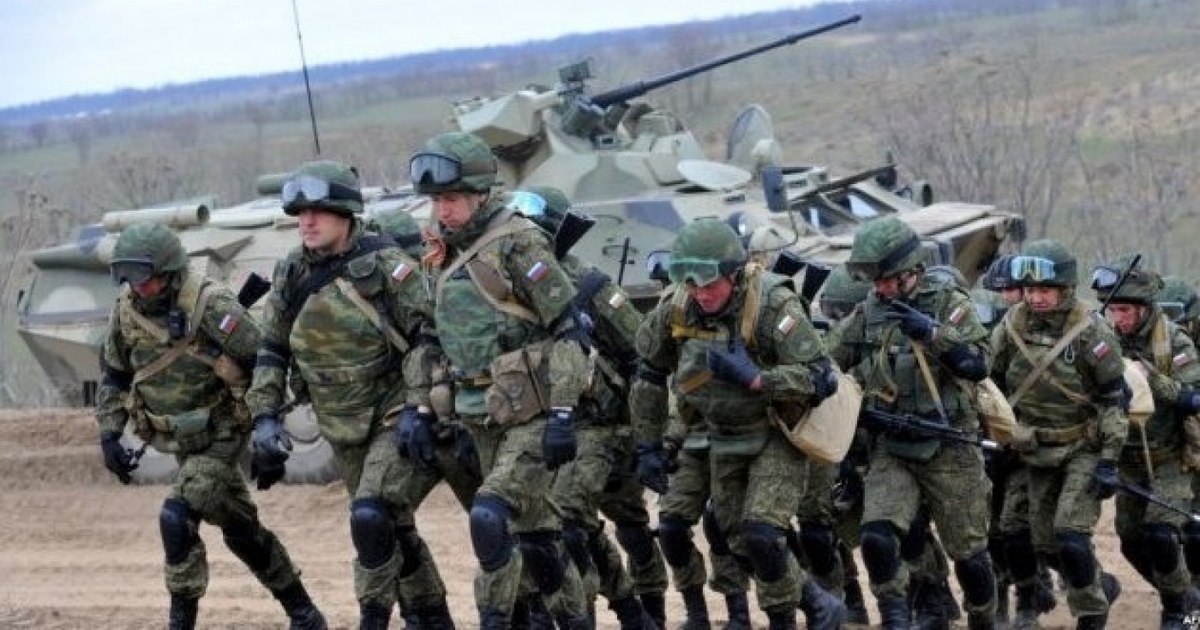
Russian troops/PHOTO: Profimedia
The exercise, organized in December 2025 at the Helmut Schmidt University of the Bundeswehr in Hamburg, did not aim to simulate actual combat tactics, but rather the political decision-making process within the alliance.
The scenario started from the hypothesis of a truce between Russia and Ukraine in the summer of 2026. While Moscow proposed to Germany the resumption of economic relations and a return to pre-war cooperation, the Kremlin intensified pressure on the Baltic states and invoked an alleged humanitarian crisis in the Kaliningrad exclave.
Attack on Lithuania
In the game, the participant playing the Russian military leadership decided to launch a quick offensive on Lithuania.
According to his account, the main objective was not the long-term occupation of territory, but to paralyze NATO's decision-making process and test Europe's political will.
The plan called for a simultaneous attack from Belarus and Kaliningrad to control the Suwalki Corridor — the strategic strip of territory linking Poland to the Baltic states.
The simulated Russian forces included approximately 100,000 troops in the entire theater of operations, of which approximately 12,000 represented the main strike force in Belarus. The operation was supported by airborne units, artillery, anti-aircraft systems and drones.
The author argues that speed was the key element of the strategy. “The fundamental problem for NATO is that Russia already has troops in the region, while the alliance needs time to bring in reinforcements,” he explains.
NATO, surprised by the speed of the attack
According to the simulation, Russian forces were able to quickly create a fait accompli on the ground before NATO could mount a coherent counteroffensive.
The analyst says European leaders — especially German leaders — have been paralyzed by the prospect of direct conflict with Russia and the risk of nuclear escalation.
In the exercise, the US chose not to intervene immediately, leaving the Europeans to manage the crisis. This delay was enough for Russia to consolidate its positions and turn the Suwalki corridor into an area controlled by drones, artillery and long-range precision strikes.
The scenario also included the possibility of a tactical nuclear escalation, by activating nuclear weapons in Belarus and Kaliningrad to deter a NATO counteroffensive.
“Europe is entering a dangerous period”
The analyst warns that with the eventual end of the war in Ukraine, Europe could enter a period of strategic vulnerability vis-à-vis Russia.
According to him, the Russian military could emerge from the conflict outnumbered, with accumulated battlefield experience and technological advantages in areas such as remote warfare, drones and dynamic targeting.
At the same time, European states would need years to catch up on air defense, precision munitions and neutralization capabilities of Russian anti-aircraft systems.
The central question for Europe
The conclusion of the exercise, says the analyst, was not strictly military, but political. “The fundamental question is whether Germany and Europe are really prepared to go to war with Russia to defend the Baltic states, even without immediate American support,” he says.
In his view, deterrence depends not only on military capabilities, but also on the adversary's perception of NATO's political will.
“In the war game, we who represented Russia started with the belief that Germany would hesitate. And that was enough to win.”