
Pro-Russian “sovereignty”. Robert Fico did not draw any conclusions from Viktor Orban's defeat

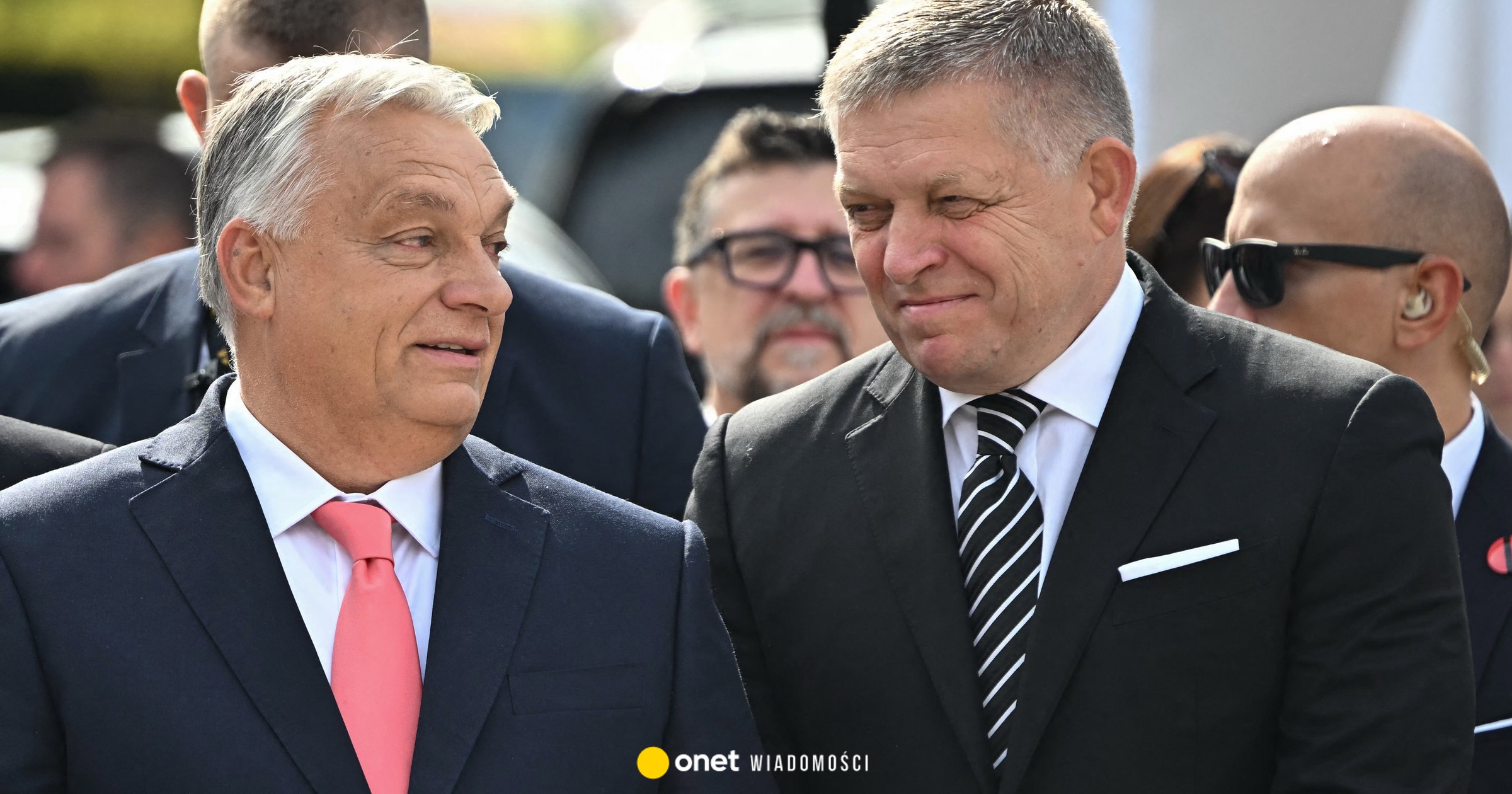
The cancellation of the announced visit of German Chancellor Friedrich Merz to Bratislava is another element of the puzzle of failures “sovereign Slovak foreign policy in all directions of the world”.
It is the result of political and diplomatic failure, which is caused by both a lack of knowledge of Germany and the belief that everyone must accept us as we are, because we are sovereign and no one will give us orders. As if other partners in the EU were not sovereign either.
As a result, even after 10 years, it was not possible to bring the head of government of Europe's largest economy – the Federal Republic of Germany – to Bratislava. The last time Chancellor Angela Merkel paid a bilateral visit to Slovakia was in 2014.
Two years later, she was in Bratislava at the EU summit on the occasion of the first Slovak presidency of the European Council. And so, after more than two and a half years of the fourth term of office of Robert Fico's government, they visited the Slovak capital only two prime ministers of EU countries – Viktor Orban and Andrej Babisz. This is a negative record of this type in the 22-year history of Slovakia's EU membership and the 15-year rule of the Smer party.
This sad result, which is a symptom of the loss of trust in the Slovak government and the decline in the attractiveness of its policy in the eyes of its closest allies, cannot be considered without connection with the toxic alliance between the Prime Minister and the former Hungarian Prime Minister.
Robert Fico has repeatedly made it clear that Viktor Orban's foreign and European policy is an example for him. On the day of the Hungarian parliamentary elections, he said that during his long political career he had never met such a fighter for sovereignty and national interests as Viktor Orban, and he bet on his victory.
Orban's model has failed
They are the ones who today have the mandate to assess how and at what price Viktor Orban and Peter Szijjartó pursued Hungarian national interests. Their image of Orban's policy is completely different from the one admired by the Slovak Prime Minister. They present evidence that Orbán's model of “sovereign policy” was not destroyed by “Brussels”, but discredited in the country.
This fundamental departure from sovereign foreign policy was also confirmed by the later transcript of Prime Minister Orban's telephone conversation with the President of Russia, in which he voluntarily took on the role of a servant, being a mouse helping the Russian lion get out of the net.
A Hungarian stick in the spokes of the EU
Anita Orban said during her parliamentary hearing that Hungary was “too often a stick in the spokes” in the EU. She assessed the abuse of the veto power even more harshly. “The veto is a legitimate tool,” she said, “but too often it has been used as political theater.” She added that in the future it would no longer be a “blackmail tool or an instrument of an internal campaign.”
The new head of Hungarian diplomacy de facto admitted that Orban's government did not use the veto as a means of protecting the state, but as an instrument of political pressure on allies in the EU and internal marketing tool.
Peter Magyar went even further. He claims that Orban turned the concept of “national interest” into a propaganda label under which Hungary gradually lost the trust of allies, influence in the EU and the ability to pursue real goals. This was most clearly visible in Ukraine.
From the beginning of Russian aggression, Orban claimed that by blocking European aid to Ukraine, he was defending Hungary from being drawn into the war and working for peace. In practice, however, the Hungarian veto has become a tool of blackmail against partners in the EU. The Hungarian government blocked sanctions against Russia and financial assistance to Ukraine and joint decisions of NATO and the EU at a time when Ukraine was fighting for survival. De facto thus helping the Russian Federation.
The paradox of “sovereign” politics
Anita Orban openly admitted that Hungarians “paid a high price for this policy”. She added that Brussels' demands regarding the rule of law, independent courts and transparent management of EU funds are not an attack on Hungarian sovereignty, but a legitimate expectation towards a member state.
This is the greatest paradox of Orban's “sovereign policy”. Instead of increasing respect for Hungary, he led the country to a situation in which all of Europe was relieved after his departure significant weakening of the pro-Russian and anti-Ukrainian wing in the EU as a chance to regain unity.
Robert Fico and Donald Tusk during the meeting of the Visegrad Group. Prague, February 27, 2024CTK Photo/Ondrej Deml / PAP
The partners were happy that after his departure, there were “no more Russians” in the European Union. A concise summary of the position to which Viktor Orban has led the country with his “sovereign policy” are Donald Tusk's words that Poland will help in the “reintergation of Hungary with the EU.”
Instead of drawing conclusions, Fico becomes offended like a child
For the alliance with his political friend, after whom he wanted to build Slovakia, he even sacrificed relations with the previous Czech government, although he had previously had excellent relations with all Czech prime ministers and respected the unwritten agreement after the collapse of the common state that Slovakia and the Czech Republic would be each other's most important and privileged partners.
Because of the positions he shared with Viktor Orban, it also spoiled relations with Poland. In this way, he contributed to the freezing of cooperation in the Visegrad Group format, senselessly accusing “large countries in the EU” of deliberately breaking it up.
If the Slovak Prime Minister still admires Orbán's “sovereign policy” and wants to continue it after his departure from the national and European scene, he should say whether he also wants to take over its consequences. Isolation, loss of trust, conflicts with allies, frozen European funds.
There are still suspicions that behind the lofty speeches about sovereignty and national interests lies something completely different – maintaining the support of a radicalized electorate, serving the interests of specific energy companies and Russia with the expectation of reward in the form of support before the elections.


