Major changes, prepared at RCA: “Parent can transfer bonus classes to child” / Other measures that can reduce accidents and prices

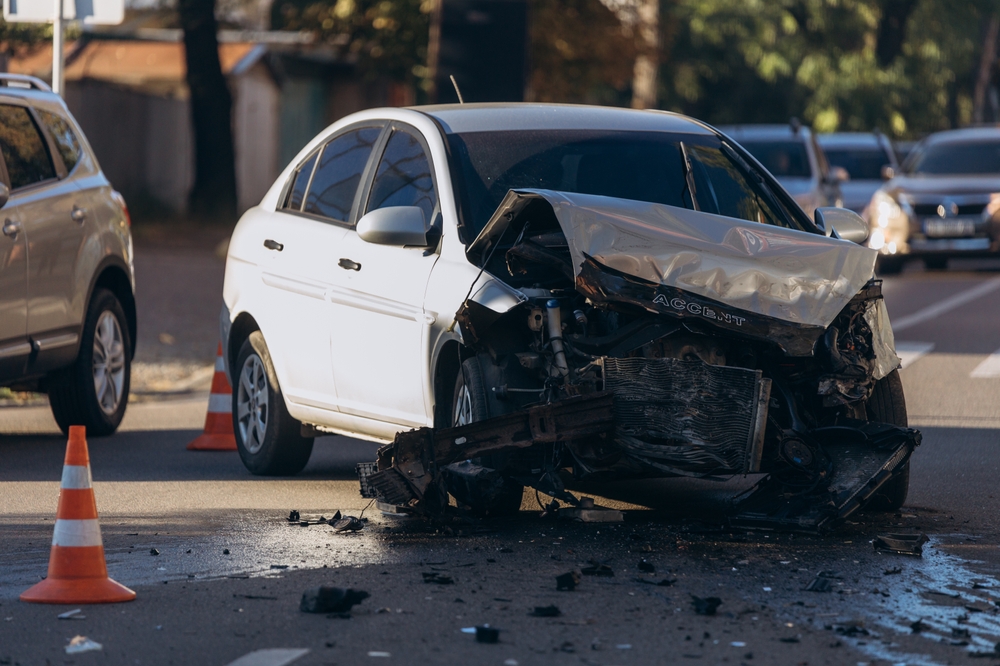
The Financial Supervisory Authority (ASF) wants to radically change this summer both the bonus-malus system, depending on which the RCA insurance price increases or decreases, but also the RCA car insurance product.
- The intention of the authorities is to allow the transfer of some bonus classes between family members. Why do they want this and, more importantly, how do they do it?
- The explanation lies in the fact that we have more accidents than in other markets and we aim for more responsible behavior on the part of the youngest, said Sorin Mititelu, ASF vice-president, in an interview for HotNews.
- On the other hand, ASF says that it is trying to solve another problem that drivers face: half of the drivers in Romania are in the maximum B7-B8 classes. That creates a disadvantage for non-accidents as well. The head of ASF says what is the solution proposed by the authorities, in the interview that HotNews publishes today, about the RCA changes.
The Financial Supervisory Authority (ASF) is preparing to amend the legislation through changes to norm 20/2017 regarding car insurance in Romania. The changes will be put up for public consultation in July of this year at the latest, says ASF vice-president Sorin Mititelu, in a dialogue with HotNews.
“We have about 460,000 claims every year”
“Norm 20/2017 will change, but the norm does not change traffic behavior,” says Mititelu. He says that in order to lower RCA prices, the frequency of car accident claims must be reduced.
“We have about 460,000 claims every year. Not all of them are of high social impact, it's only a few thousand, but there's still this number, which is high. There has to be something that drives this lower frequency.”
“If you were to compare this frequency of claims from us to the frequency in other markets similar to us, the frequency from us is much higher. So that tells us that we have a space where we can work to ultimately reduce the insurance premium by reducing the frequency of claims,” said Mititelu.
A 'fairer system' with higher prices for those who cause accidents
The authority wants to bring more changes that lead to the adjustment of traffic behavior.
“We intend to add a few more situations to the current criteria in order to make the system fairer. That is, the one who has a less responsible behavior and leads to an event with a large social impact, will still have a demotivation, in that he will later have a higher premium.”, stated Sorin Mititelu.
“Parent to be able to transfer two bonus classes to child”
“With the RCA insurance product, we want some additional elements to the clause, such as the deductible, the use of telematics, the possibility of transferring some bonus classes between family members, to motivate more responsible behavior on the part of the younger ones,” said the ASF official.
“For the parent to be able, for example, to transfer two bonus classes to the child in one year, who will thus have a lower premium in the end, given the fact that the risk premium calculated for the segment to which the young person belongs is usually higher, because the frequency of claims is certainly higher.”
“This is a way to make both the parent and the young person responsible. Normally, it is expected that this transfer will be accompanied by counseling from the parent given to the young person on how they should behave on the road”, said the vice-president of the ASF.
How could a parent transfer bonus classes to the youngster?
With a simple request to the insurer, says Sorin Mititelu.
“A young person who does RCA for the first time on his own car is classified in class B0 (neutral). A parent who has B8 can transfer two bonus classes to the insurer with whom the young person wants to get RCA insurance. Practically, the young person will get a 10% discount from the beginning” mentions the vice-president of ASF.
Although the parent's policy could be slightly more expensive, the economy at the family level will be significant, believes the head of the ASF. Because, he says, the discount applies to a much larger calculation base in the case of the young person.
“That 10%, because it is usually applied on a larger basis, because the risk premium is higher, will have a greater impact than the 10% that the parent gets in addition on a basis that is usually lower, because the frequency of claims in those segments is lower – not because you are in B8, but because you are an adult. It is a system that is successfully applied in another market, namely in France,” he said.
Wouldn't the parent have a more expensive RCA?
“Obviously, yes. But online it will be an even more gain and you make the child responsible”, explains Mititelu.
Another change considered by ASF is the bonus-malus system. The current system has 17 classes (8 bonus, 8 malus and 1 neutral) and was designed to reward careful drivers and penalize those who cause accidents.
In theory, drivers who cause accidents and cause damage move up to Malus classes and pay higher premiums when they renew their RCA policy, while accident-free drivers move up to Bonus classes and get price discounts.
These penalties and bonuses are applied as percentages of the insurance company's standard rates. The maximum penalty (M8) can increase the premium by 80%, while the maximum reduction (B8) is 50% of the tariff.
Half of the drivers are in the maximum classes B7-B8
The current bonus-malus system, which with 17 classes (8 bonus, 8 malus, 1 neutral) is considered by ASF to be “too short” and asymmetric.
Almost half of the driver portfolio is concentrated in the maximum B7-B8 classes, which forces insurers to make everyone's policies more expensive to compensate for the discounts granted.
“What is lost sight of is the fact that this system is a compensation system. Basically, you give a discount bonus to someone, but you take from someone else among the participants. So in the end the result is net zero”, argues Mititelu.
“Because we have this very high concentration on classes B7 and B8, that is, almost half of all RCA policies in Romania are in these classes, and as the system practically operates through a compensation within it, it is necessary that in all insurance policies at the start you add a component, a cost of financing this compensation system”.
“And that's because the scheme we have has too few bonus-bonus classes.” says the vice president of ASF.
The second problem, in his opinion, is “the amplitude of the jump from one class to another”.
“Even a 5% reduction, if applied to B0 level, in a relatively short term, about six years you can get to B8 if you don't have any events. So the scheme itself has too few classes and, two, it has too big a step. And, three, the jumps back, in the lower classes also not being differentiated, you end up with only a few remaining in the malus zone.” says Sorin Mititelu.
“It is necessary for this system to have several classes at a time”
“Time was the only factor that led to this situation. It always started from a B0. So there was an initial point where this concentration was not in the maximum area. Time made half of the policies to be in the area of B7 and B8,” says the ASF official.
As a result, the authority wants to bring structural changes to this system.
“It is necessary for this system at a given time to have more classes, to have a transition with a smaller amplitude in the bonus zone and a larger one in the malus zone, and last but not least certain jumps, especially to the malus zone, when the events have a large social impact and lead to compensation, to be larger.” detailed the head of ASF.
They are thinking of a Bonus Malus of 27 classes
One of the options now considered by ASF, to solve these deficiencies, is the expansion of the number of bonus-malus classes.
“We are considering an increase in the number of malus bonus classes, a reduction especially when moving from B0, B1, B2 to higher classes. As an example, a 5% reduction in the discount you had in the previous year and a 10% increase in the value of the malus you had in the previous year, if you had an event, would lead to a total of 27 bonus-malus classes.” claims Mititelu.
It is one of the options, but there may be others, adds the vice-president for insurance from the ASF.
“Nothing has been decided, it is under analysis, but this adjustment is necessary. Now there are 17 classes: 8 bonus, 8 malus and one neutral – B0. At 27 classes there would be 14 bonus classes, 12 malus and one neutral B0”.
“This would be a system in which there would be some reasonable parameters. The reduction will be mainly by changing the reporting basis. The reductions will no longer be related to B0, but to the value of the discount you had in the previous year. The system will lead to a slower increase in bonuses on the bonus and a more accelerated one on the malus”, stated Mititelu.
How does the bonus-malus system work in other countries?
“There are countries where the bonus-malus system is applied by each individual insurance company, when it charges according to its own methodologies. There are other countries, like us, where it is a separate system from that of the insurers and comes with uniform criteria at the level of the entire market.”
“And there are other countries where the insurer's system remains up to a point, also of bonus-malus, and a national system is added. The ones that are similar to the one we have usually have a much larger range of classes.”
The vice-president of the ASF gave as an example “Germany, which has 30 classes only in the bonus area. Likewise, France has something similar, in which the number of years without an accident is communicated, but in fact it is still a class system.”
As for the situation in the countries of the region, such as Bulgaria, the vice-president of the ASF specified that “the systems are somewhat similar, but they also have a larger range of classes.”
He believes that the introduction of Telematics (Traffic Monitoring) would reduce accidents
Inspired by foreign markets and the CASCO insurance area, ASF proposes the use of telematics devices or applications to individualize risk.
Such systems, which can also be in the form of free phone applications, monitor speed, sudden braking, driving hours and frequented routes.
“The apps enable insurers to better assess the risk profile of the driver and therefore the car owner to get a lower premium due to good traffic behaviour.”
“Data is collected for short periods, either during the pre-contractual period, or immediately after contracting, or over the course of a year, so that upon renewal a premium is offered that takes into account this profile of the driver,” said the ASF official.
Franchise and Redemption Clause
In order to reduce the frequency of small claims and to get rid of the financial pressure on the common fund, ASF wants to propose the introduction of two additional clauses to the RCA.
One is the deductible, where the driver can choose to pay part of the damage caused (the first part of the compensation). In exchange for this assumed risk, the price of the RCA policy goes down.
“It reduces the amount of compensation, but it leads to a different behavior and helps reduce the frequency of damages.” claims Mititelu.
Another tool is the “buy-back clause” whereby the driver pays an additional amount when purchasing the policy to guarantee that, in the event of a minor accident, the driver will not be relegated to the Bonus-Malus system, maintaining its price for the next year.
“These are elements that help reduce risk exposure. All of these will be part of the changes to the 20/2017 rule.” concluded Sorin Mititelu, vice-president of ASF.