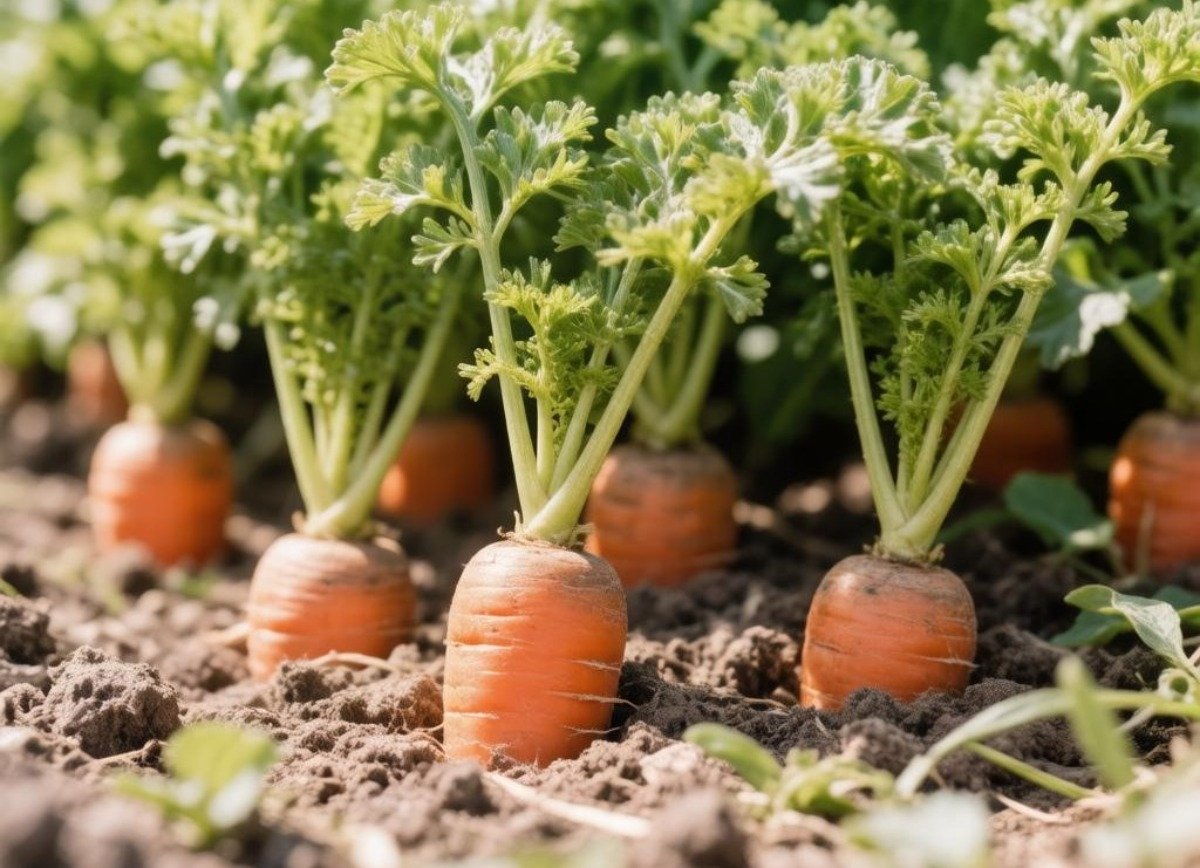
Many people believe that carrots grow on their own and only require watering. In fact, the quality of the harvest is established precisely at the end of May, when the rudiments of root crops are formed and the plants enter the phase of active accumulation of substances. Success depends on proper thinning and balanced nutrition.
It all starts with loose soil without fresh manure. Carrots do not tolerate heavy soil and excess organic matter. If the soil is dense or overfed with nitrogen, the roots will grow horned, crack, or remain hollow. It is especially important to carry out the first thinning at the end of May, when the plants have three or four true leaves. Leave two to three centimeters between shoots. This gives each specimen room to develop. It is not recommended to add nitrogen additives during this period, otherwise the tops will grow and the underground part will remain shallow.
Carrots require special attention to mineral balance. To form dense and sweet pulp, at the end of May, switch to potassium and phosphorus fertilizers. Wood ash works softly and effectively: just scatter half a glass per square meter and carefully embed it in the rows. If light spots appear on the leaves or the tops lose their elasticity, use a calcium supplement in the form of a solution. To improve the taste and prevent cracking, one foliar treatment with boric acid is enough: two grams of powder per ten liters of water.
Watering should be deep, but not frequent. In dry weather, moisten the beds once a week, soaking the soil ten to fifteen centimeters. Surface watering provokes hair growth and greening of the top of the root crop. Be sure to remove weeds by hand, as hoeing damages the delicate root threads. It is important to maintain a balance: do not over-moisten the soil and prevent the formation of a dry crust.
If you follow these rules, by the end of summer you will have smooth, sweet and crunchy root vegetables that store well and are suitable for any dish.