Ukraine's new strategy is devastating the Russians. “The most important change”

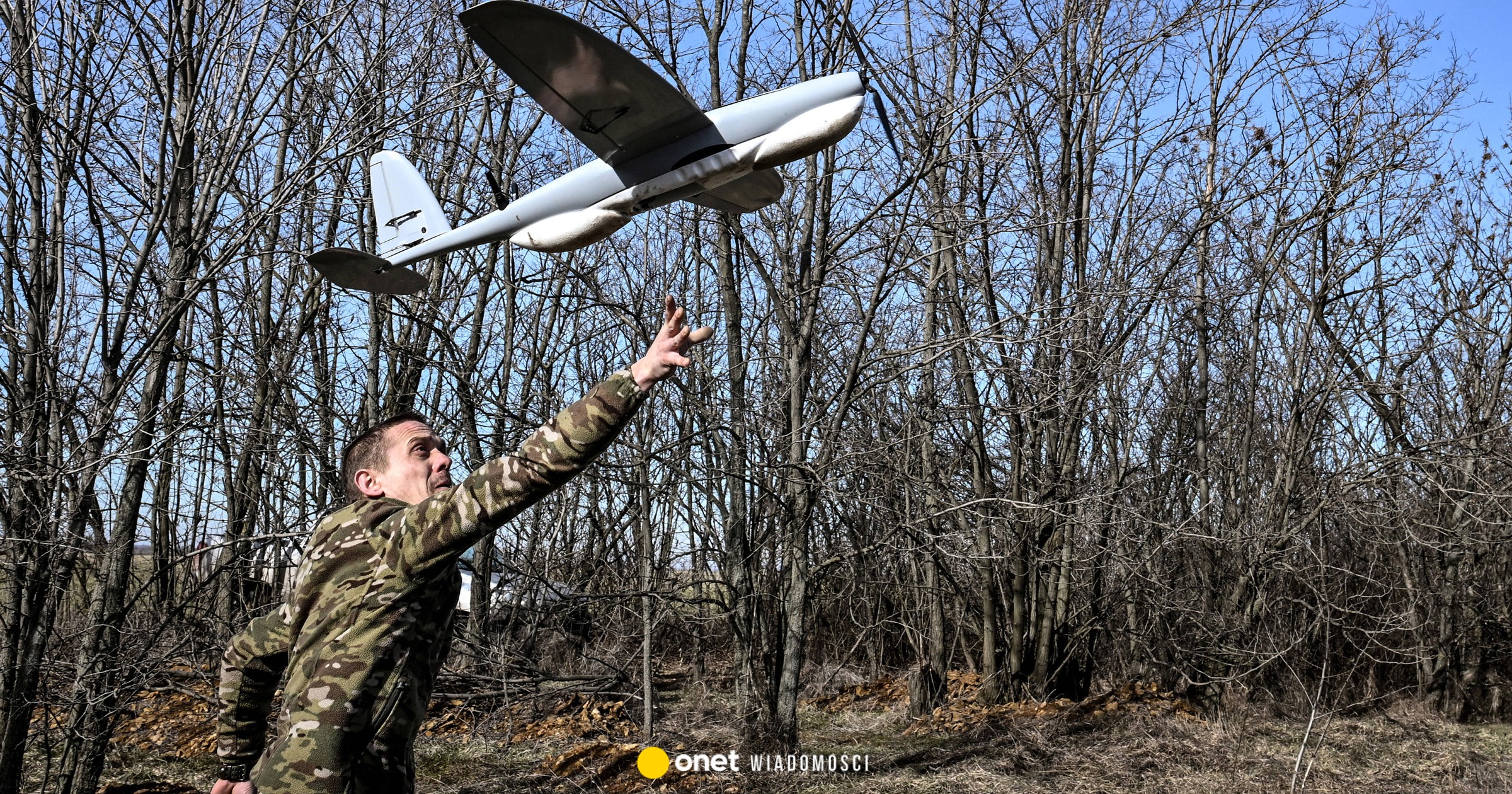
The new medium-range drones have significantly thinned out the air defense deployed in the occupied territories and in the border regions of Russia itself. Such attacks alone cannot break the course of the war, military analysts believe, but they change both its course and the dynamics of the conflict.
In recent months, the Ukrainian Armed Forces have been devoting more and more resources to medium-range attacks – to the area approximately 30-200 km behind the front line. By destroying anti-aircraft defense assets and frontline supply facilities with drones, Ukraine stops the advance of Russian troops and opens the way for long-range drones and missilesthat hit refineries, oil storage facilities, ports and arms plants, two Ukrainian commanders, two drone specialists and three military analysts told Reuters.
“Medium-range strikes currently play a decisive role in carrying out long-range attacks on Russia from distances of up to 2,000 km,” Robert Browdi, commander of the Ukrainian Unmanned Systems Forces, told Reuters. President Volodymyr Zelensky recently stated that the number of medium-range strikes doubled compared to March and quadrupled compared to February.
The Wall Street Journal calls it “probably the most important change in the course of warfare this spring.” The number of medium-range drones, such as the Ukrainian FP-2 and “Chaklun V”, the American Hornet, is growing, and the Ukrainian army also uses Starlink satellite communications for attacks, which the Russian army no longer has.
“Intensive research and development activity, as well as an increase in the number of qualified pilots, are paying off,” the head of the unmanned aerial vehicle unit of the 1st corps of the Ukrainian National Guard “Azov”, who published video recordings of successful attacks on Russian rear infrastructure facilities, told the newspaper.
According to Browdy, his Unmanned forces have destroyed at least 129 air defense systems in Russian-occupied territories this year. As a result, he said last week, the Russian army is facing a shortage of equipment and is forced to use outdated radar complexes and stations that were “in service back in the 1960s.”
As the commander of the 7th battalion of the 414th separate unmanned systems brigade told Reuters, his unit is mainly engaged in destroying targets at a distance of up to 100 km from the contact line. The most valuable, according to him, are radar installations and anti-aircraft missile systems such as “Buk”, “Tor” and “Pancyr”.
Ukraine takes the lead in the drone war
Drones have changed the nature of conflict to such an extent that the front line is likely no longer the place where the fate of the war is decided, notes Bloomberg. Currently, there are only three Ukrainian soldiers per kilometer in the most forward positions, “they have become a burden,” Mykola Beleskov, chief consultant of the National Institute of Strategic Research in Kiev, told the agency.
They are not much needed for defense there – the Ukrainian Armed Forces have learned to effectively contain Russian soldiers using drones, and as a result, the front line has barely changed since the end of winter.
What is more important is that Ukraine, which suffered from massive Russian drone and missile strikes on its cities and power plants, it can now bomb energy and military facilities in Russian regions on its own. And the occupiers' air defenses are much less likely to hinder the long-range drones and missiles within their range. about 70 percent Russian population.
As a result The mood in the Russian internet community is becoming increasingly gloomysays Ivan Filippov, who has been researching it since the beginning of the war. “Even considering the level of freedom that prevails in z-space, writing texts about 'we are heading for failure' is dangerous,” but z-community authors nevertheless try to convey to readers the idea that “the war is at a standstill, the prospects are dim, and victory is impossible,” notes Filippow.