Tragedy in the Maldives: The bodies of two Italians who died in the “shark cave”, recovered only now. Controversy surrounding the dive

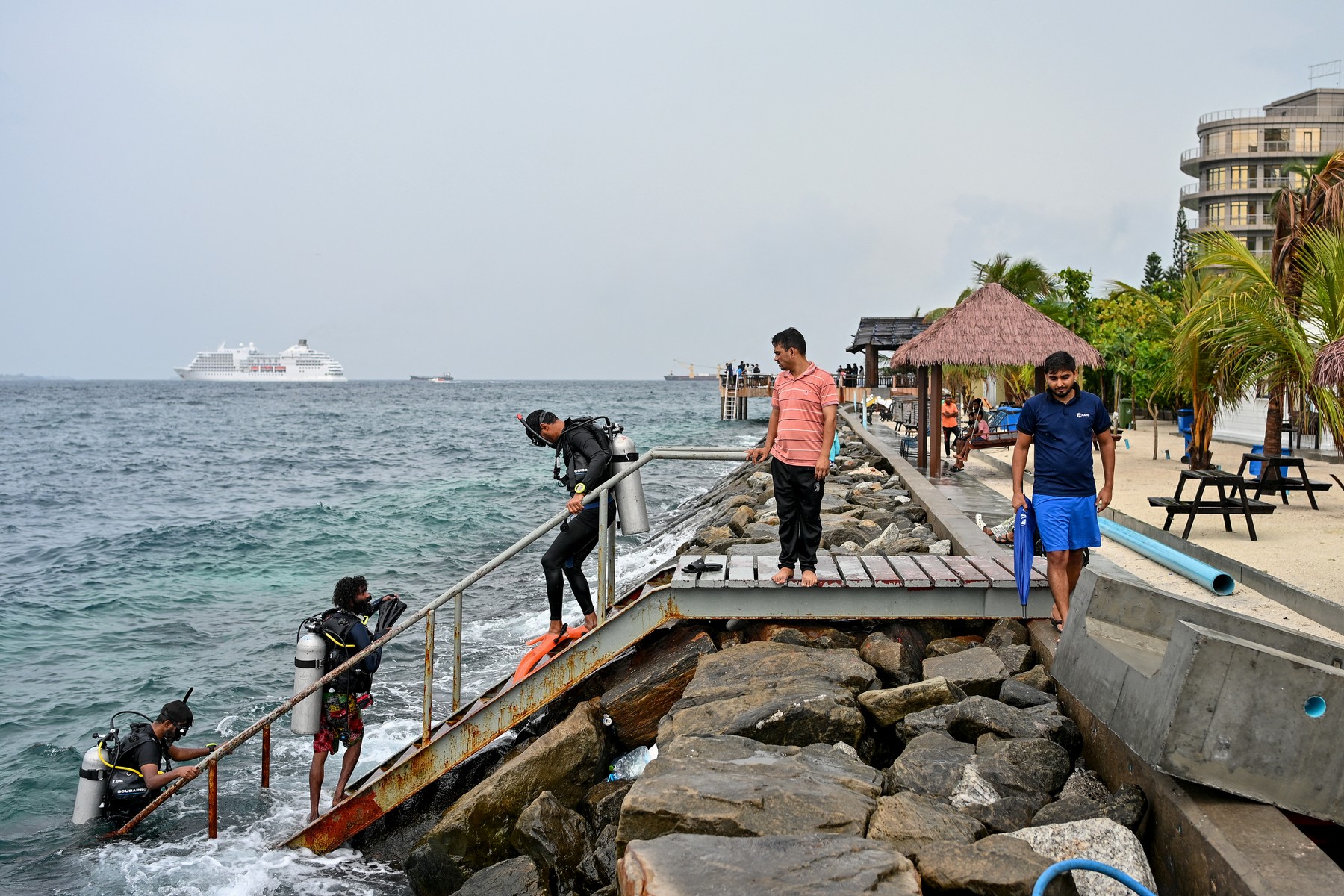
The bodies of two Italians who drowned in last week's diving accident in the Maldives have been brought to the surface, local officials told BBC News on Tuesday.
“They were recovered from the third chamber of the underwater cave by specialist divers from Finland, following an operation that lasted two hours,” announced Mohamed Hossain Shareef, a spokesman for the Maldives government.
The two lifeless bodies were taken to the capital Male for identification.
The two Italians were among the five people who died in the accident. Two corpses are still inside the cave.
The first body of an Italian diver, who was part of the group, was recovered shortly after last Thursday's accident near Vaavu Atoll. He was identified by Italian media as Gianluca Benedetti, a naval operations manager and diving instructor.
Then on Saturday, a rescue diver from the Maldives died while searching for the bodies of the missing.
The bodies of the four missing people were finally found on Monday by Finnish divers in the cave chamber furthest from the entrance. Known locally as the 'shark cave', it is up to 60 meters deep.
The mission to recover the two remaining bodies will resume on Wednesday, and a Maldivian official expressed hope that they would be brought to the surface on the same day.
Authorities hope the discovery of the bodies will provide clues as to the cause of the crash. The recovery operation was described as complex due to the depth of the cave, limited space and low visibility. The entrance to the cave is at a depth of 47 meters, but the various chambers are at different depths.
Finnish professional divers collaborated with local police and the coast guard, and officials said that while the specialist team brought the two bodies to a depth of 30 meters, the coast guard divers took over the operation from that point.
The weather at the time of the sinking on Thursday was described as rough and a code yellow warning was issued for passenger and fishing boats.
Four of the dead divers were affiliated with the University of Genoa, which told the BBC it did not approve any deep-sea diving as part of their scientific research.
“The requests made to the Maldivian authorities (…) were clearly made outside the scope of the mission authorized by the university,” a spokesman said. The dive was carried out “in a personal capacity”, the spokesman added, and was not part of the investigation.
The university added that it had suspended authorization for all scientific diving – regardless of depth – in March 2024, in accordance with a ministerial decree from that month setting guidelines for underwater diving. Currently, the university is developing an internal protocol to regulate its procedures, in accordance with the respective regulations.
A Maldivian government spokesman said the team had permission to dive to a depth of 50 meters but had not mentioned the name of the cave in the dive request.
The team was led by Monica Montefalcone, associate professor of ecology at the University of Genoa, together with researcher Muriel Oddenino, who were studying the effects of climate change on tropical biodiversity.
The other two cave divers were Montefalcone's daughter Giorgia Sommacal, a student at Genoa, and recent graduate Federico Gualtieri.
Sommacal's father, Carlo, strongly criticized the university's claim that the cave dive led by his wife was not authorized.
“Monica (Montefalcone, nr), according to many, is the person who had the most extensive knowledge of scientific literature in the world about these corals,” he told La Repubblica newspaper.
“There are hundreds of master's students writing theses on the Maldives using data that they collect with Monica or that Monica collected. And no one knew anything? It makes me laugh,” added Carlo.