China de facto remains the main guarantor of the stability of Putin and the Putin regime. Since these guarantees are purely conceptual and not written down on paper, Putin needs to meet with the Chinese leader from time to time to reaffirm them. The visit on May 19–20 is about exactly this.
Of course, there is no “friendship without borders” between China and Russia.
This is clearly visible in the contrast in Beijing’s approaches: while with the United States China is building a complex, long-term strategy, purposefully creating mutually beneficial balances, then with Russia everything is much simpler and more cynical. With the start of a full-scale invasion, Russia is only deepening its dependence on China, and the further it goes, the fewer issues Beijing has left that are worth discussing with the Russians.
That is, this is not “friendship without borders,” but banal colonial relations in which Russia is viewed only as a resource base, the survival of which is entirely dependent on relations with the Chinese leadership.
China's attitude towards the war in Ukraine is known and remains unchanged.
China demonstrates conditional neutrality. It does not provide direct military assistance to Russia and complies with anti-Russian sanctions. At the same time, it supplies civilian equipment and dual-use products that Russia uses in war.
There can be no doubt that Putin has repeatedly asked the Chinese to stop supplying Ukraine with components for our defense industry. However, China did not do this, although it always had such opportunities.
China views war solely in economic terms. In China, the crisis of overproduction has been ongoing for several years, because the volumes of production in China exceed both domestic demand and the ability to sell surpluses on foreign markets. Since Russia found itself isolated after sanctions, China took this as an opportunity to sell surpluses to Russia (and to Ukraine, by the way, too). In fact, this remains a key point in the relations between these countries.
China is not interested in Russia losing the war. But this does not mean that China wants Russia to win.
Russia's defeat entails two scenarios. First, turmoil begins on the northern borders of China, which will lead to civil war and the collapse of Russia. The second is regime change in the Kremlin, with the likelihood that the successor will be more pro-Western, which means Russia will become more “anti-Chinese.” Neither of these scenarios is acceptable for China, and Chinese diplomats are clear about this.
The ideal situation for China is a ceasefire, but at the same time Russia remains isolated. This will stabilize relations with Europe, which regularly accuses China of supporting the war, and at the same time preserve the critical dependence of the Russian gas station, preventing the Russians from breaking out of the orbit of Chinese influence.
The issue of the war in Ukraine will undoubtedly become one of the key topics in the negotiations between Putin and Xi Jinping.
From the official press release of the Chinese side it is known that the war in Ukraine was discussed at the summit with Donald Trump. It is significant that the American release did not mention this at all. Obviously, this means that the United States does not consider this discussion to be productive.
However, it is clear that China is extremely interested in stabilizing relations with the United States. Theoretically, Trump could ask Xi to put pressure on Putin to sign the peace agreement. Since there are not many topics related to the war in Ukraine that could be the subject of discussion between the leaders of the United States and China, most likely it was about China using its influence on Putin. Since relations with the United States are much more important for Beijing than with Russia (after all, Russia is not going anywhere anyway), it is possible that Xi will try to voice certain limits to Putin. And here everything will depend solely on how persistent Beijing will be in its pressure.
China has still not recognized Crimea, Mariupol or the Zaporozhye region as Russian. China does not care whether Kramatorsk is under occupation. Essentially, a gradual, controlled Russian exit from the war that would preserve stability in Russia but would not force China into directly supporting aggression is what is best in China's interests. I would like to hope that China, for its part, will also act accordingly.
Source:
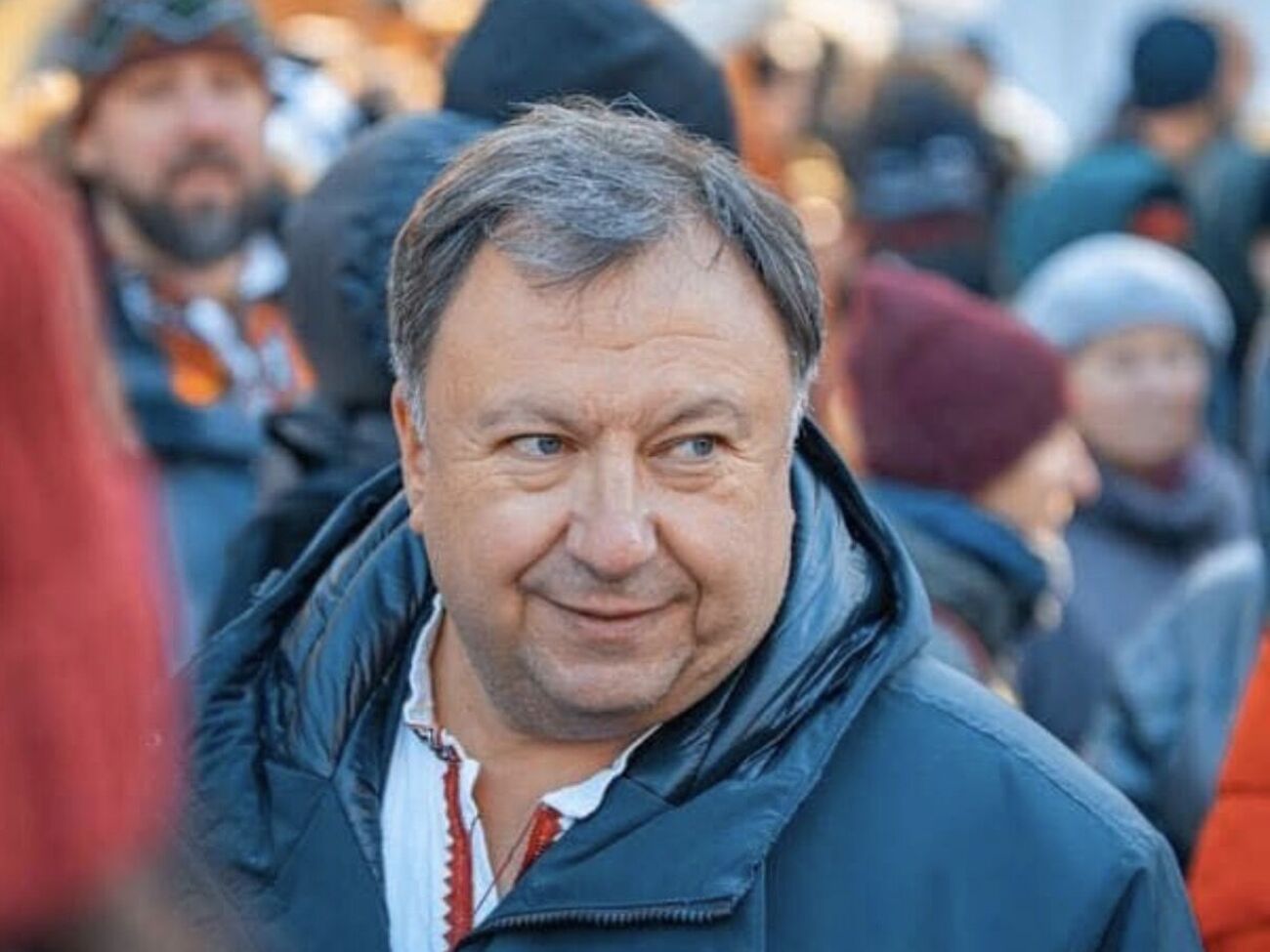
Nikolay Knyazhitsky / Facebook
The blog reflects solely the opinion of the author. The editors are not responsible for the content and accuracy of the materials in this section.