Classified documents show for the first time how China is training Russian soldiers sent to fight in Ukraine

China's armed forces secretly trained about 200 Russian soldiers on Chinese soil late last year, and some of them have since returned to fight in Ukraine, three European intelligence agencies and documents obtained by Reuters have concluded.
Although China and Russia have held a series of joint military exercises since Moscow's large-scale invasion of Ukraine in February 2022, Beijing has repeatedly said it is neutral in the conflict and presents itself as a peace mediator.
The clandestine training sessions, which focused mainly on the use of drones, were detailed in a bilingual Russian-Chinese agreement signed by high-ranking Russian and Chinese officers in Beijing on July 2, 2025.
The agreement, seen by Reuters, stated that around 200 Russian servicemen were to be trained at military facilities in locations including Beijing and the eastern city of Nanjing. The sources say Chinese forces then trained large numbers of Russian troops as stipulated in the agreement.
It also provided for hundreds of Chinese soldiers to participate in training in military facilities in Russia.
An intelligence official told Reuters that by training Russian military personnel at the operational and tactical level, who then participate in the war in Ukraine, China is more directly involved in the war on the European continent than previously known.
The defense ministries of Russia and China did not respond to Reuters requests for comment on the details presented in the article, which were provided by intelligence agencies on condition of anonymity given the sensitivity of the subject.
China insists it is impartial
“On the Ukraine crisis, China has consistently maintained an objective and impartial stance and worked to promote peace negotiations; this is consistent and clear and recognized by the international community,” the Chinese Foreign Ministry said in a statement provided by Reuters. “Relevant parties should not deliberately fuel confrontation or shift blame,” it added.
European powers, which consider Russia a major security threat, have watched with concern the growing rapprochement between Russia and China, the world's second largest economy and an important trading partner of the European Union, Reuters notes.
Partnership “for all seasons” between Moscow and Beijing
The two states announced a “borderless” strategic partnership days before Russia's invasion of Ukraine in 2022 and pledged to hold military exercises to practice coordination between their armed forces.
While the West tried to isolate Russia, China offered Moscow a “lifeline” through purchases of oil, gas and coal.
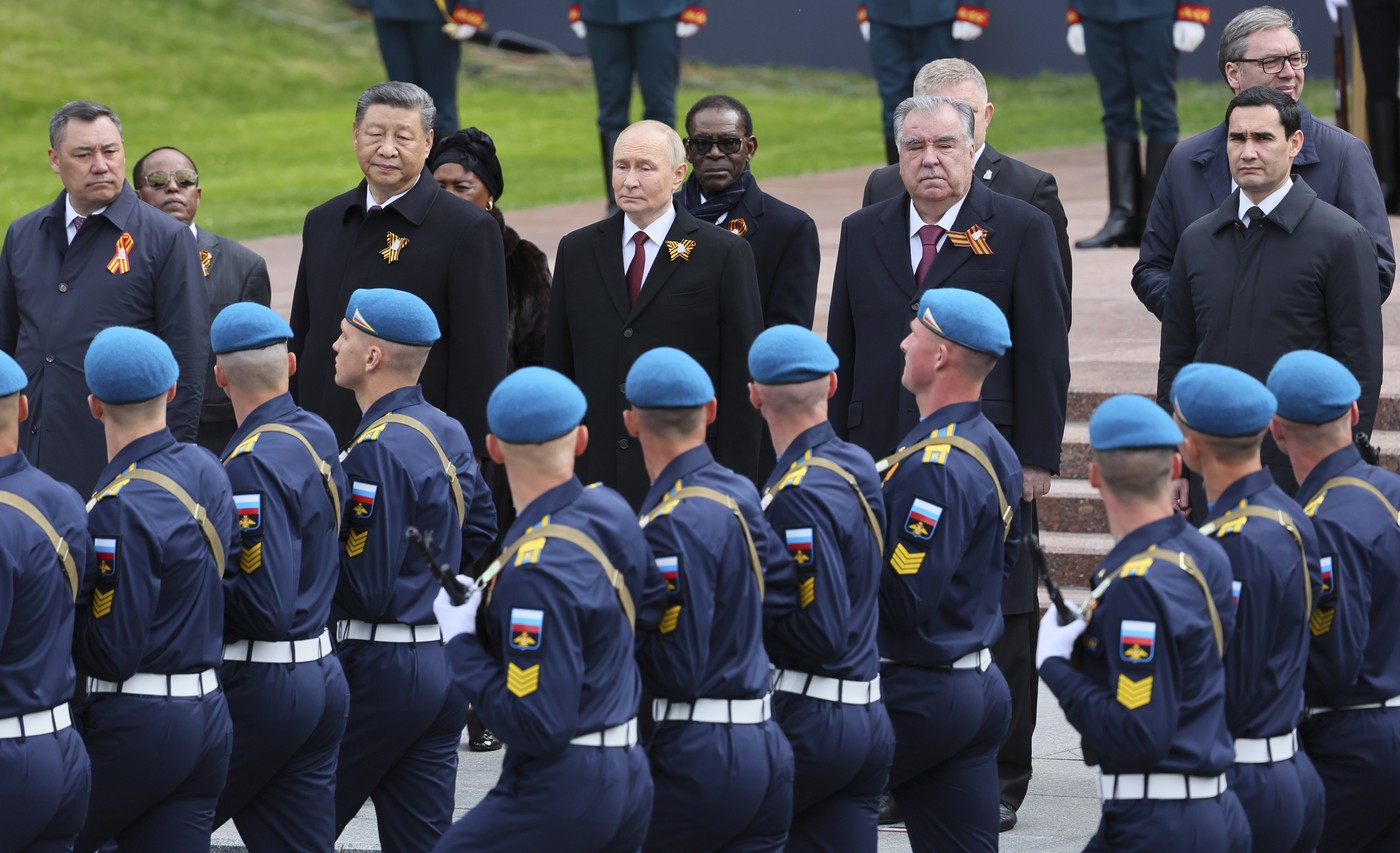
Chinese leader Xi Jinping is set to host Russian President Vladimir Putin on Tuesday and Wednesday, less than a week after US President Donald Trump's visit.
China and Russia have presented Putin's visit, his 25th trip to China, as further evidence of their “all-season” partnership, even as the West calls on Beijing to pressure Moscow to end the war in Ukraine.
Chinese support for Russian 'drone war' in Ukraine
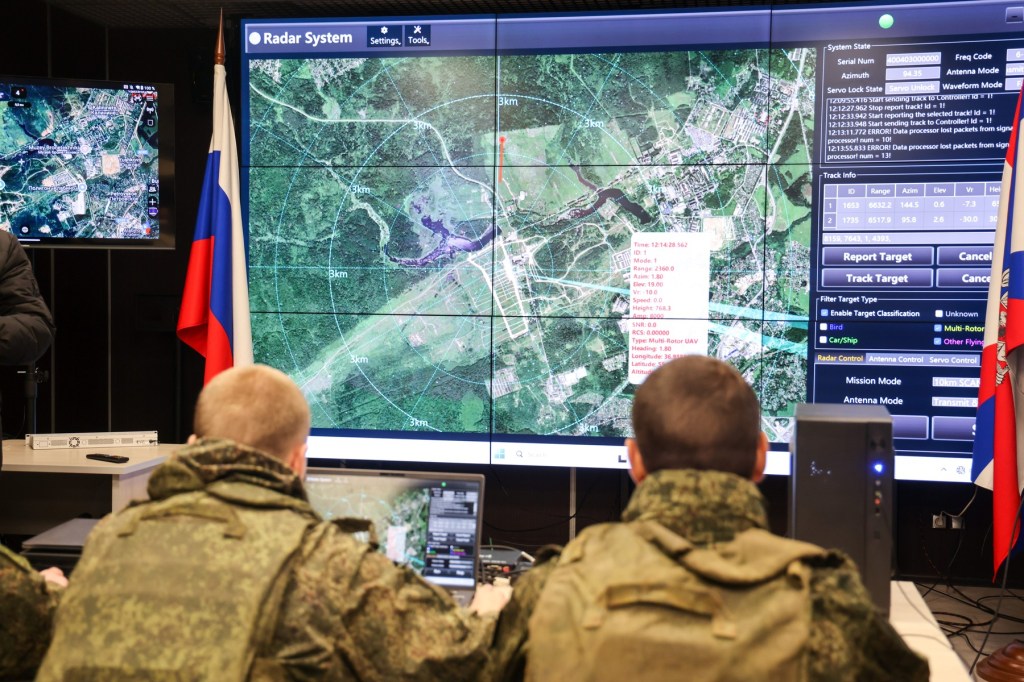
Drones have proven to be an essential weapon in Ukraine.
Both sides use long-range models to attack targets hundreds of kilometers behind front lines, while on the battlefield smaller drones, remotely controlled by pilots using first-person view (FPV) equipment and armed with explosives, dominate the airspace. These make the movements of armored vehicles or infantry extremely dangerous.
In September 2025, Reuters reported that experts from private Chinese companies were doing technical development work on military drones for a Russian attack drone manufacturer, according to European officials. The Chinese Foreign Ministry claimed at the time that it was unaware of this collaboration.
The two companies identified in the article were sanctioned by the European Union last month.
According to the training agreement seen by Reuters, the Russian servicemen were to be trained in areas such as the use of drones, electronic warfare, military aviation and armored infantry. The agreement prohibited any media coverage of the visits in either country and stipulated that no third party should be informed.
The training of Russian soldiers in China, a first
Two of the intelligence agencies consulted by Reuters say Chinese military visits to Russia for training have been taking place since at least 2024, but training Russian personnel in China is new. While Russia has extensive combat experience in Ukraine, China's vast drone industry provides technological “know-how” and advanced training methods such as flight simulators.
China's People's Liberation Army has not fought a major war in decades, but has expanded rapidly over the past 20 years and is now comparable to US military power in some areas.
A significant number of Russian servicemen who received training in China were graded military instructors in a position to pass knowledge up the chain of command, the two intelligence agencies said.
One of the agencies said it had confirmed the identity of several Russian servicemen who were trained in China and who were later directly involved in drone combat operations in occupied Crimea and Ukraine's Zaporozhye region. The rank of these soldiers ranged from junior sergeant to lieutenant colonel, the agency said.
The names of these people appeared in a Russian military document seen by Reuters, which listed servicemen sent to China. Reuters could not independently confirm the subsequent involvement of these individuals in the war in Ukraine.
The same intelligence agency stated that it is highly likely that many of those who were trained in China ended up in Ukraine.
What the reports of the Russian army write
Internal Russian military reports seen by Reuters described four training sessions for Russian soldiers in China after they had already taken place.
A report dated December 2025 described a combined warfare course for about 50 Russian servicemen at the Shijiazhuang branch of the People's Liberation Army Ground Forces Infantry Academy.
The report stated that during the course soldiers were trained to fire 82 mm mortars while simultaneously using unmanned aerial vehicles to identify their targets.
A second report described air defense training at a military facility, including the use of electronic warfare rifles, net launchers and drones to counter enemy drones. Two officials said the facility was in Zhengzhou.
All these types of equipment are relevant to the war in Ukraine. Electronic warfare rifles are used against drones to disrupt their signals, while nets can be dropped to capture them as they approach.
Both the Russian and Ukrainian forces use fiber-optic aerial drones, connected to pilots by a very thin wire that cannot be electronically jammed. These drones typically operate within a range of 10–20 km, but some can reach up to 40 km.
China has provided training to Russian soldiers in other areas as well
A third report, dated December 2025 and written by a Russian major, described drone training for Russian military personnel at the People's Liberation Army's Military Aviation Training Center in Yibin. The course focused on multimedia presentations and included the use of flight simulators, training in the use of several types of FPV drones and two other types of drones.
A fourth report described a November 2025 course at Nanjing Military Engineering University of People's Liberation Army infantry. The training covered explosives technology, mine construction, demining, as well as the disposal of unexploded ordnance and improvised explosive devices.
This report included photographs of Russian soldiers in uniform being trained by Chinese instructors in military uniform. The footage also showed Russian soldiers being made to work with engineering equipment and practice mine detection.