A traveler who wants to go to Singapore for a week on Sunday has a choice. Maybe at 9.50 p.m. board a jumbo Lufthansa in Frankfurt, which costs PLN 1.5 thousand. euro (PLN 6.3 thousand) will take him there in the cheapest class. However, you can also use an Emirates plane – with a stopover in Dubai for EUR 1,144 (PLN 4.8 thousand). The option on the Qatar Airways Dreamliner via Doha is even cheaper: the trip currently costs EUR 784 (PLN 3,300).
In the middle of the war with Iran, airlines from the Persian Gulf region have again in recent days launched their air connections on a large scale. The leading airline is Emirates, which flies seven times a day from German airports to Dubai, right in the middle of the crisis-stricken region.
The airlines that once fueled the tourist boom of glitzy Gulf cities are now working to make a quick comeback. It's risky a bet of billions. The outcome will be decided not only by war powers but also by tourists. What is more important to them – the desire for affordable luxury or a bit of a threat to life?
A week ago, Emirates sent a slightly surreal photo to the world.
It shows a bird's eye view of an A380 passenger plane in the morning sun at Dubai airport. A huge flag with 3D effects was painted on the fin and half of the hull of the giant machine. “We are proud to respond to the call of His Highness Sheikh Mohammed and raise the flag as a sign of the unity and strength of the UAE,” explains board member Sheikh Ahmed bin Said al-Maktoum in a press release, announcing the resumption of operations.
The airline is currently operating again 96 percent its connection network and 75 percent transport capacity before the “break”as the company calls it. Other airlines such as Qatar and Etihad have also resumed operations.
The impression of normality
Companies do not disclose how full planes are. But maybe it doesn't matter that much right now. — Emirates is flying again to secure or regain market share. In the short term, profitability is of secondary importance, says aviation expert Heinrich Grossbongardt. Flight service is a brand-nurturing maneuver. – It's about creating an impression of normality – adds the expert.
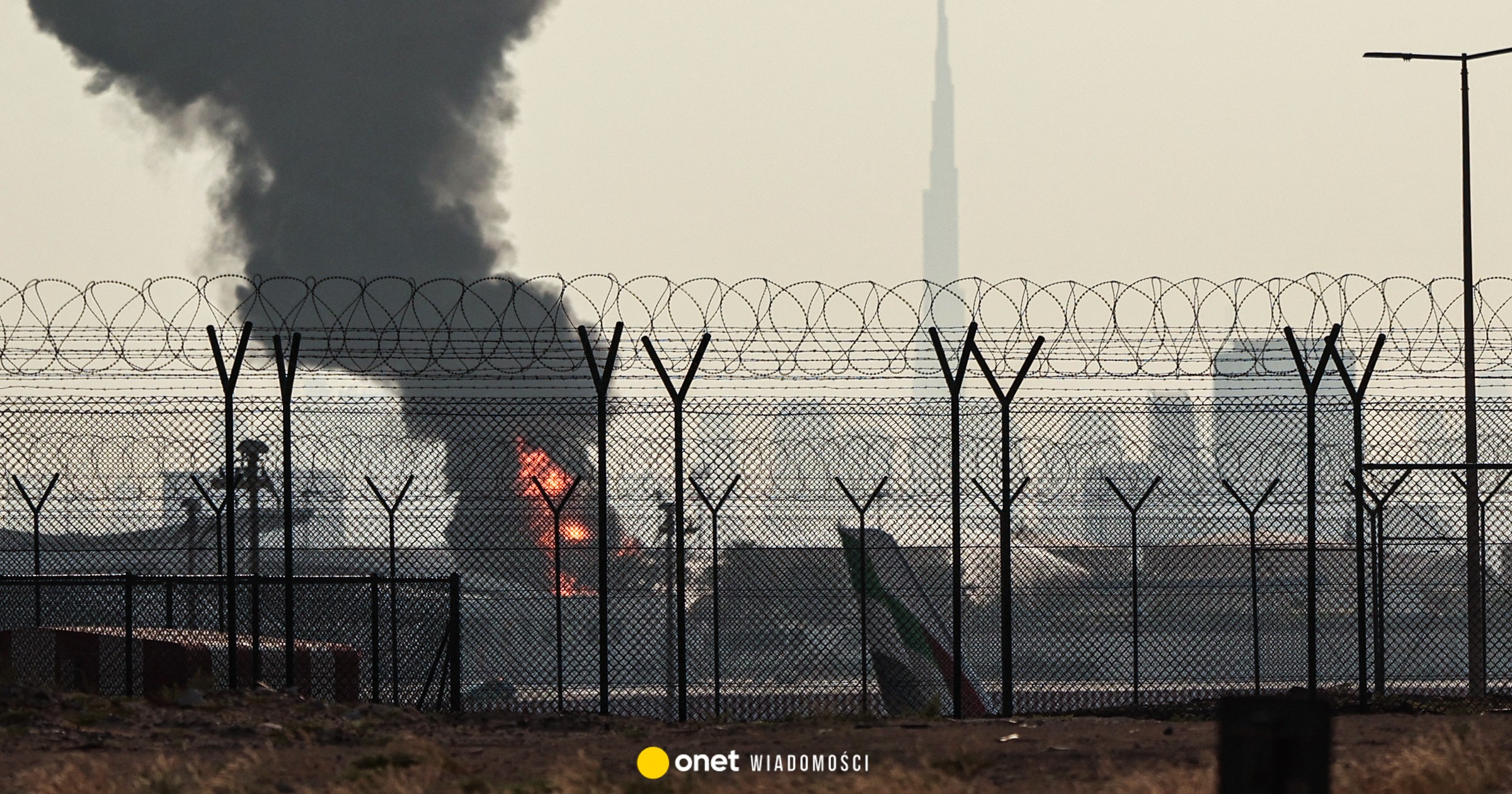
This trial is not entirely without disruptions. On the day Emirates publicly announces its return to normality, the sound of air defenses shakes the air in Dubai. According to the Ministry of Defense, two ballistic missiles and three drones from Iran were shot down, and falling fragments of destroyed objects injured three people.
Now social media is flooded with videos of influencers on deserted beaches assuring that everything is safe. However, photographing impacts, fires, rocket shots or fragments of debris is prohibited and may result in heavy fines or even imprisonment.
In fact, due to the lack of tourists, many hotels, such as the famous Burj Al Arab, have closed and are already starting renovation works for the upcoming season. The Emirates were brutally left behind taken from a desert fairy tale of towers reaching to the sky and palm paradises in the sea through war. However, they apparently recovered quickly and once again tempt us with affordable luxury, leaving aside all the disturbing realities. And perhaps successfully.
Eager tourists
The German Tourist Association (DRV) is observing in the middle of an armed conflict growing demand not only to flights through hubs in the Persian Gulf region, but also to the region itself. — Demand for new bookings of package tours, mainly to the United Arab Emirates, is also currently developing very positively, says DRV CEO Albin Loidl. — Geopolitical conflicts may slow down tourism in the short term, but in the long term they do not change Germans' great willingness to travel.
Indeed, the once-dead Gulf tourist metropolises appear to be back in the game. Five-star hotels tempt you with rooms with a sea view for less than EUR 100 (PLN 425) per night. In Europe, you can no longer even get a camping place for this amount.
The article continues below the video
What helps Emiratis defend their new business model is the old one. Because in the Persian Gulf, apart from occasional hostilities, there is something that the rest of the world wants very much right now: oil (kerosene).
While air carriers across Europe, Asia and America are canceling tens of thousands of flights due to skyrocketing fuel prices, Emirates, Qatar Airways and other airlines in the region sit on the inside of the Strait of Hormuz and don't understand the confusion. “At our hub in Dubai, suppliers have confirmed that our future demand is fully covered,” explains an Emirates spokesperson.
— Geographical location can turn from a disadvantage into an advantage for carriers from the Persian Gulf. Now they are the only ones who have direct access to the largest source of kerosene in the world, says Grossbongardt. Even if the world ran out of fuel, Emirates would still be able to fly. — The strategically advantageous location in the Persian Gulf allows Emirates to fly Boeing 777 aircraft from Dubai to Europe or Asia and back with one refueling, explains the expert.
An Emirates Boeing 777-300ER aircraft takes off from Warsaw Airport, May 3, 2026.Mateusz Wlodarczyk / AFP
UAE policy instrument
Even after the opening of the Strait of Hormuz, it would take four to five weeks for the first tanker to reach Europe. Airlines in the Persian Gulf region can refuel cheaply at home from day one. By leaving OPEC, the Emirates have paved the way for a drastic increase in production and it can be assumed that they will preferentially service their strategically important state-owned airlines.
The new hope of the Emirates is becoming the bane of the European aviation industry. Over the past two decades, it has lost much of the lucrative long-haul market to Gulf airlines. Almost one in three passengers traveling to Asia or Africa recently did not fly from Germany directly to their final destination, but with a stopover in the Persian Gulf or the Bosphorus. In airlines, which now, in addition to lax regulations, also benefit from competition concerns about jet fuel.
— For countries such as the United Arab Emirates and Qatar, their airlines are key strategic instruments of economic and locational policy, says Joachim Lang, director general of the German aviation association BDL. There are significant distortions of competition because its airlines are not subject to EU climate requirements, strict passenger rights and other cost factors. “As the crisis in the Middle East subsides, there is concern that Gulf airlines will try to attract additional traffic to their hubs through dumping prices,” he adds.
The main losers of such a development would be carriers such as Lufthansa, which continued to benefit significantly from the exclusion of competitors during the first month of the Gulf War. Now the situation threatens to reverse. Gulf airlines return now noticeably lowers prices — complained on Tuesday the head of the airline, Carsten Spohr, during a debate at the Lufthansa general meeting in Frankfurt am Main. He even used the phrase “combat prices.” This sounds threatening to Lufthansa shareholders – but to passengers it may be rather tempting.
I’m Ashley Davis as an editor, I’m committed to upholding the highest standards of integrity and accuracy in every piece we publish. My work is driven by curiosity, a passion for truth, and a belief that journalism plays a crucial role in shaping public discourse. I strive to tell stories that not only inform but also inspire action and conversation.