CIA director John Ratcliffe paid a visit to Cuba on Thursday, during which he demanded major economic and security changes from the government in Havana. The visit comes at a time when Cuban authorities have acknowledged that their oil reserves have run out, but also amid efforts by US federal prosecutors to indict Raúl Castro on drug-trafficking charges and his involvement in the downing of aid planes in 1996.
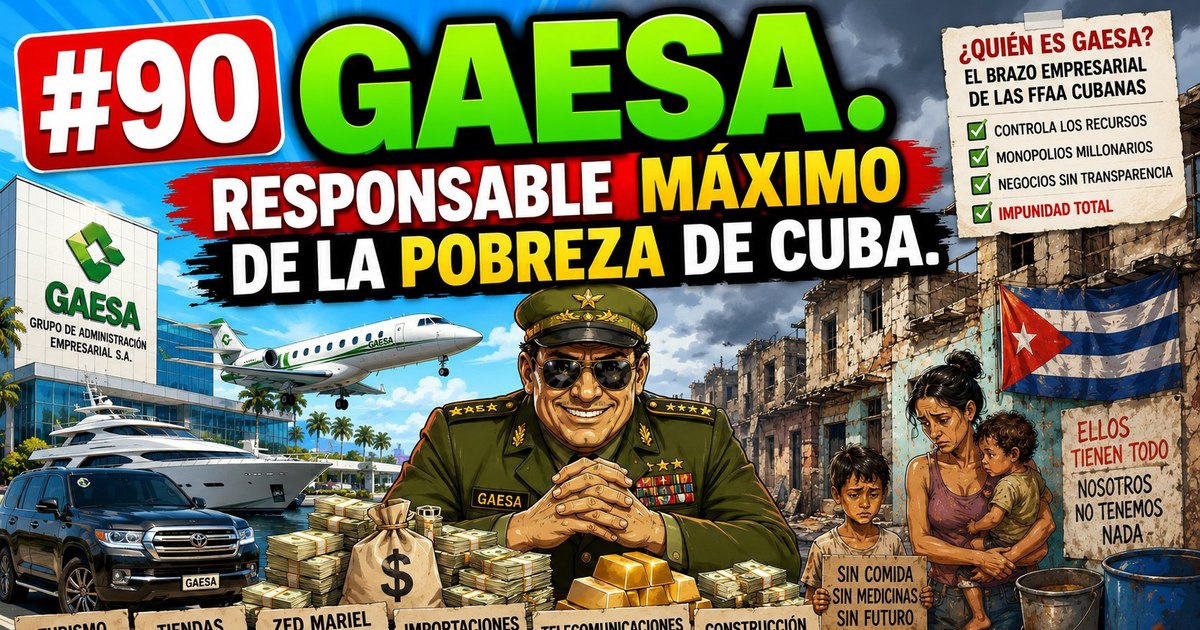
Earlier this month, President Donald Trump signed an executive order expanding sanctions against Cuba to target conglomerate GAESA. The document claims that its revenues “are probably more than three times the state budget”.
Secretary of State Marco Rubio stepped up diplomatic pressure, describing GAESA as a tool of the Cuban political elite used to suppress the population and enrich their own power network.
“This private company that has more money than the government itself,” Rubio said during a visit to the Vatican. “None of this money ends up building roads, bridges or providing food for the population, except for those inside GAESA.”
He added that the new sanctions target “a company that steals from the Cuban people for the benefit of a few,” adding that other measures will follow.
Cuban President Miguel Díaz-Canel condemned the executive order, calling it “coercive”.
The origin and rise of GAESA
GAESA emerged in the context of the deep crisis after the collapse of the Soviet Union in 1991, although some of its roots date back to the 1980s. Raúl Castro, then defense minister, reportedly persuaded his brother, Fidel Castro, to allow the military greater involvement in economic activities, according to former US officials.
With the demise of the USSR, Cuba lost its main trading partner and financial supporter. The army faced major difficulties, including the inability to pay its troops. In this context, the state allowed the military establishment to take over economic sectors, including tourism, to stabilize the economy.
At first, the model produced results: the military was considered a more effective administrator than other state structures, and the economy gradually recovered by the end of the 1990s. The profits were reinvested in public services such as health, education and the food rationing system, writes The New York Times.
Expanding economic influence
After Raúl Castro assumed the presidency in 2008, GAESA's influence increased significantly. The conglomerate today controls vast sectors of the Cuban economy, from small projects to major investments, including abroad, such as Angola, where it generates important revenues from education, health and construction.
The Trump administration tightens the noose around Cuba: Massive deployment of US air and naval forces to the island's borders
Critics argue that GAESA has become a tool to consolidate the power of the Castro family.
Today, the conglomerate is more influential than ever, while the level of poverty in Cuba continues to worsen.
“The army was the more pragmatic part of the revolution, but that doesn't mean it supports political liberalization”explained analyst Frank Mora. “It is both an economic and a military entity, which reduces interest in major changes unless they are favorable to it.”
GAESA's finances are not public and do not appear in the state budget, which makes it impossible to accurately assess its contribution to national revenues. A former audit official stated in an interview that she did not have access to the conglomerate's financial data, and was later fired.
Power and Continuity Networks
Control of GAESA remained closely tied to the Castro family. In 2011, Raúl Castro appointed his son-in-law, General Alberto Rodríguez López-Calleja, to head the conglomerate.
After his death in 2022, the leadership was taken over by Brigadier General Ania Guillermina Lastres Morera, recently sanctioned by Washington. However, family ties continue to play an important role, through Raúl Guillermo Rodríguez Castro, grandson of Raúl Castro.
According to some investigations, he would have maintained contacts with the new management and would have traveled in 2024 on a private plane to Panama, where GAESA would have registered companies.
He is also involved in dialogues with American officials, along with other members of the Castro family, including Óscar Pérez-Oliva Fraga, the current deputy prime minister and foreign trade minister.
Investments, tourism and economic imbalances
Cuban authorities frequently claim that US sanctions are the main cause of economic difficulties. However, analysts also point to GAESA's investment decisions as a major factor in internal imbalances.
After the resumption of diplomatic relations with the US in 2015, the conglomerate has bet heavily on tourism, anticipating an influx of American visitors. During that time, the number of hotels has grown significantly, reaching over 120 by 2025.
But the policy shift in 2016, when the US reintroduced travel restrictions, followed by the 2020 pandemic, has severely affected the tourism sector.
Despite the decline, investment in hotels continued, while traditional sectors such as the sugar industry collapsed, forcing Cuba to import this product, including from the US.
Washington's obsession with the “forbidden island”. Why can't Donald Trump leave Cuba alone?
Official data indicates that in 2024 almost 40% of the state budget was directed to tourism and hospitality, while the hotel occupancy rate remained low.
Spending on tourism exceeded the combined education and health budgets by more than ten times, while education funding fell significantly from the previous year.
An economy without transparency
Economists say the lack of transparency around GAESA undermines public control over the economy.
“The Cuban constitution states that the people own the means of production, but there is no real oversight over the economic decisions of this conglomerate”said economist Ricardo Torres.
Meanwhile, investment continues, including luxury hotel projects in Havana, in stark contrast to the decaying urban infrastructure.
Former US officials involved in previous negotiations describe the current situation as paradoxical: while resources are concentrated in opaque structures, the population is increasingly feeling the effects of the economic crisis.