“You don't make one rich out of two poor people.” Village town halls, in impossible situations after “efficiency”

The administrative reform that requires a 30% reduction in the maximum number of posts in town halls and county councils puts rural town halls in the situation of not being able to carry out their activities in compliance with the law, the mayors accuse.
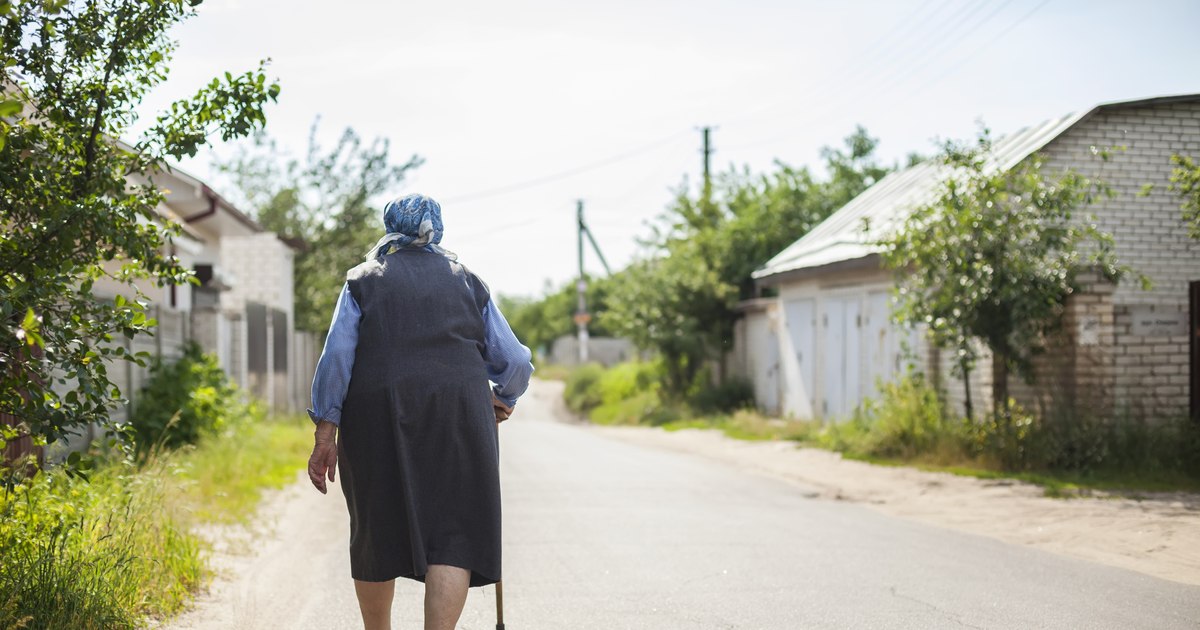
Services provided by village halls will worsen with less staff PHOTO: Shutterstock
The efficiency of the local public apparatus, a result that should be reached by applying GEO no. 7/2026, puts many mayors in difficult situations. No matter how many solutions are sought to meet the obligation to reduce the maximum number of posts by 30% (but not more than 20% of the number of occupied posts), since civil servants have long been “the man and the post”, wherever you cut is not good.
The “streamlining” process must be completed by July 1, 2026, many town halls have already approved the adjustments within local councils, but the discussions and debates about “how do we do after” are just beginning. The hope of many is that the “falling” in court of the prefect's orders imposing the number of positions to be adjusted, as has already happened in Covasna, could also save civil servants from dismissal and town halls from chaos in the rest of the country.
It is not a solution either not to implement GEO 7/2026, as some mayors tried to “wash” it by the method of putting to a vote the decisions by which the reorganization was decided, and this is because the law speaks of clear consequences: you no longer receive money from the broken-down quotas from the income tax and other funds to balance local budgets, or most small municipalities do not even manage to pay the salaries of officials collect from taxpayers, not to mention investments.
And then what do you do? You give up the “non-essential” employees – and the workers were the first targets -, or you convince them to be satisfied not with full-time, but with part-time, or you set up a position to be paid from the “Culture” chapter, exempt from cuts, if you didn't have one, or you take the social worker (also paid separately from the “Social Assistance” chapter, so excluded from the total to which the percentage of cutting) from what other attributions received over the years, also from the need to cover nobody's domains, and you let him do only social assistance, or…
They are essentially “fireworks”, workarounds. And the mayors also explain why they had to look for loopholes in the law: because they also went through a 10% reduction in the staffing scheme and because not all town halls are “crowded with people”, but in many it is the man and the field.
“I'll give you an example. In one locality, X, a commune with 3,000 inhabitants, the town hall functioned with, let's say, 16 people out of 20, as was the law until now. Among the 16, the mayor had a social worker who, due to the fact that he did not only have social assistance duties, was not paid from the “Social Assistance” chapter and was included in the calculation of the 16. Why? Because, in addition to social assistance, he was also in charge of urban planning, he was also responsible for the environment or something else, because in small communes he is not responsible for a single problem. .So does the librarian. The librarian who, normally, is a librarian and is paid by “Culture”, because he was also given attributions of ISU, of something else, was included in the 16. Now, when these budget restrictions came, the respective commune thought carefully and said: wait a minute, I let everyone do his job, I don't give him any other attributions, and he is no longer included in the 14 that must remain. Does this mean avoidance? I think it means, after all, a respect for the law”, explains the mayor of Bobicești commune in Olt county, Ilie Chitez.
He says he is one of the mayors who have indeed assigned librarians other duties.
“I am one of the mayors who did this. When he takes away from me, I have to do the same tasks. It did not diminish my duties. I mean, the environmental law did not tell me that I no longer have the obligation to have a person responsible only for the environment. Or, somehow, in order to carry it out, I did it in such a way that during those free hours, when the number of children also decreased, there are not so many customers at the library, to do something else, and then I did what I think was better. Now, if the law says that I have to let the librarian sit there even if he only has two books a day, that's how I do it to respect the law.” added the mayor.
The consequence will be that the officials who thus escape dismissal will have even more duties, taking over what else the social worker and the librarian were doing. The real impact will not be felt now, but next year, believes mayor Ilie Chitez, after the new wage law will appear. “The moment they see that the salaries, which we have blocked since 2019, will remain at the same level, they will leave. But until then we will have another shock, namely that overtime is not paid. When it's Code Yellow, we have to do permanent work, and all of the 16, now 14, will do that. These people were working overtime, they were unpaid, more than half of them I couldn't even compensate them with time off because they couldn't do the jobs they were going to do, and then they worked voluntarily. Well, the officials have already informed us that we should think about making Code Red and Code Yellow work again”the mayor highlighted another situation.
A gross manipulation: “We are not increasing pensions because PNRR does not allow us”. In reality, they have no money in the budget
Even uniting two small, neighboring municipalities is not a great economy, the mayor believes, because 1 million old lei is not investment money. In addition, “has anyone guaranteed that by uniting two communes we will have funds for investments? Immeasurable or at least a much higher percentage than this economy?”asks the mayor.
Force them to disobey the law
The mayor also draws attention to the fact that today, also due to budgetary constraints, town halls are in a position to constantly violate the law, because a lot of normative acts require specialized personnel to manage a certain field, but the institution cannot afford to hire. A minimum of two social workers would be needed, for example. Many town halls do not have them. According to the calculation made by the Association of Municipalities in Romania (ACOR), 53 employees would be needed to meet all these requirements. “With this list we should go to the minister, or the prime minister, and ask them which ones we don't have,” adds the mayor.
“At the present time, with 14 officials we are at the limit of functioning, considering the public procurement law and all the laws related to investments. Why this thing? In an investment, those who center must not also give their heads. For an auction I need five and they are not allowed to participate in other procedures, payments or reception during the investment. I must have five people designated to stop walking at the investiture and another five to attend the reception. Between the first five and the next five should not be found the accountant, who makes the payments, the mayor and the deputy mayor. 14 without 3 makes 11. I'm somewhere on the limit. Can I use the librarian? Can I use the social worker? Each has specific studies in their area. And if I were a social worker or a librarian I would say: lord mayor, don't put me where I'm not good at. Put me where I'm good at and I'll do the same job there, but don't put me in the economy area, don't put me in the reception area”the mayor also pointed out.
Efficiency measures, on the other hand, can be adopted, the mayor is convinced. The mayors of ACOR have proposed, for example, the reduction of the number of local councilors, who receive monthly up to 10% of the mayor's allowance for attending meetings. “Having 11 councilors in a commune with 800 inhabitants is still a lot”the mayor pointed out. The same thing happens at the County Council, the mayor also pointed out.
I am, on the other hand, “a bunch” of decentralized services where we are not talking about the mayor's allowance, but “their salaries are at least twice as high”. There are an army of people also in the school inspectorates, there are armies of officials in the regional development agencies where in the years when SAPARD funds were accessed, and digitalization was only a dream, they worked in the entire institution as many officials are in an office today, Chitez also points out. “That's where the economy is, if they want to make an economy”, added the mayor.
“We are below the number required to exercise the powers that we have established by law”
The “efficiency” of 30% of the total number of posts, imposed over the previous 10%, in the conditions where even so the rationing for rural town halls was already far below that of cities and municipalities, will prevent town halls from functioning optimally.
The government has published the first “radiography” of the public administration in Romania. The conclusions of the report
“We are below the number required to exercise the powers that we have established by law. I had several consultations, but I want to tell you, and I say it with all responsibility, in all these consultations the prime minister was the only one who knew, he was just saying what they had to do, not to take from our proposals. The only minister with whom I collaborated exceptionally is Minister Cseke Attila, for whom I have all the respect”, reinforced the president of the Association of Municipalities in Romania, mayor Emil Drăghici.
“The administrative-territorial reorganization must be effective according to the will of the resident. And we have the experience of several communes that broke away in 2003-2004 and their development was much better than in the old communes. The fact that you are doing a reorganization, all trumpeted by one or the other, is a form of manifestation of a will without analysis. Because at the level of the communes, we have an underfunding, by no means an overfunding. Think about a simple thing: do you make two poor people one rich, or do you make one even poorer? You unite two poor families. Are you making a rich one? You make one with more problems”thinks the president of ACOR.
Instead, he points to the mayor Emil Drăghici “all kinds of oversized institutions that even overlap in the exercise of powers” .
As for ACOR's proposals for budget efficiency, Drăghici mentions the reduction in the number of local elected officials. If the number of local elected officials in each locality were to be reduced by four, it would be equivalent to the costs of 500 communes, according to the simulations made by ACOR. “But no one wants it, because there is no one left to walk the votes through the communes. The parties are the ones who oppose it”emphasized Drăghici.
On this date, ACOR, together with the unions that defend the rights of town hall officials, attacked throughout the country the prefect's orders that imposed the staff cuts, and in Covasna the order was suspended. The approach will continue, the president of ACOR also stated.