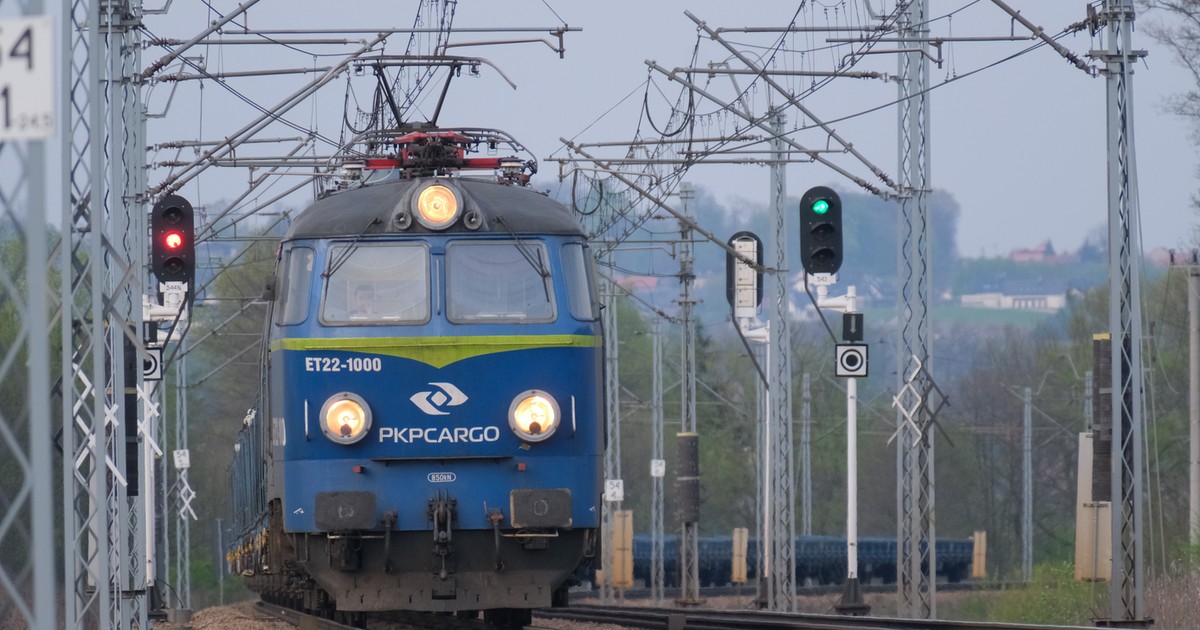
On May 11, the manager of the state-owned company PKP Cargo concluded an agreement with the Minister of National Defense. It is about cooperation in the field of rail transport for the needs of state defense. It is to include, among others: on enabling the transport of military equipment and heavy equipment by rail, the potential use of the terminal and siding infrastructure and the company's traction resources, including locomotives, for defense purposes, and cooperation in the field of rapid response in crisis situations.
See also: A huge investment is being prepared in Poland. A new factory may be built in Szczecin
President of PKP: we need a lot of diesel rolling stock
— In the event of any threat, logistics and transport actually play a key role. Therefore, it is very important that the railway, as the force that can transport large loads the fastest, is prepared for this – explained the president of PKP Alan Beroud in an interview with Next.Gazeta.pl during the Impact'26 event.
The railway infrastructure is to be prepared for a possible war situation. It's about the so-called dual use – so that, for example, heavy railway platforms, used on a daily basis to transport cargo, could be at military disposal in the event of war.
See also: Germany is preparing infrastructure for war. They want to be the logistical pillar of NATO
It is possible that adapting railway infrastructure and equipment to war conditions will require a return to some traditional systems, e.g. diesel locomotives. The president of PKP emphasized in an interview with Next.gazeta.pl that although the current priority is railway electrification, the situation in Ukraine has repeatedly shown that “in a situation of military threat, drones attack power stations first.” A lack of electricity may prevent military operations in a critical situation.
— To wage war, we need a lot of diesel vehicles. We didn't invest in it before because we thought it was something we needed to move away from, added Alan Beroud. He emphasized that many operations normally carried out digitally will only be able to be performed manually in analogue mode in war conditions. The railway must also be prepared for this.