On May 13-15, Donald Trump returned to China as US president after a nine-year break. He might have been surprised by how much the United States' greatest rival has changed economically over this time. We wrote more about this in the text: “Will China overtake the USA?”
The delegation included representatives of large American companies together with the US president. All this in order to do some business in a country that has become a power in many sectors, sometimes even overtaking the United States. In most industries, there is fierce competition between companies from both countries. At Business Insider, we checked who is on top and how the balance of power has changed since Donald Trump's last visit to China.
|
Created using AI/ChatGPT
China or the USA – who owns the largest companies?
In the ranking of the world's largest companies without industry division, the United States clearly dominates. In terms of capitalization (market value based on the valuation of shares on the stock exchange), the American one is number one globally Nvidia. We are talking about a business whose value is approaching $6 trillion.
Also on the podium are: Alphabet and Apple with capitalization of USD 4.3 and USD 4.8 trillion. There are more in the TOP 10 Microsoft, Amazon, Broadcom, Tesla and Meta. They are all American companies. The raisins in this cake are: Taiwan's TSMC and Saudi Aramco from Saudi Arabia.
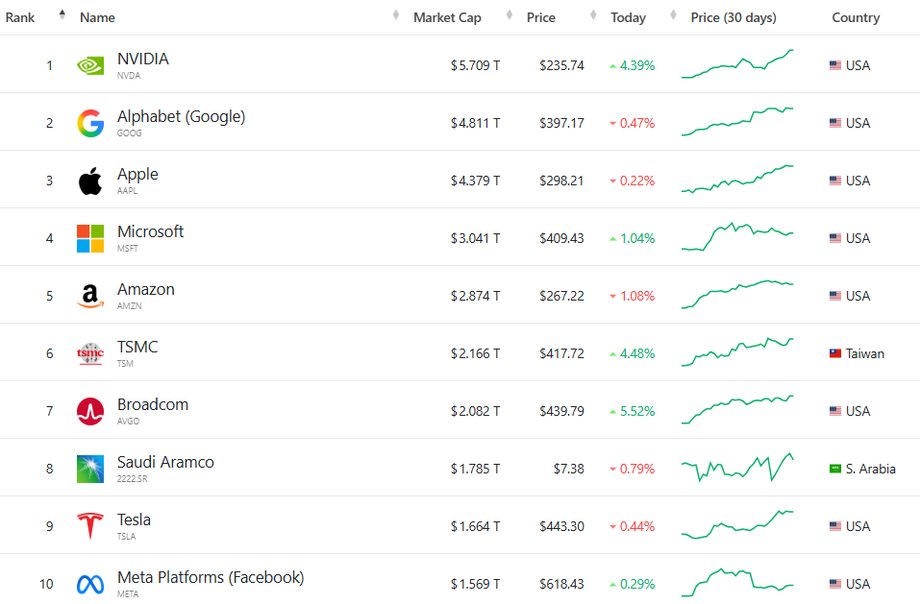
The 10 largest companies in the world (by capitalization as of May 15, 2026)
|
companiesmarketcap.com
Where is any representative of China? Far away, because only 25th place in the ranking is Tencent (a digital giant that controls, among others, the most popular Chinese messenger, WeChat, and a global leader in the video game market). His business is valued at approximately USD 532 billion. Even ten such companies would not exceed the capitalization of the American Nvidia.
See also: The market reacts to Donald Trump's words. “They want to buy oil from the US”
The next representatives of China's largest companies (by capitalization) are mainly banks: China Construction Bank, Agricultural Bank of China and ICBC, and Alibaba and CATL (the world's largest producer of batteries for electric cars).
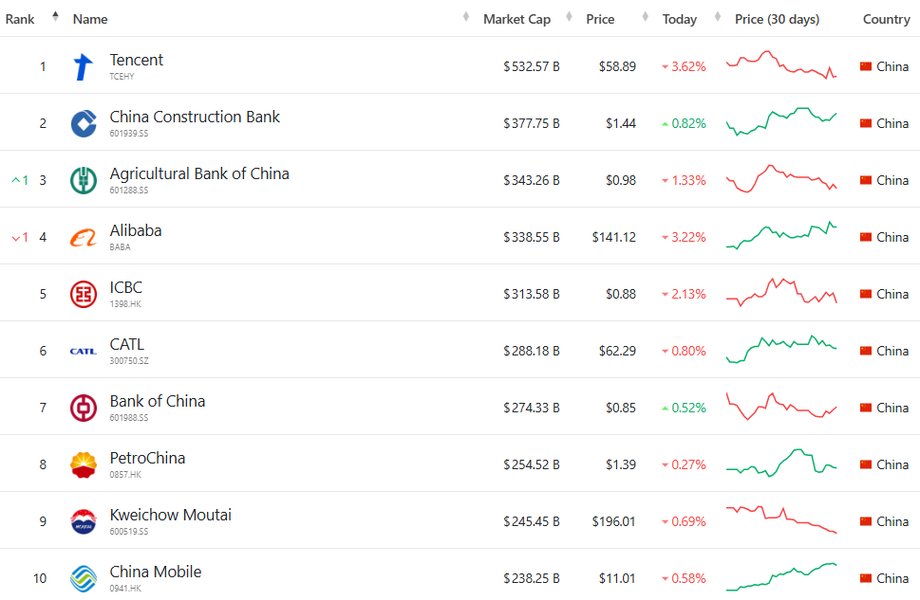
TOP 10 largest Chinese companies (according to capitalization, i.e. stock exchange valuations)
|
companiesmarketcap.com
Chinese companies are leaders in these industries
In broadly understood technologies, Americans are still leading, but now in the video game industry, the Chinese leader is unrivaled. Mentioned earlier Tencent boasts a capitalization 10 times larger than the world's second US company, Electronic Arts.
The American giant has grown by approximately USD 17 billion since Donald Trump's last visit to China. (50%). Its Chinese competitor increased its capitalization at the same time by approximately USD 50 billion, which, however, is not very impressive in percentage terms (10%) due to the higher reference point.
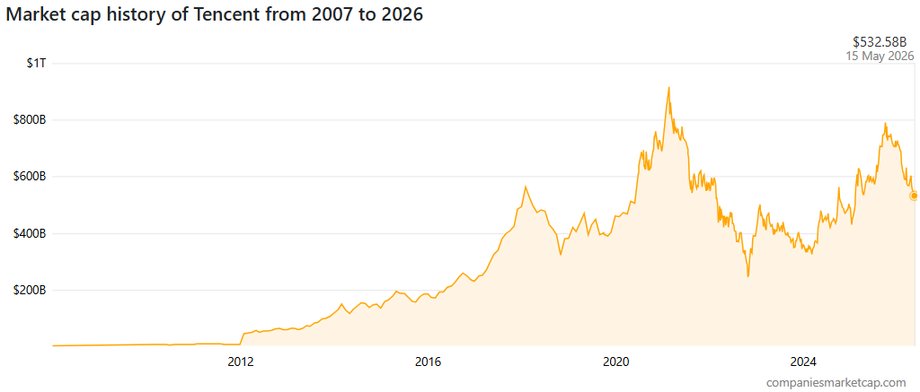
Tencent company capitalization
|
companiesmarketcap.com
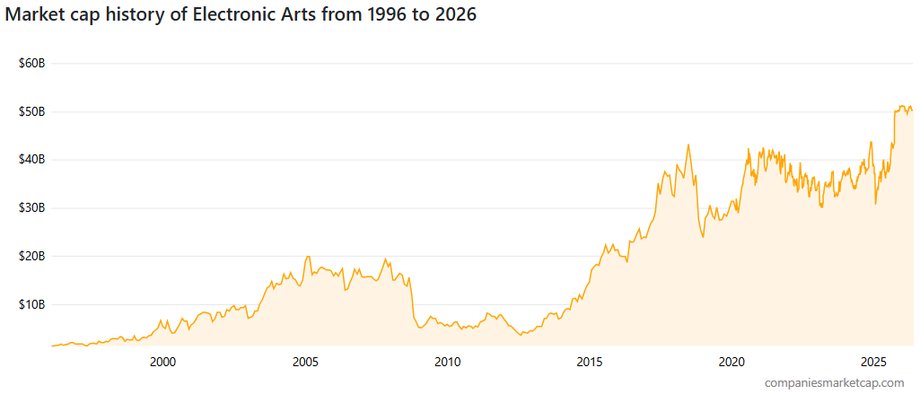
Capitalization of the Electronic Arts company
|
companiesmarketcap.com
American companies must also recognize the superiority of the Chinese competitor in the alcoholic beverage industry. Business Kweichow Moutai sounds foreign in Poland, but it is valued at $245 billion. The flagship product is Maotai – a luxurious, traditional Chinese baijiu alcohol (pure spirit distilled from fermented sorghum, usually containing about 53% alcohol). This drink is considered the “national drink” in China.
See also: American business and politicians are begging Trump. It's about China
One tenth of the value of Kweichow Moutai is held by the largest manufacturer in the US – Constellation Brands, which ranks only seventh in the industry. Above are, among others: European players such as Anheuser-Busch Inbev and Heineken.
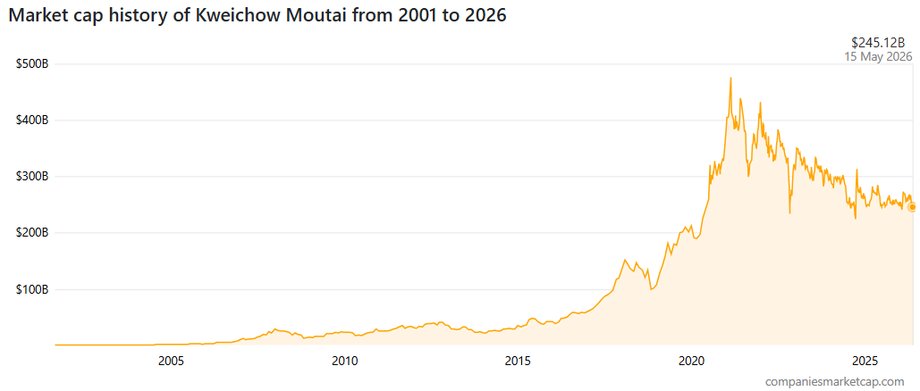
Capitalization of the Kweichow Moutai company
|
companiesmarketcap.com
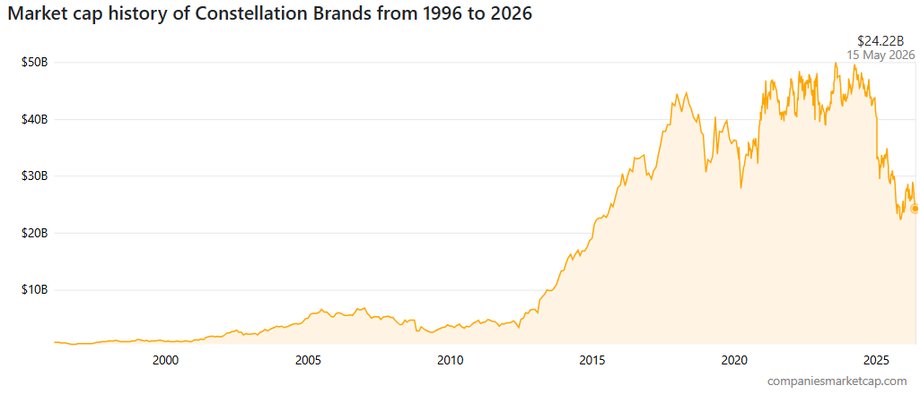
Constellation Brands company capitalization
|
companiesmarketcap.com
China Mobile is at the top of the rankings in the telecommunications industry. With capitalization at the level USD 238 billion is ahead by USD 35 billion. a well-known brand in Poland, i.e. T-Mobile US.
However, the Chinese giant is losing its advantage. Between President Donald Trump's visits to the Middle Kingdom, it gained approximately 14%. At the same time, T-Mobile's valuation quadrupled.
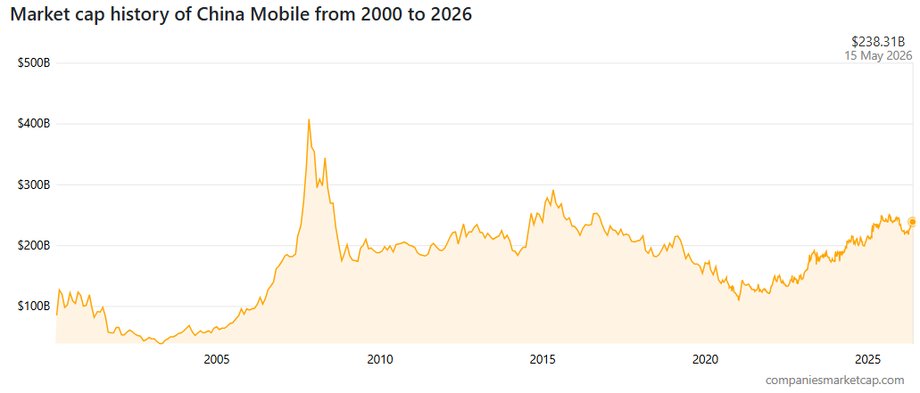
Capitalization of China Mobile
|
companiesmarketcap.com
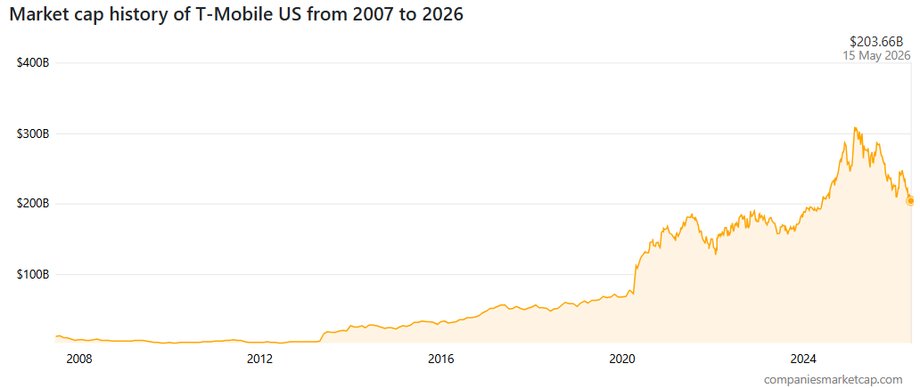
Capitalization of T-Mobile US
|
companiesmarketcap.com
Donald Trump in China. How has the business balance of power changed since your last visit?
In the years 2017-2026, the Chinese economy grew significantly faster in real terms (in national currency) than the American economy. — by approx. 61 percent compared to approximately 25 percent in the case of America. GDP per capita at purchasing power parity gives a similar picture: in China it increased by approx. 97% and in the USA by approx. 16%.
— China is beginning to clearly dominate in terms of investment and industrial production. The share in global results is close to 30 percent, while the role of the USA is half as much – says Jakub Rybacki, an economist at mBank, in an interview with Business Insider.
He explains that this result is partly related to subsidizing production by China, which is increasingly generating tensions not only between these two powers, but also in Europe. Such practices have allowed China to gain a leading position in the production of high-technology goods, such as electric cars and photovoltaic panels.
China fares less favorably in the race with the USA, when comparing the largest companies from both countries. So what if Chinese electric cars are conquering the world, if investors still see much greater value in Tesla than in BYD. Elon Musk's business has also grown faster over almost a decade. There are more such stories.
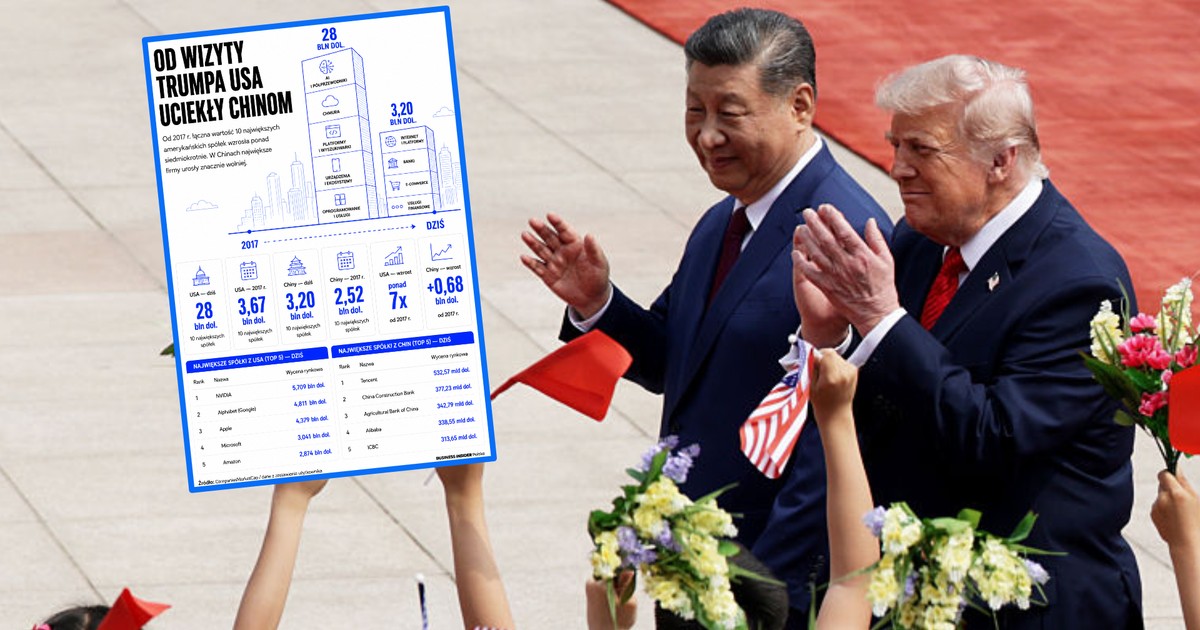
The combined value (capitalization) of the 10 largest American companies currently exceeds USD 28 trillion. Compared to 2017, there was a more than seven-fold increase in this respect (from USD 3.67 trillion). The situation is completely different in the case of the largest Chinese companies, which have increased their value relatively little for almost 9 years – from USD 2.52 trillion. up to USD 3.20 trillion
American companies are still ahead of Chinese companies in industries such as:
- airlines: Delta Air Lines ($47 billion) vs. Air China ($17 billion)
- banks: JP Morgan Chase ($803 billion) vs. China Construction Bank ($377 billion)
- e-commerce: Amazon ($2.87 trillion) vs. Alibaba ($338 billion)
- health care: United Health ($362 billion) vs. JD Health ($18 billion)
- mining: Southern Copper ($157 billion) vs. China Shenhua Energy ($145 billion)
- fuels: Exxon Mobil ($633 billion) vs. Petro China ($254 billion)
- arms companies: RTX ($236 billion) vs. China State Shipbuilding Corporation ($45 billion)
Author: Damian Słomski, journalist of Business Insider Polska