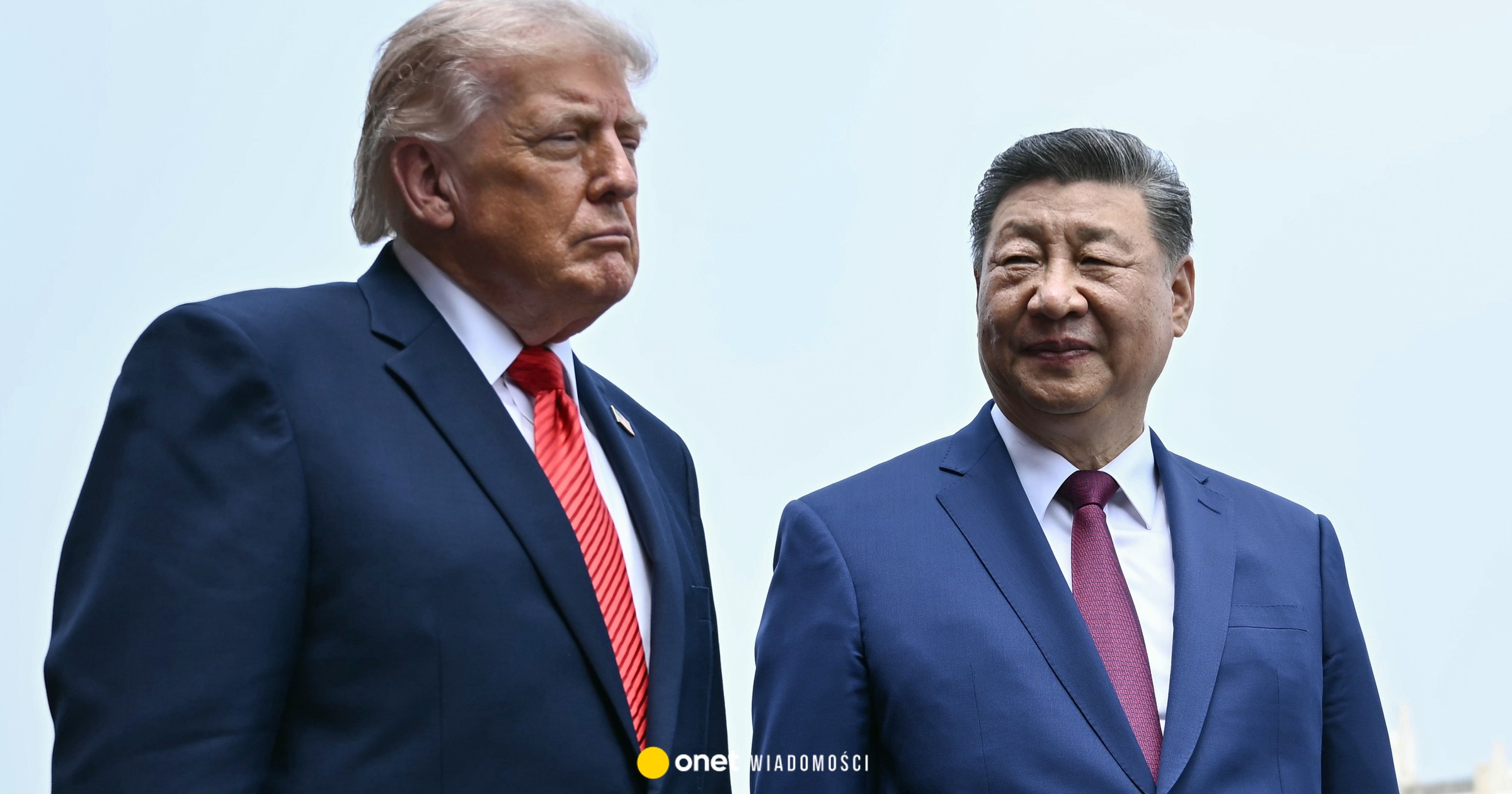
During a Friday press conference aboard Air Force One on the way back to the United States from Beijing, Trump revealed few specific agreements. He also suggested that, at Xi's request, he was reconsidering a key element of U.S. relations with Taiwan.
Trump also provided no details about a potential U.S. sale of soybeans to China, other than a vague statement that China would buy it for “billions of dollars.”
He boasted of selling 200 Boeing planes to China, but it was less than half of what some analysts and investors expected. Beijing has not confirmed either deal, and Boeing did not respond to a request to confirm the sale. Trump also said he talked to Xi about “possible security cooperation” in the development and use of artificial intelligence systems.
And despite repeated assurances from White House officials that U.S. policy toward Taiwan would not be on the summit's agenda, Trump said the two leaders talked at length about U.S. relations with the island. Trump told reporters he is willing to reconsider U.S. arms sales to the self-governing island — long a key demand from Beijing — despite long-standing U.S. commitments to providing defensive weapons to deter potential Chinese aggression.
“I will make a decision soon,” Trump said when asked whether he would continue arms sales to the island. He added that as part of this decision-making process, he would talk to “the person who rules Taiwan,” apparently referring to Taiwan President Lai Ching-te.
The “monumental event” that Trump promised appears to have failed to materialize, leaving behind a fragile but stable trade ceasefire. Nevertheless, this is a far cry from the all-out trade war that broke out a year ago, and the Trump administration left the meeting having achieved its overall goal, which was to maintain the status quo — one in which tariffs on Chinese goods remain roughly the same as in the rest of the world.
— The summit delivered modest, implementable and controllable results, which is about as good as U.S.-China relations can currently afford, said Craig Singleton, a China expert at the hawkish think tank Foundation for Defense of Democracies.
Flash point
It is unclear whether Trump will revisit the issue of arms sales to Taiwan, but he has made it clear that he will I do not feel bound by the 1982 commitment.which former President Ronald Reagan made to the island that he would not consult with Beijing on arms sales to Taiwan.
– So what was I supposed to do? Trump asked. — Say, “I don't want to talk to you about it?” Because I have a contract signed in 1982? No, we were talking about selling weapons, he said.
Taiwan became a flashpoint during the meetingand Xi warned Trump that mishandling the island, which China considers part of its territory, could lead to “clashes and even conflicts, putting the entire relationship in great danger.”
The article continues below the video
Trump postponed approving $14 billion in arms sales to Taiwan. (PLN 51 billion), but this was the first signal that he discussed this matter with Xi.
“Actually haggling or exchanging services on arms sales, or consulting on what we would and wouldn't sell — that would be a departure from past practice if the Chinese asked for it and the president was willing to agree to it,” said David Sacks, a former political-military expert at the U.S. diplomatic mission in Taiwan.
Taiwan's diplomatic mission in Washington did not respond to a request for comment.
Beijing persists
While Trump seemed willing to accommodate Xi's position on Taiwan, the Chinese leader has given no signs that he would use his influence to address one of Trump's key concerns — Iran's dominance of the Strait of Hormuz. A White House statement about Thursday's meeting said the two leaders agreed that the Strait of Hormuz should be open to navigation and that no country should impose “fees” for passage through the strait. The Chinese statement from the meeting only said that the two leaders discussed “the situation in the Middle East.”
Trump told reporters aboard Air Force One that he had not asked Xi for help to pressure Tehran to open the strait. “I don't need favors,” Trump said of the decision. He then added that believes that Xi will put pressure on Tehranto stop blocking the strait because he “would like it to be opened.”
Trump also hit a snag on other key issues raising tensions in U.S.-China relations. Xi ignored Trump's concerns about Chinese cyberattacks on US infrastructure. Trump was also apparently unable to get Xi to take further action to stop the flow of Chinese chemical precursors into Mexico that cartels turn into fentanyl. Trump said he raised the issue, but then said the fentanyl tariffs he imposed on Chinese imports had reduced the flow of fentanyl into the United States “significantly compared to before,” without going into detail.
Xi also refused to budge on Trump's requestfor the Chinese leader to release jailed Hong Kong pro-democracy activist and former media tycoon Jimmy Lai. Before the trip, Trump promised to “raise” the cases of Lai and an unnamed imprisoned pastor. Xi said he would “very seriously consider” releasing the pastor, but said it would be “difficult” for him to release Lai, Trump said Friday.
Expectations were low before the summit. Some of the more serious structural issues plaguing the U.S.-China relationship — government subsidies to China's industrial sector and Beijing's increasingly aggressive military presence in the Indo-Pacific region — were apparently not on the agenda.
“That's another peak he had more symbolic than substantive importance — focused on managing issues rather than resolving existing issues between the U.S. and China, said Rush Doshi, former deputy director for China and Taiwan on the National Security Council in the Biden administration.
The lack of concrete results from the summit may reflect both leaders' ambitions for more detailed talks later in the year. Trump and Xi could meet up to four times this year as part of the administration's efforts to stabilize U.S.-China relations, Treasury Secretary Scott Bessent said in January. Their next in-person meeting will be in September, when Xi will make an official visit to the White House. The two leaders may also meet on the sidelines of the APEC Economic Leaders' Summit in Shenzhen, China, in November and the G20 Summit in Miami in December.
“The way both leaders talked about the future suggests that this will be part of the process that will play out this year,” said Kurt Campbell, a former deputy secretary of state in the Biden administration.
I’m Ashley Davis as an editor, I’m committed to upholding the highest standards of integrity and accuracy in every piece we publish. My work is driven by curiosity, a passion for truth, and a belief that journalism plays a crucial role in shaping public discourse. I strive to tell stories that not only inform but also inspire action and conversation.