Who is Alexandra Căpitănescu, the young woman who took Romania to the Eurovision 2026 final

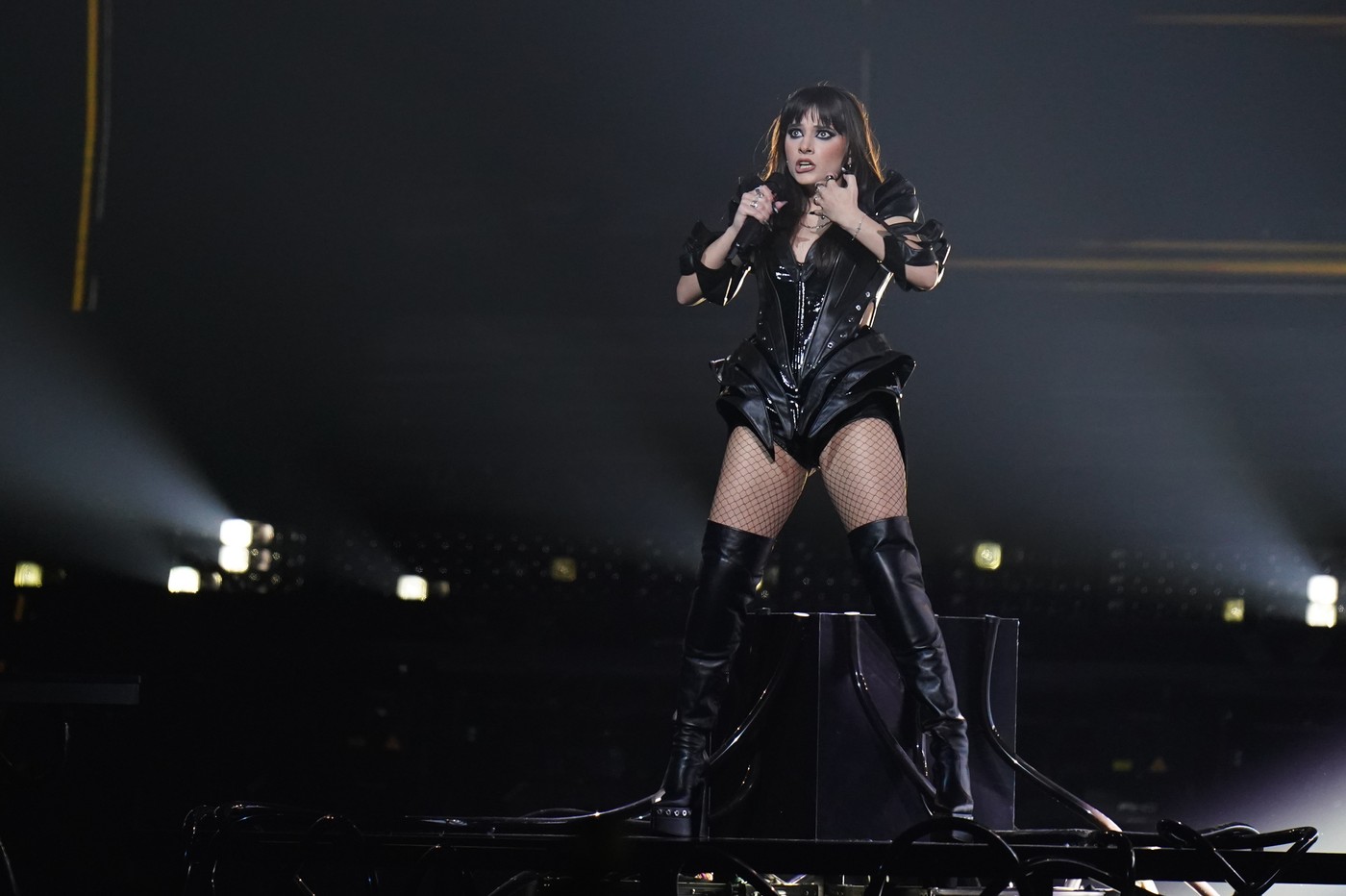
The representative of Romania at Eurovision 2026, the artist Alexandra Căpitănescu, got the ticket for the grand final on Saturday, in Vienna, after an electrifying show in the penultimate act of the contest.
Alongside Alexandra Căpitănescu, her bandmates, Bogdan Stoican, Luca Şofron, Matei Cohal and Thomas Cîrcotă, performed on stage in the Wiener Stadthalle on Thursday evening.
Who is Alexandra Căpitănescu?
Alexandra Căpitănescu became known to the general public after, in 2023, she won the “Vocea României” musical contest. She was then 19 years old and was part of the artist Tudor Chirilă's team. At the blind auditions, she turned all four chairs.
Shortly after winning the show, Alexandra Căpitănescu released her debut single, “Căpitanu'”.
The track was enthusiastically received, quickly amassing hundreds of thousands of views on YouTube. In April 2024, he released his first EP, also titled “Căpitanu'”, which includes five songs that consolidated his artistic identity, according to the artist's description on Spotify.
Alexandra Căpitănescu started, at the end of 2024, on a tribute tour dedicated to Laura Stoica. In the same year, she released the song “Arde”, a reinterpretation of the famous chorus of the hit “Fire”, sung by Laura Stoica.
Alexandra Căpitănescu also collaborated with the band VAMA, with whom she released the song “Butterflies in the Stomach”. In 2025, he also released the songs “Falling Star”, “Dilaila” or “Tare”.
Eurovision 2026. Controversy over the song “Choke me”
Alexandra Căpitănescu said, shortly after winning the National Selection, that the song “Choke me” is a metaphor for the feeling of being overwhelmed by strong emotions and one's own expectations.
The song reflects a deeply personal struggle with inner fears and pressure—the feeling of being “suffocated” by doubt, self-criticism, or a desire for growth and transformation, according to its Spotify description.
“And the chorus is quite positive: we say how important self-love is and it conveys to be gentler with ourselves, in general, in everything we do, in all fields, because that's the only way we reach our true potential. If we didn't set our own limits, we would reach 100% of our potential”, the artist told eurovisionromania.ro, before a wave of criticism.
But the song with which Romania participates in Eurovision 2026 has sparked controversy, with activists and international experts claiming that it “romanticizes sexual strangulation”, a dangerous practice that can cause brain damage and even death, according to the British publication The Guardian.
In the three-minute piece, the phrase “choke me” (“strangle me”) is repeated about 30 times, writes the British publication.
The lyrics also include phrases such as: “It's hard to breathe in”, “I want you to choke me” and “make my lungs explode”.
Clare McGlynn, professor of law at Durham University and author of Exposed: The Rise of Extreme Porn and How We Fight Back, said the play's repeated sexualised message “shows an alarming lack of concern for the health and well-being of young women”.
“The song, as well as Romania's choice of it for Eurovision and its promotion by the organizers, represents a reckless normalization of a dangerous practice. It's like playing irresponsibly with the lives of young women. The medical evidence emerging now shows that frequent sexual strangulation can cause brain damage in young women,” she said.
Eurovision 2026. The electrifying presence of Alexandra Căpitănescu
Criticism of the song has also spread online, where many Eurovision fans have asked for the song to be disqualified or the lyrics to be changed, The Guardian also writes.
On Thursday night, the song was received with applause by Eurovision 2026 fans in the hall where the contest is being held, while many on social media believed that it deserved to win the trophy this year.
Alexandra Căpitănescu said of her controversial song, “Choke Me”, that it is “a personal manifesto”. “It's a very honest story, about the fragile balance between falling and coming back,” Romania's representative at Eurovision 2026 told HotNews.
Before the representative of Romania entered the last act of the contest, Mihai Trăistariu considered that Alexandra Căpitănescu has even greater chances to reach the grand final on May 16, which was confirmed last night, and due to the criticism the artist received as a result of the controversial message of her song, “Choke Me”.
“We have a saying in showbiz: sex sells, everything related to sex, that it's a scandal, that something sexy sells. Everything rises and it automatically raised her in the polls almost 20 places. So, it didn't harm her, but on the contrary: it brought her to the attention of everyone who clicked”, said Mihai Trăistariu on Thursday, at Euronews Romania.
Mihai Trăistariu also referred to the criticisms coming from Great Britain, following which there were voices that demanded that the song “Choke Me” be removed from the competition on the grounds that it incites sexual violence.
“Critics immediately raised her in the polls and at the betting houses. Scandal always sells and the sexual parts don't say anymore. People clicked on the song to see what's wrong with that song. And it's not that bad. The voice is very good and then it only helped her. Any scandal helps,” the singer pointed out.
Mihai Trăistariu is the artist who had one of Romania's best rankings at Eurovision. He placed 4th at the 2006 Eurovision Song Contest held in Athens with the song “Tornero”. This was one of Romania's best Eurovision performances, with the artist then scoring 172 points.