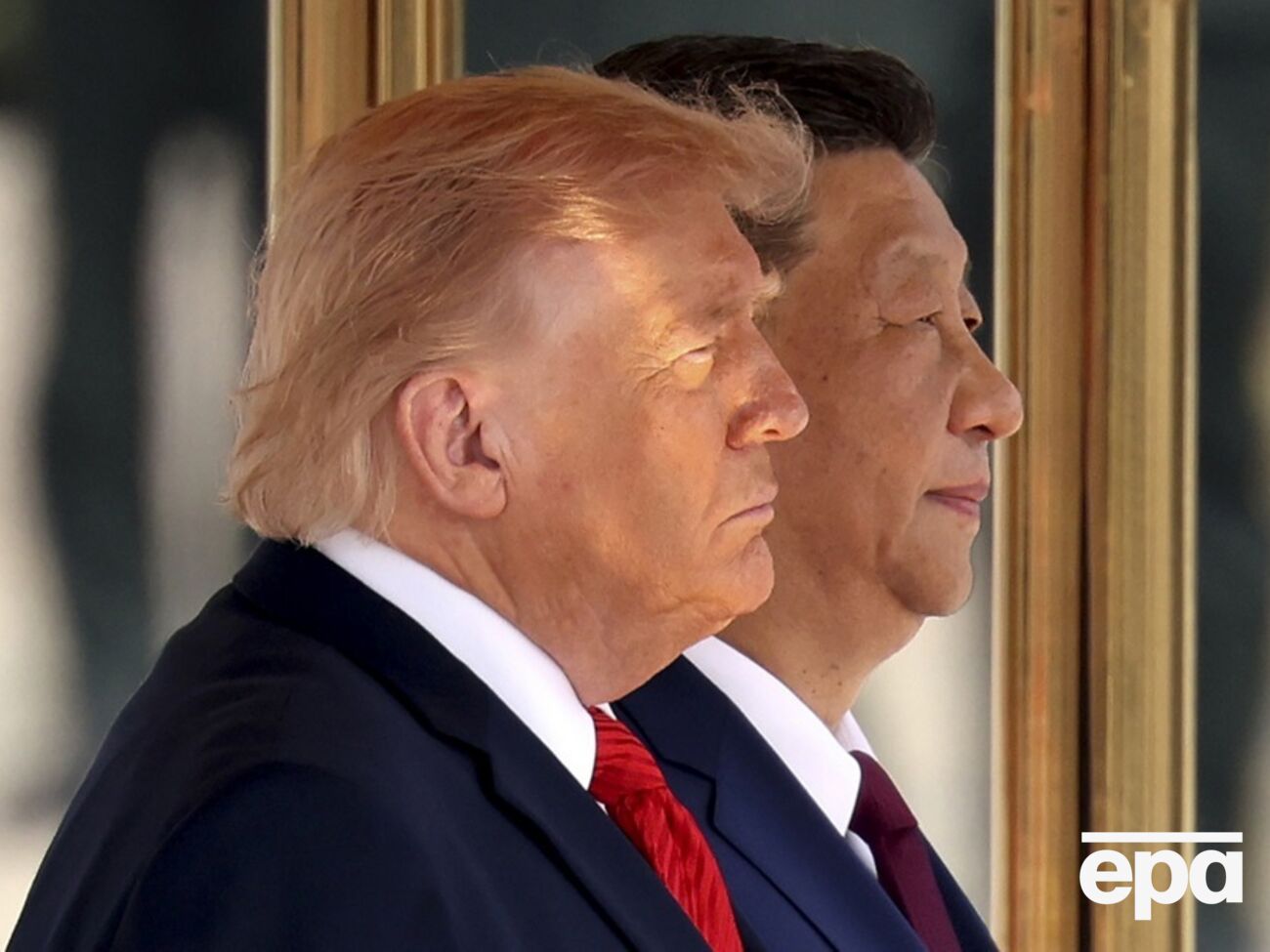
The summit between US President Donald Trump and Chinese leader Xi Jinping in Beijing could weaken the position of Russia and the illegitimate Russian President Vladimir Putin in the international arena. This is stated in the analytical material of The Conversation, published on May 14.
The authors note that the summit in Beijing demonstrated the readiness of the United States and China to stabilize relations after a long period of tension.
During the opening of the meeting, Xi Jinping said China and the United States “should be partners, not rivals,” while warning of the risk of “clashes and even conflicts” if the situation around Taiwan escalates.
Beijing is also signaling a willingness to give American businesses more opportunities in the Chinese market. According to the authors, this creates the basis for preventing a new trade war and more predictable relations between the two states.
The Conversation also writes that the potential improvement in relations between Washington and Beijing weakens the Kremlin’s position. The authors note that Putin seeks to maintain Russia's status as a great power, either through Moscow's strategic utility to the United States and China or by demonstrating the ability to create problems and destabilization.
At the same time, Moscow’s influence, according to the publication, is declining. Russia's war against Ukraine is no longer a top priority for the United States as key American negotiators – Special Envoy Steve Witkoff and Jared Kushner – are now more focused on Iran issues.
The media also draws attention to the last telephone conversation between Trump and Putin, which took place on April 29. According to the authors of the material, Putin offered to export highly enriched Iranian uranium to Russia, but Trump refused and called on him to “focus on ending the war in Ukraine.”
In addition, the article notes that the situation in relations between Moscow and Beijing also looks less stable. The last personal meeting between Xi Jinping and Putin took place in September 2025, and after that the parties held only one video conference.
At the same time, the authors emphasize that even despite the attempts of the United States and China to stabilize relations, there is currently no talk of a joint position against Russia. Moscow and Beijing maintain close ties and common anti-Western interests. At the same time, as The Conversation writes, under the Trump presidency, the United States is demonstrating a less tough and less unambiguous approach to Russia than previous American administrations.
To summarize, The Conversation calls the Trump-Xi summit “a party to which Putin was not invited.” According to the authors, the prospects for a more stable and manageable relationship between the US and China indicate that the Kremlin's efforts to assert itself have largely failed.