According to David Lubin, Chatham House specialist dealing with global economy issues, Energy expenditure plays a key role in shaping the current situation. The expert indicates that this factor is the most important variable determining the pace of price growth in the world today. The scale of the phenomenon can be seen in the latest macroeconomic readings from various regions of the world.
April statistics from individual countries reveal the extent of the problem caused by the cutting off of the Strait of Hormuz during the conflict. The United States and Israel were on one side, and Iran on the other. In the US economy, the consumer price index (CPI) increased by 0.6% month-on-month. Over the past 12 months, the increase has reached 3.8%, which is the highest reading since May 2023.
Read more: Inflation in the US is the highest since 2023. Ordinary Americans are paying for the war
Lubin forecasts further cost increasesemphasizing the importance of energy carriers for the entire inflation mechanism. Since the outbreak of the fighting with Iran, prices of energy raw materials have gone up significantly and there is no indication that they will return to the values observed before the conflict.. This position was presented by the expert in a text published on the Chatham House website.
Virtually all variants of the development of the situation considered by analysts assume that fuel and energy prices will remain at an increased level also in the following quarters. The coming months will be exceptionally demanding for the management of institutions responsible for monetary policy. Lubin points out that history shows a clear pattern: sharp spikes in inflation usually had their source due to rising energy prices.
A lesson from Paul Volcker's time
The author refers to the experience from several decades ago, when the oil shocks of the 1970s pushed American inflation to the level of 15 percent at the beginning of the next decade. Then-Chairman of the Federal Reserve, Paul Volcker, then decided to take a drastic step, raising the cost of money to 20% to suppress uncontrolled price increases. This historical reference is intended to show the scale of the challenges that current central bankers may face.
Monetary policymakers will be forced to watch two dimensions of the phenomenon — direct increases resulting from energy costs and indirect consequences for the entire economic system. Lubin points to additional risks associated with governments' response to the conflict with Iran. If concerns about the stability of supplies prompt the authorities to relax budget discipline, price pressure may become even stronger.
Read also: Wall Street slows down after inflation data. Chips are seriously under the line
Kevin Warsh's dilemma
The Chatham House expert also analyzes the position of Kevin Warsh, who became the head of the Federal Reserve. The new president will find himself in a challenging situation balancing between two conflicting pressures. On the one hand, President Donald Trump expects him to quickly reduce the cost of credit, on the other hand, economic reality may force a move in the opposite direction.
Therefore, Warsha will face difficult decisions unless there is a chance for a decline in the prices of energy raw materials – and Lubin does not consider such a scenario likely. The global economy, as the analyst emphasizes, is only just beginning to feel the full effects of the crisis caused by the closing of the strategic isthmus.
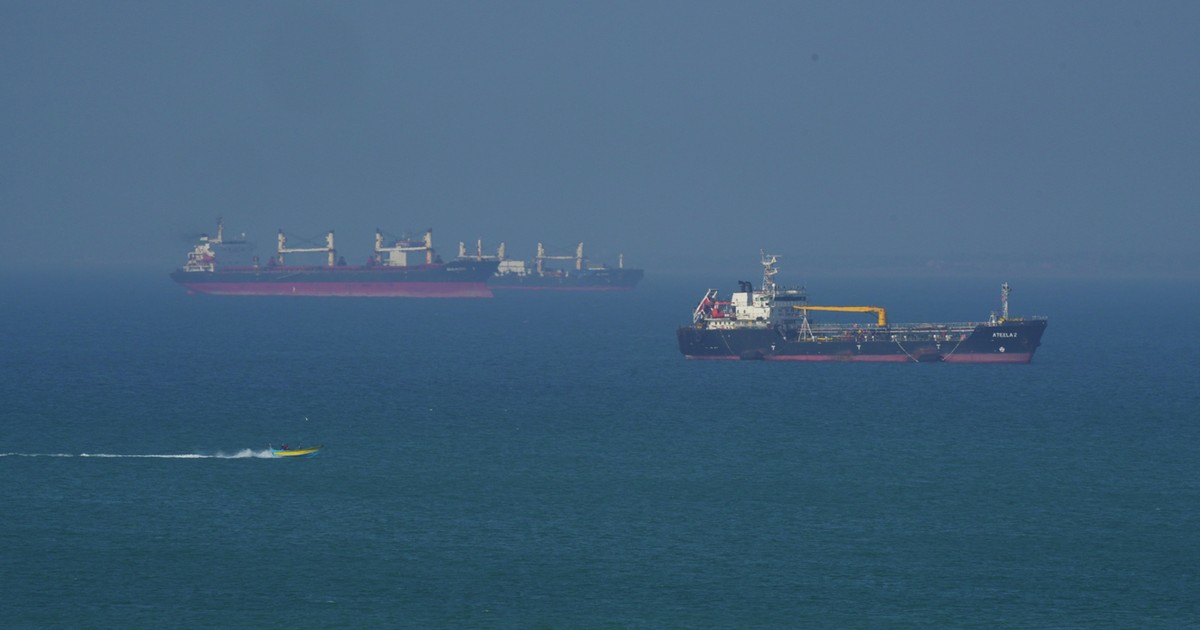
Tehran's response to the attacks by US-Israeli forces that began on February 28 was to block the Strait of Hormuz – a sea route of fundamental importance for the export of oil from the Middle East. Since April 8, Washington and Tehran have been observing a ceasefire, although the route remains effectively impassable. Negotiations on a permanent agreement are not producing results, both sides reject each other's proposals, and the issue of Hormuz remains one of the main axes of the dispute.