The sunset of the “Swedish model”. Europe's most surprising capitalist turnaround: the welfare state retreats and the market takes over

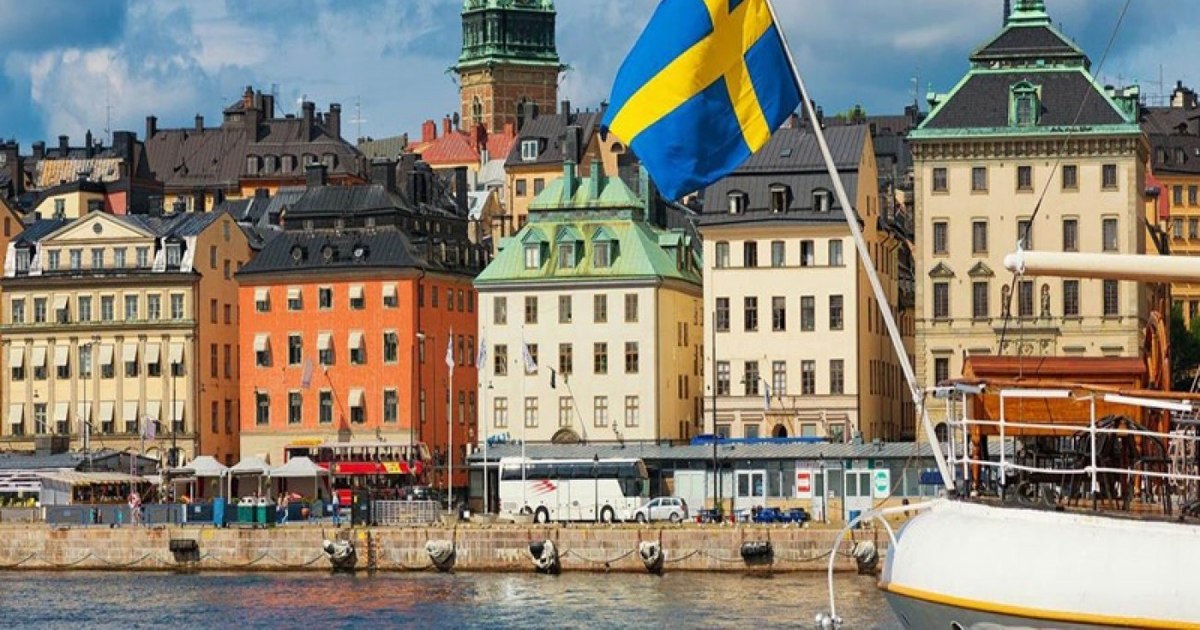
For decades, Sweden was the almost perfect symbol of the European welfare state: huge taxes, ubiquitous public services and a model where the state looked after the citizen “from the cradle to the grave”. Today, however, without big ideological declarations and almost without political noise, the Nordic country is going through one of the most spectacular economic transformations in the West, writes The Wall Street Journal.
Sweden abandons the welfare state model/PHOTO:shutterstock
Sweden, once considered the bastion of European collectivism, is increasingly moving towards a capitalist model based on competition, privatization and individual initiative.
The change is already visible everywhere. Almost half of primary care clinics are private, many controlled by investment funds. One third of public high schools are privately managed, and education operators are listed on the stock exchange.
The Swedish transformation is also closely watched beyond Europe. In the United States, where debates about the role of the state are increasingly intense, the Swedish model continues to be invoked by progressive politicians. But the reality of Sweden today differs radically from the romantic image of an omnipotent welfare state.
How Sweden managed to downsize the state without collapsing its economy
Paradoxically, it is precisely this liberalization that has allowed Sweden to do what few developed countries have been able to do in recent decades: reduce the size of the public apparatus and lower the tax burden, notes the WSJ.
Total social spending – which includes health, education and the welfare system – has fallen to around 24% of GDP, close to the level of the United States and well below countries like France or Italy, where it exceeds 30%.
At the same time, the Swedish economy continues to grow at a solid pace. The International Monetary Fund estimates for the coming years an annual growth of about 2%, comparable to that of the US and double that of Germany or France.
“Sweden is a real country of opportunity,” says Finance Minister Elisabeth Svantesson, who has cut taxes three years in a row. In the 1980s, the maximum tax rate reached almost 90%. Today, this is closer to 50%. And the great fortunes began to return home.
Conni Jonsson, the founder of Swedish private equity giant EQT, says that, taking total taxation into account, Sweden has become “even more attractive than the US”.
From the mammoth state to the innovative economy
Sweden has not always been a country with an oversized state. For almost a century, until the 1970s, the Swedish economy developed spectacularly without extreme levels of taxation.
Everything changed after the 60s, when the social democrats massively expanded public spending. By the 1990s, the state had come to consume almost 70% of GDP. Economic stagnation, huge debts and a severe banking crisis followed.
Under pressure from markets and investors, Stockholm was forced to radically reform the system: reducing social benefits, privatizations, tax reforms, limiting public debt and eliminating wealth and inheritance taxes. The result was the emergence of an entrepreneurial culture that few would associate with Sweden.
The country has become one of Europe's most dynamic tech economies, with hundreds of IPOs and an explosion of startups. The Swedish gaming industry has produced global phenomena such as Minecraft and Candy Crush, and Sweden has even surpassed the US in the number of billionaires per population.
Sweden “cuts” the price at the pump. What are the rest of the European countries doing and where is Romania?
Private hospitals, artificial intelligence and efficiency
The transformation is perhaps most visible in the healthcare system. At the hospital of St. Stockholm's publicly funded but privately run artificial intelligence is already being used to detect breast cancer. Waiting lists have shrunk dramatically, and doctors have more time for complex cases.
Managers talk about efficiency, performance indicators and the Toyota model of organization. The management claims that the treatment of some conditions costs 15-20% less than in hospitals directly managed by the state, writes The Wall Street Journal.
And medical consultations have changed radically. The Swedish platform Kry allows video programming 24 hours a day, in several languages, including Arabic. For many patients, fast and digitized access to the doctor has become one of the great advantages of the new system.
But who loses?
But Sweden's economic success also has a less comfortable side. Critics warn that the Swedish model produces increasing inequalities in a society historically built on the idea of social equality.
In suburbs dominated by immigrant communities, gang violence has skyrocketed. In some areas, criminal networks directly challenge the authority of the state.
In education, the debate is even more heated. Private schools are accused of chasing profits by cutting back on investment in teachers, libraries or infrastructure.
At the same time, the best private schools attract high-achieving students and wealthy families, while public schools remain with vulnerable students and higher social costs.
“We are moving from a society built on the idea of 'all for one and one for all' to one where everyone fends for themselves,” says Swedish journalist and author Andreas Cervenka.
A richer but more fragmented country
For the urban middle class, the transformation has been hugely profitable: higher incomes, more valuable property, and access to modern services.
For other categories, however, especially outside the big cities, the reality is different: reduced public services, outdated infrastructure and rising housing costs. The number of young people living with their parents has increased significantly, amid the explosion of property prices. Even supporters of the reforms now admit that liberalization may have gone too far.
“The direction of privatization was right,” he says the economist Lars Calmfors, one of the architects of the Swedish reforms. “But I probably overdid it.”
The elections that can change Sweden again
Ahead of the general election in September, the topic of privatization – especially in education – has become one of the most explosive in Swedish politics.
Social Democrats are calling for a ban on school profits and greater investment in public services, criticizing tax cuts for the wealthy.
However, after decades of reforms, school choice and competition between operators have already become part of the new Sweden's DNA.
And the question now dominating the public debate is no longer whether the state should withdraw, but how far this withdrawal can go without the Swedish social model losing its identity.
The country that wants to make it easier to deport immigrants who don't lead an “honest life.” Bill presented by the government