Merz's coalition is preparing a last-chance plan. It is intended to save the government from electoral disaster

There haven't been many good days yet for the so-called black-red coalition in Berlin. From the unsuccessful first round of the chancellor's elections in May 2025 to the almost collapse of the coalition after the meeting in Villa Borsig four weeks ago: CDU, CSU and SPD almost continuously for the first year presented a desperate image of the governmentwhich has not been able to meet the challenges of the current situation in key policy areas.
It was no figment of the imagination of hasty commentators and grumpy social media users that there was a feeling across the country that this coalition could fall apart much more quickly than its ill-fated predecessor, the traffic light coalition, also known as the red-green-yellow coalition.
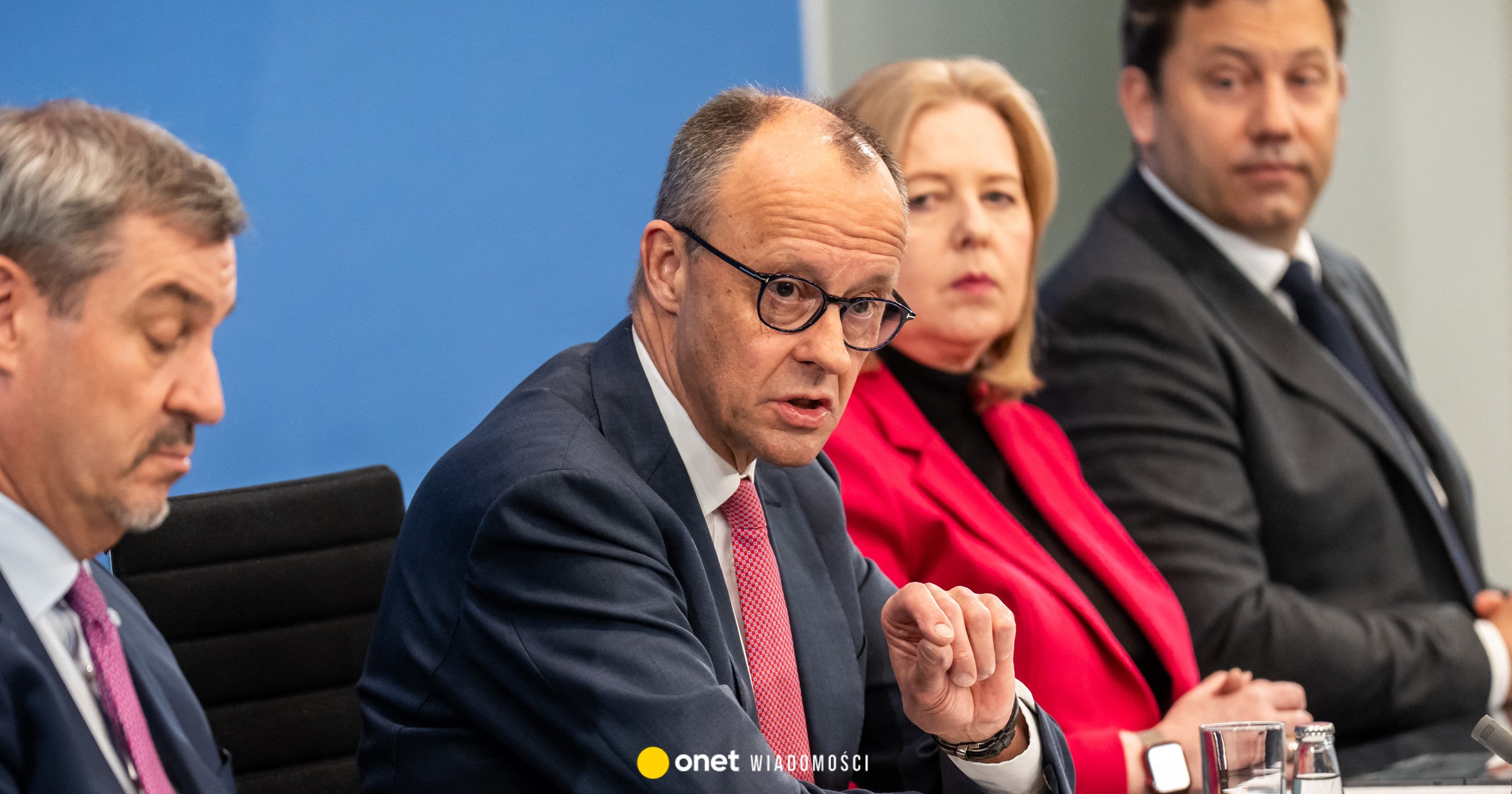
In this context, Tuesday, when representatives of the coalition gathered at the Chancellor's Office late in the evening and looked for a way out of the black and red misery, was one of the better days of this government alliance. Friedrich Merz (CDU), Lars Klingbeil (SPD) and Markus Soeder (CSU) gave themselves and their colleagues some breathing room this evening.
If all goes well, then this moment of breath will become a breakthrough. If not, it will only remain a postponement of execution, which will expire at the latest in the fall with the elections to the state parliaments in Saxony-Anhalt, Mecklenburg-Vorpommern and Berlin. The black-red coalition hasn't won anything yet. Germany faces a summer of decisions.
Accordingly, the following day's announcements and comments were cautious. Nothing was announced with great fanfare, and no red lines were drawn. The few important findings from the previous evening were communicated to both factions in the Bundestag via email and text messages. An energy allowance of EUR 1,000 (approx. PLN 4,000), which employers could pay to their employees without the need for both parties to pay taxes and contributions, was ultimately rejected. It was a predictable decision after the Bundesrat's “no” on Friday, but it clearly shows that the coalition is still able to correct mistakes.
The leaders of the three government parties have agreed that the carbon price will not increase next year, which would be just a drop in the ocean in the face of the foreseeable, continuing energy price crisis. The head of the CSU faction, Alexander Hoffmann, also made it clear in Redaktionsnetzwerk Deutschland (RND) that the “fuel discount” currently valid for two months could be maintained after June. The coalition partners know that in the fall, voters will judge the ruling parties also on the basis of perceived short-term relief, and not only on the basis of the creation of a grand reform plan supported by all parties.
The fact that it is such an extensive program is to be developed in a short time, before the summer breakin a concerted effort, is easily the biggest news to come out of Tuesday night. For now, however, this remains only a declaration. The desire to permanently regulate the issues of income tax, pensions, bureaucracy and tax code within a few months, under considerable time pressure and without destructive disputes, is an ambitious political experiment.
“The right signal”
There was some premature praise, however, on Wednesday. Restrained, given the unstable situation in which the current federal government finds itself. So Olaf Lies (SPD), Prime Minister of Lower Saxony, expressed to the coalition committee his “respect” for “that this decision, i.e. the energy allowance, is now being withdrawn. This is how it should be.”
Lies, who before the Berlin meeting argued for greater involvement of employers, workers and the federal states in the federal government's reform plans, rightly sees a “right signal” in the coalition committee's announcement that it wants to meet with the social partners in early June for a “direct dialogue.” The president of the Bremen Senate, Andreas Bovenschulte, also praised the decision “that the social partners now have a seat at the table when the coalition discusses the necessary reforms.”
German Chancellor Friedrich Merz speaks during the congress of the German Trade Union Confederation in Berlin, May 12, 2026.Sean Gallup/Getty Images
However, Lies from Lower Saxony is optimistic. — We are confident that we will be able to find solutions to all the challenges we face. This applies to both the upcoming social reforms and the necessary tax reform, he said. At the same time, he is in favor of “the federal states being closely involved in further talks in order to ensure the necessary majority in the Bundesrat, the upper house of the German parliament, representing the interests of the federal states.”
Relations between the federal government and the federal states, as well as relations with municipalities facing significant financial difficulties, will be another topic that the leaders of the CDU/CSU and SPD coalition will have to address in the coming weeks.
The conference of the heads of government of the federal states with the federal chancellor on June 25 will be another date that will determine the possible success of the reforms of the CDU/CSU and SPD coalition and the further functioning of the federal government.
Instead of an autumn of reforms, a winter of disappointments
The co-chair of the opposition Green faction in the Bundestag, Britta Hasselmann, was much more skeptical than Lies or Bovenschulte. — I think it's a tragedy because this government has been in power for a year now and we are witnessing constant announcements. The autumn of reforms turned into a winter of disappointmentand in the spring the coalition and, above all, the chancellor himself will feel sorry for themselves, she said in an interview for the Phoenix television station.
Representatives of the German economy welcomed the reform plan of the ruling coalition. — It's good that the coalition has agreed on a specific work process, says Helena Melnikow, director general of the German Chamber of Commerce and Industry (DIHK). In her opinion, it is crucial for Germany that “a comprehensive package of reforms is quickly created, bringing tangible relief to citizens and businesses.”
Jorg Dittrich, president of the Chamber of Crafts, made a similar statement. In his opinion, the coalition “did the right thing by not making further ill-considered, hasty decisions, but by agreeing on a work process in which the upcoming reforms are to be carefully prepared.”