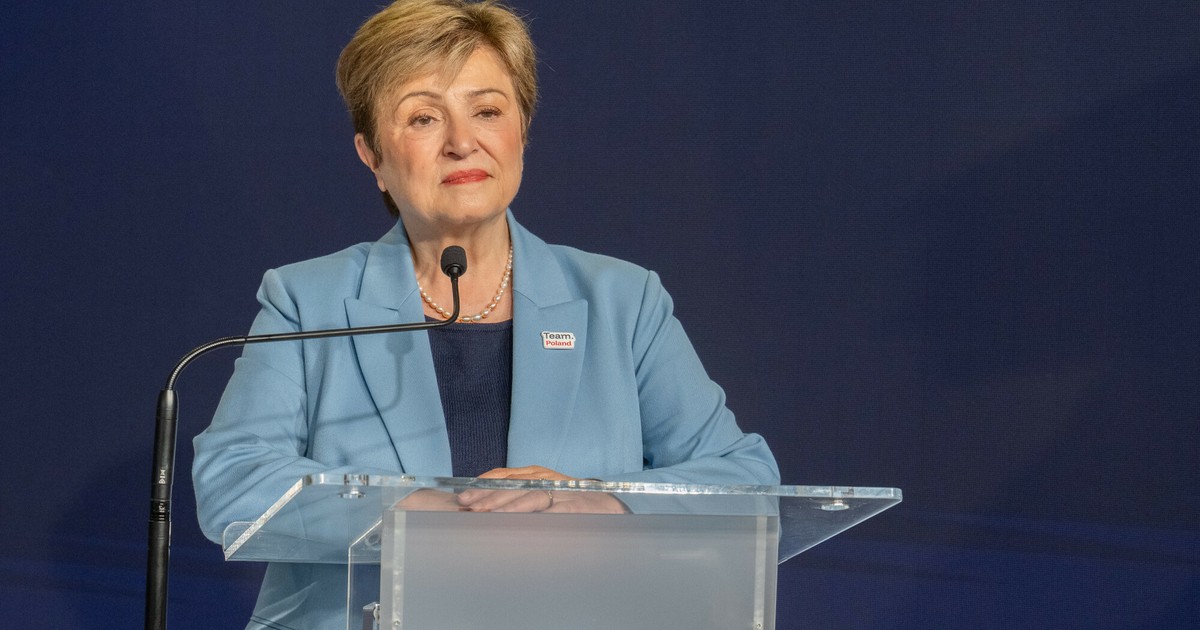
During the Impact'26 congress in Poznań, the executive director of the International Monetary Fund (IMF), Kristalina Georgiewa, spoke about the global energy shock. She appealed to decision-makers to be careful when using their limited fiscal possibilities.
She also assessed that Poland's macroeconomic stability requires reducing the fiscal deficit, which last year was the second largest in Europe. The head of the IMF emphasized that NBP must continue to focus primarily on price stability.
See also: Another crisis. Europe received a huge bill
Energy shock is not short-lived. The head of the IMF speaks directly
According to the head of the IMF, after the global energy shock there will be positive changes, but only in a year and a half.
— My optimistic view of the situation is that every time we face an energy shock, a year or 18 months later, our energy efficiency improves significantly and we find alternative solutions. So in a year or a year and a half, there will be some positive changes. However, we must prepare for this coming year or 18 months – she said, quoted by PAP Biznes.
She assessed that the current energy shock was not a short-term phenomenon. She noted that she was very concerned about the fact that most economies and decision-makers still treated this situation as a temporary phenomenon.
This is why The IMF advises policymakers to use their limited fiscal resources very carefullyas they may be needed for a longer period of time.
See also: Lower VAT and excise duty on fuels in Poland. The government announces the decision
Energy shock. The head of the IMF says what the NBP should do
According to the head of the IMF, in a broader perspective Poland's macroeconomic stability requires a reduction in the fiscal deficit and adjustments should not be postponed for too long.
— Facing the latest shock in the energy supply market The National Bank of Poland must continue to focus primarily on price stabilityand fiscal support should be directed to those who really need it, i.e. households in difficult situations. In a broader perspective, macroeconomic stability requires a reduction in the fiscal deficit. This is not an easy task, said Georgieva, quoted by PAP Biznes.
— How this will be achieved – whether by increasing taxes, by reducing spending, or by combining these two measures – depends on Poland's decision. However, these adjustments should not be postponed for too long, she added.
See also: This is how countries react to the oil shock. “The greatest in history”
Poland faces a difficult task
As Georgieva emphasized, Poland recorded the second-largest fiscal deficit in Europe last year, partly due to higher defense spending. The number of professionally active and working-age population is decreasing. Despite the intensive implementation of technology, national innovations require support.
As she pointed out, Poland's development in recent decades proves that fast, sustainable and inclusive economic growth is possible.