Xi and Trump meeting. China, USA and for a long, long time nothing. Germany has reasons to be concerned

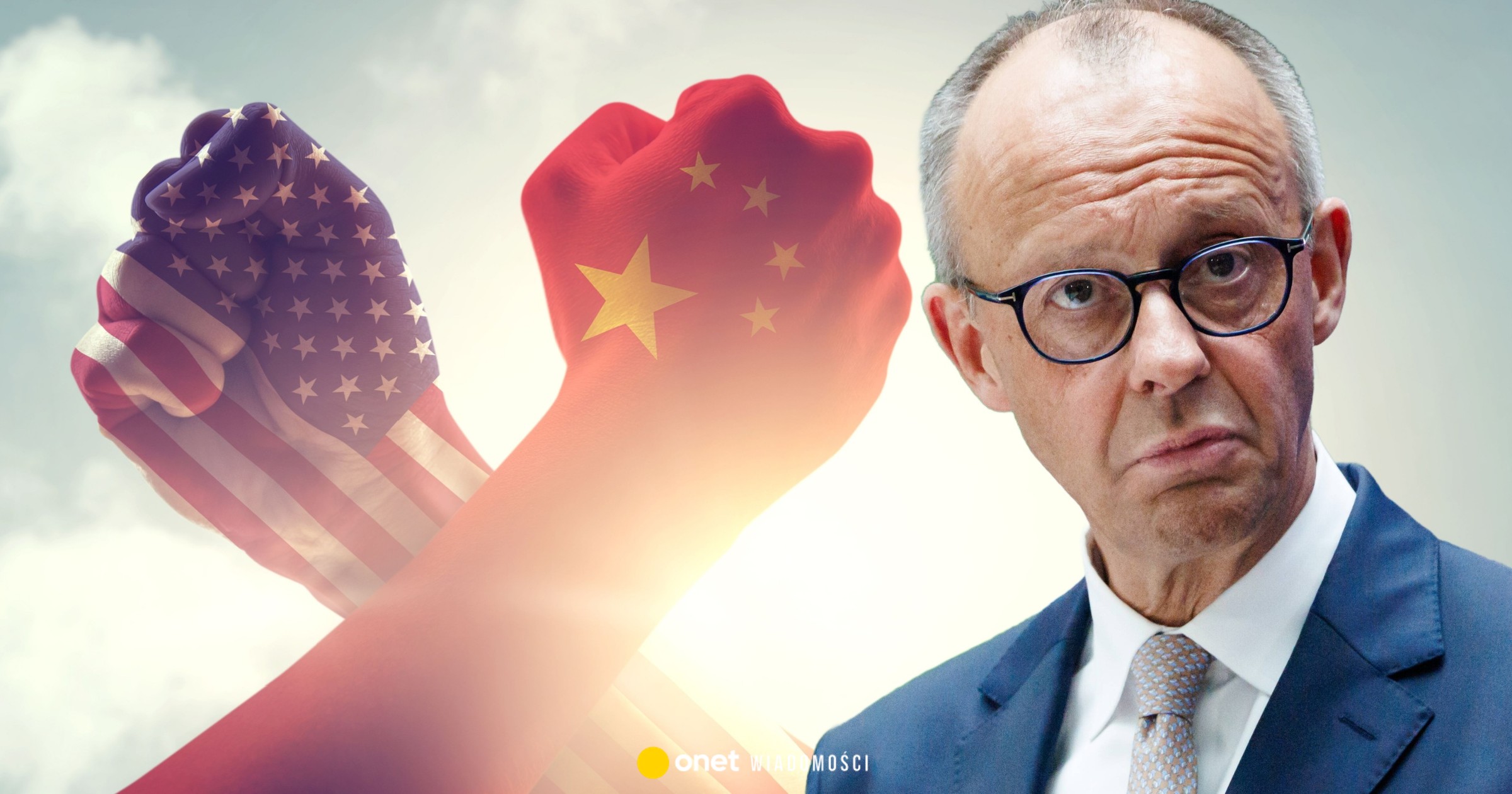
Economists now warn that this development will come at the expense of other countries. We are threatened by a “Chinese shock 2.0”, modeled on the first Chinese shock that led to the collapse of much of the industry in the United States. Now economies such as Germany and South Korea are particularly at risk, according to a report by the consulting company Rhodium Group, prepared on behalf of the American Chamber of Commerce.
“Developed countries face the risk of long-term loss of competitiveness in the processing industry, especially in industries such as automotive, mechanical engineering and chemical industry” – write analysts. As a result, the share in the world market will shift to China's advantage – and by 2030, the amount will be approximately USD 650 billion (approx. PLN 2.35 trillion). This corresponds to approximately 12% of the exports of the G7 countries' processing industry.
China doesn't play fair
The U.S. Chamber of Commerce strongly urges us to take these threats seriously. Already 10 years ago, China openly presented its strategic intentions in its five-year plans. “The warnings reached the highest levels of government and business in the world's most important economies. However, too often the responses were insufficient — due to conflicting priorities, political conditions or the belief that market mechanisms alone are sufficient as a counterweight,” we read in the introduction to the report. “The costs of this delayed response are visible today in the form of loss of competitiveness, weakened industrial potential and strategic weaknesses, the removal of which will require sustained efforts.”
German industry is currently painfully feeling the changes in China that have been announced for years. “It is Germany that is the main victim of both China's growing market share and the decline in Chinese imports. German exports – for years recognized as a measure of the competitiveness of European industry – deteriorating in all key markets” – indicate analysts. In 2025 alone, the German industry lost over 120,000 jobs and this trend continues.
The problem for Western companies is that China does not play fair. Strategic sectors, such as the automotive industry or solar panel manufacturers, the state provides huge subsidies. Huge production surpluses are created and Chinese companies are forced to increase exports as much as possible.
The effect is this flooding world markets with cheap Chinese goodswhose prices Western competitors are unable to compete with. In many industries, the Chinese have already become closer to Western producers in terms of quality.
“The window for effective political action is closing quickly.”
Europe has been reacting very cautiously for a decade. Although many governments have initiated actions such as introducing trade barriers, industrial policies and attempts to reduce risks in supply chains – write the authors of the Rhodium Group report – “these actions are scattered and largely uncoordinated. This risks increasing competition between allies, double investment and shifting trade direction while fundamental imbalances remain intact.
Without better political coordination, China's industrial policy will continue transform global markets, perpetuate dependencies and undermine competitiveness industry in both developed and developing countries, experts warn. “The window for effective political action is closing quickly.”
The factory of the Chinese electric car manufacturer Nio. Illustrative photoPAP/EPA/JESSICA LEE / PAP
However, expectations for the meeting between the two leaders are low. “Any economic agreement that is acceptable to both sides will be too limited to address the root causes of the conflict,” says Jacob Gunter, head of the economic and industrial program at Merics. — This will be a truce. But the trade war is not over between the United States and China. China may announce that it will buy more American soybeans. Trump could sell this to his voters as a success story for farmers. China already acted this way during Trump's first term.
Cautious optimism
Will it be possible to achieve success? German companies in China are currently slightly more optimistic than a year ago. According to a survey by the German Chamber of Commerce in China 61 percent German companies plan to increase investments in the next two years — this is the highest level since 2023. A year earlier it was 53%. In total, 37 percent companies expect the economic situation to improve in the next six months, only 17 percent predicts deterioration.
A year ago, companies were much more pessimistic about the immediate future. However, the fundamental threat to the German economy posed by China's aggressive strategy still remains.