Putin's archenemy has no illusions. Europe must prepare for a long confrontation with the Kremlin. “New Cold War”


Former oil magnate Mikhail Khodorkovsky tells POLITICO why Russia will need decades to overcome the “imperialist-military narrative” that continues to drive Kremlin policy.
Although the war in Ukraine will end someday, tension between Russia and the West will not disappear. Khodorkovsky warns that the Kremlin will think in terms of force and fear for years.
– predicts the former oil tycoon during a closed meeting in Brussels. Khodorkovsky points to one key risk.
Leading Kremlin critic Mikhail Khodorkovsky is warning Europe to prepare for a long-term confrontation with Russia, regardless of how Moscow's war against Ukraine turns out.
According to Khodorkovsky, who has been in exile for years, the only factor that will prevent Russia from further aggression against Europe will be Vladimir Putin's belief that The West has real military power and will not hesitate to use it. Without this, NATO may be at risk.
During the Cold War, which lasted almost half a century, the Soviet Union and Western countries competed for influence while avoiding open conflict in Europe and the risk of nuclear war. Today, many European leaders and NATO representatives warn that Russia is returning to its policy of “destroying the West”, using hybrid warfare tactics to sow chaos and create division.
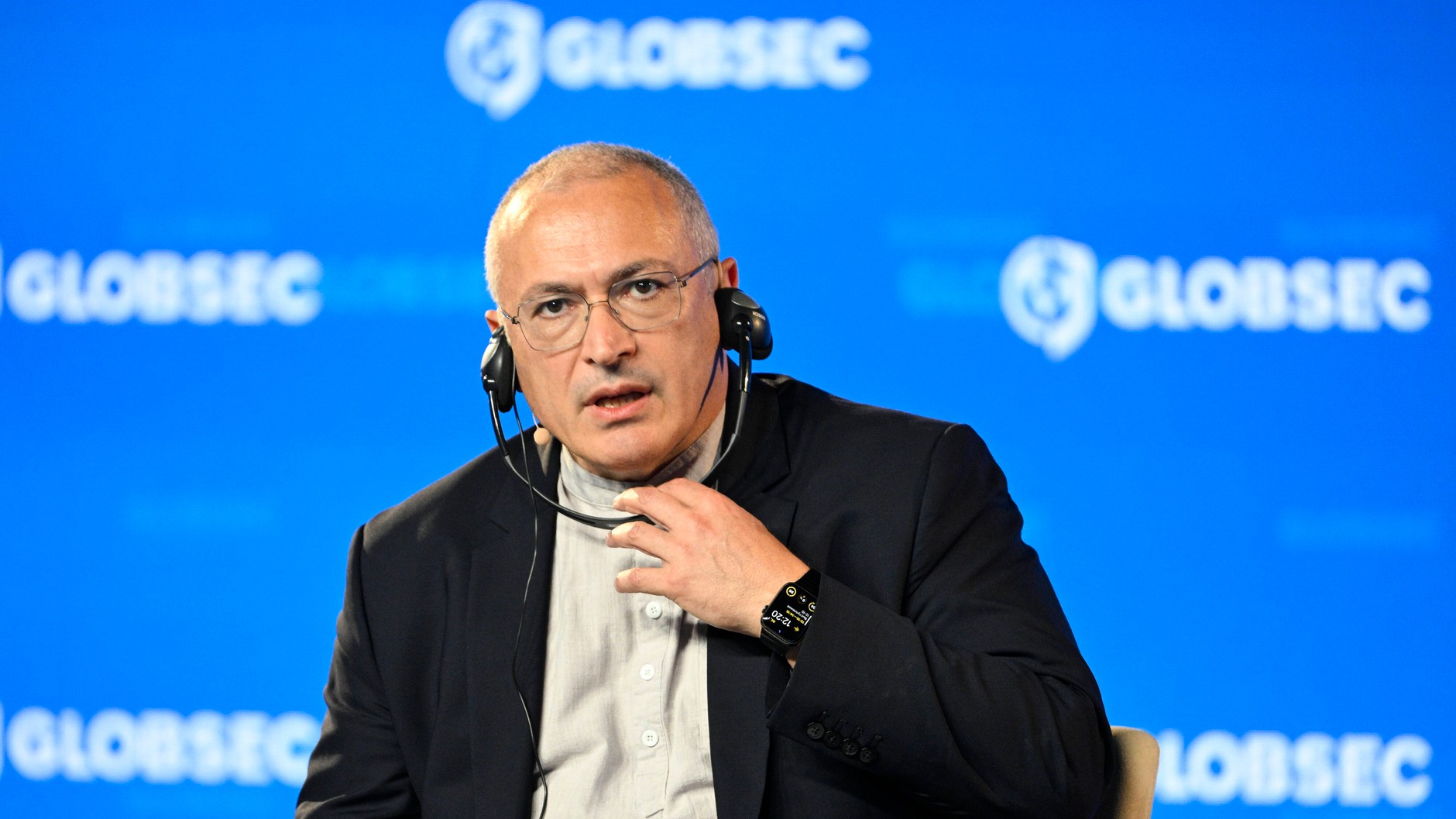
Kremlin oppositionist Mikhail Khodorkovsky speaks during the 19th Globsec security conference. Prague, Czech Republic, September 1, 2024Michal Kamaryt / PAP
Sanctions have no effect, drones have no meaning
Khodorkovsky, who spent 10 years in Russian penal colonies and now lives in London, assessed that Western sanctions are unable to really change the Kremlin's course. — Yes, they put some pressure on the Russian economy, but I wouldn't expect any major effects, he says.
He is similarly skeptical about the ongoing Ukrainian drone offensive targeting Russian refineries.
— The most powerful drone, even a Tomahawk missile, can destroy at most two hectares of land. For comparison, a typical refinery in Siberia takes approx. 1.5 thousand square meters. ha.
The effects of these attacks can be compared to stepping on someone's toes
– explains Khodorkovsky, former owner of the oil giant Yukos and once the richest man in Russia.
In fact, he argues, the only time when Putin could realistically be weakened was the first two years after the invasion of Ukraine began — provided Russia then suffered a clear military defeat.
As Khodorkovsky claims, this chance is already gone.
However, he adds ironically: – We have a certain tradition in Russia. Our dictators usually die in their seventies and eighties.
Putin turned 73 in October.
New accusations and pressure from the Kremlin
Last month, Russian authorities initiated new criminal proceedings against Khodorkovsky, accusing him of leading a “terrorist organization” and planning an armed coup with the help of Ukrainian paramilitary formations.
In its statement, the Federal Security Service (FSB) also named 22 people linked to Khodorkovsky's Russian Anti-War Committee, a group of exiled Russian oppositionists.
Some of them had already been imprisoned in Russia or faced with the threat of political trials. However, the list also included scientists and entrepreneurs.
Khodorkovsky himself spent 10 years in a Siberian penal colony before being pardoned in 2013 in a high-profile case widely seen as the beginning of Putin's campaign to suppress dissent. Although formally the case concerned tax evasion and ended with the expropriation of Yukos, this process was primarily treated as a political warning to Kremlin critics.
The new allegations against Khodorkovsky and his associates emerged just two weeks after the Parliamentary Assembly of the Council of Europe announced its intention to create a “platform for dialogue” with Russian democratic opposition forces.
Khodorkovsky says the Kremlin's strong reaction shows “how much Putin is afraid of even symbolic recognition of democratic forces in Russia”.
Although the people named by the FSB already live abroad and are outside the Kremlin's direct legal reach, several of them have reported problems with European banks. They also fear that “terrorism” charges could make it difficult for them to travel because of the risk of extradition.
The article continues below the video
Russia's future is still marked by its past
Khodorkovsky is convinced that one day he will return to Russia “after Putin.” He warns, however, that it will take decades before his country frees itself from the “imperialist-military narrative” according to which Russia is surrounded by only enemies and has the right to attack its neighbors.
My generation will not live to see the day when Russian society returns to normal
– says.
Asked if the prospect discourages him, Khodorkovsky smiles.
— When you work in heavy industry, you get used to the idea that certain processes you start will only be completed long after your death. It often takes 15 or more years from the discovery of an oil deposit to the start of extraction.
– The future is as real to me as the present and that is what motivates me – he adds.