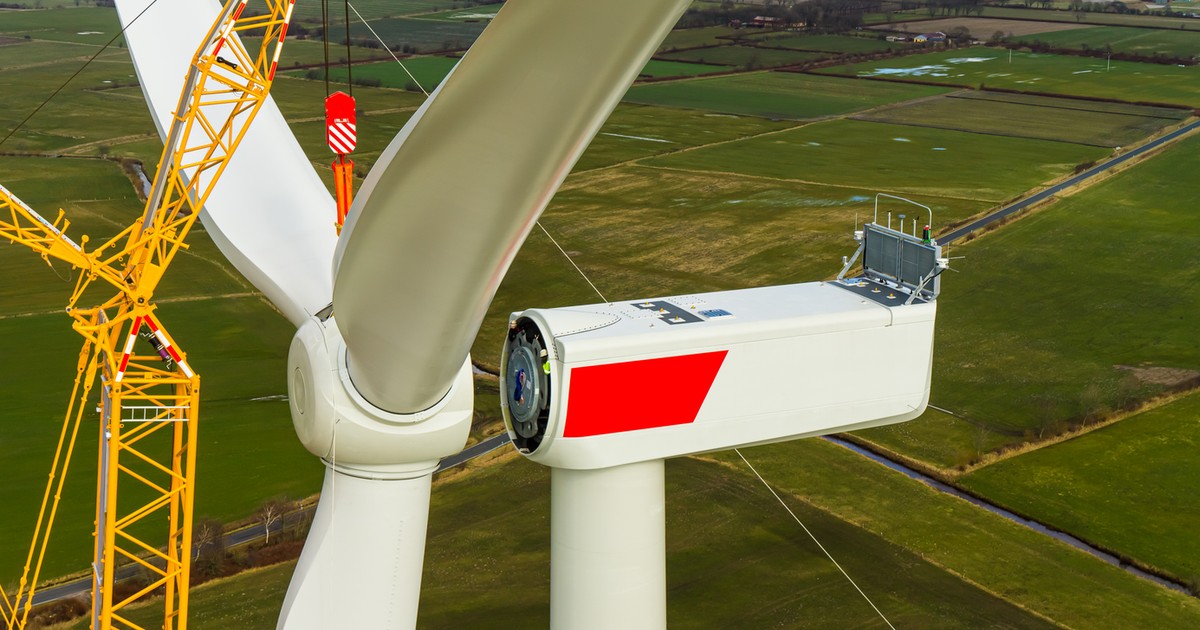
Construction and logistics companies, producers of steel products and composite materials, creators of software and electronic solutions, service technicians – all these entities can come together to build one wind turbine. Building one windmill requires the use of dozens of different products and services and thousands of components provided by hundreds of sub-suppliers. An optimistic vision? According to the authors of the “Polish strategy for the development of the onshore wind farm industry”, which was released today – a description of reality from which, in the today fashionable spirit of local content, the entire Polish economy should benefit.
Read also: “Deadlines are getting longer and customers are paying higher costs.” The president of an energy giant says what is slowing down the transformation [WYWIAD]
Investments in onshore windmills. Over PLN 200 billion
The document describing the desired industrial policy actions for onshore wind energy was prepared by the Polish Wind Energy Association, the Wind Industry Hub Foundation and the consulting company CEE Energy Group. The authors' main thesis is simple – although energy transformation is often perceived only as a cost (the last one is a telling manifestation of this andreferendum initiative of President Karol Nawrocki), with its help you can build new economic added value. Polish companies can simply earn money in new industries, provide attractive jobs, develop specialized competences and make a solid contribution to overall growth. The strategy includes phrases such as “space for the development of domestic industry” or “reindustrialization”; the authors justify them with numbers.
Let's take a look at some of them. The first premise is, of course, the market attractiveness of onshore wind energy, which, according to experts, is today the cheapest source of electricity production, with the cost of energy production lower by over 70%. lower than 15 years ago. There are currently just over 11 GW of wind installed in Poland; as we read in the strategy, increasing these amounts to 16-18 GW by 2020 “means launching investments of tens of billions of zlotys.”
If the industry were provided with better conditions for development (the barriers that “windmill workers” talk about are a topic for a separate article), in the years 2026-2040 the market value would exceed PLN 200 billion, of which approximately PLN 150 billion would go to capital expenditures alone, and the rest to operational expenditures.
“With the assumptions made regarding the cost structure and the level of participation of domestic companies, this means that approximately PLN 110 billion may be consumed by the domestic supply chain.“, we read, and the authors of the document stipulate that the possible entry of Polish enterprises into foreign markets would further increase this amount.
Construction of windmills. An opportunity for the steel industry
An appropriate industrial policy could provide domestic companies with approx. 55-60 percent in the coming years. share in value chains for wind farm investments, and the growth potential in the next decade would reach approximately 75%. The current problem is this Polish companies, although largely present, e.g. in the implementation of projects, construction or servicing of wind farms, do not participate in the most lucrative elements with the greatest potential for further increase in value — primarily the production of components and systems for the “heart” of turbines, i.e. the nacelle with the rotor, including generators, control and monitoring systems. As we have already mentioned, even hundreds of sub-suppliers may be needed to produce one turbine.
Participation of Polish companies in supply chains for onshore wind energy
|
PSEw, Wind Industry Hub, CEE Energy Group / PSEW, Wind Industry Hub, CEE Energy Group
An industry with great potential is the steel industry, especially present in the production of wind towers, where today the share of domestic companies may reach 80%. The authors of the strategy draw attention to the problems of the steel industry and the growing scale of raw material imports. Stable demand from investors in windmills (including offshore windmills) is to be an incentive to “recreate the production capacity (steel – editor's note) in Poland and reduce the trade imbalance in this area.” Huta Częstochowa is to be an encouraging example of providing steel for the construction of wind towers. Other producers of large-size elements are also expected to benefit from the market.
Earthworks, construction of connection infrastructure (including cable production), and installation of the turbines themselves are other areas in the “lower” elements of the value chain, where Polish business already operates today, often exceeding 90%. participation at this stage of investment. The demand for operational services during the operation of the farm is expected to persist for approximately 25-35 years.
For the market to grow (especially in the above-mentioned most advanced areas of production of key technologies for turbines, where Polish companies are least present today), well-thought-out support is needed. Therefore, the authors of the strategy propose the development of a road map based on facilitations for investors in onshore wind farms. “The development of the market – at the level of approximately 1.5-2 GW of new capacity per year – will be an impulse for the establishment of industrial plants and maintaining the competitiveness of domestic suppliers,” we read.
Read also: The state still has no offer for the industry. Hundreds of billions of zlotys are needed
“Effective policy starts with the market”
The recurring word is not accidental – the authors write that “effective industrial policy does not start with subsidies, but with the market”. The state is therefore supposed to support not only the supply of components and services, but also the demand for them. At the same time, financing programs are needed to support investment outlays or build competences. This includes programs of institutions such as the National Fund for Environmental Protection and Water Management or the National Center for Research and Development, but also the use of revenues from the ETS system.
The authors of the strategy propose the creation of public-private partnerships, the creation of a special investment fund (the so-called Polish Green Fund, managed by the Industrial Development Agency), wider use of EU funds and the creation of training and advisory programs. The demand for domestic suppliers can be strengthened through the instruments provided by Brussels in its new pro-industrial regulations – e.g. the use of non-price criteria in public procurement or shortening procedures.
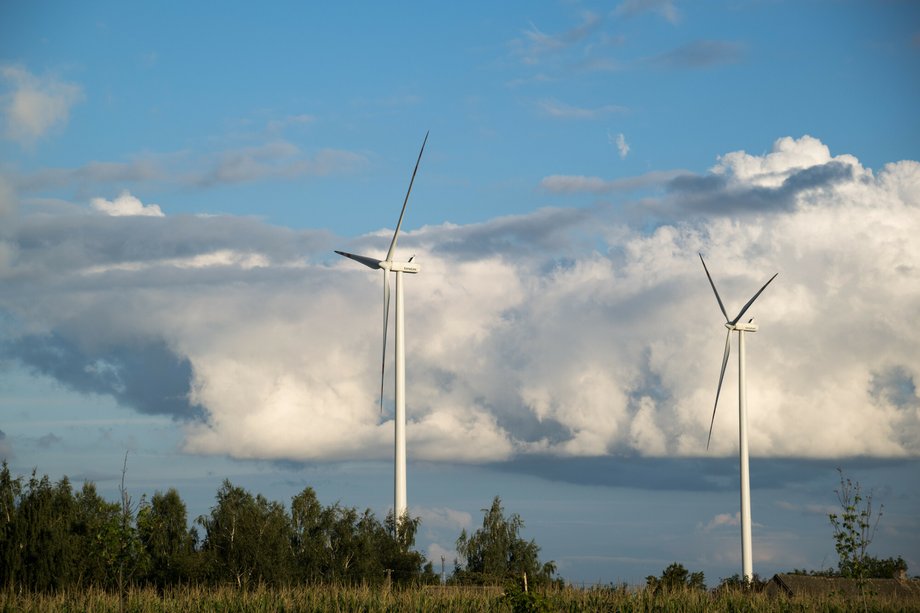
Wind farm
|
Wojciech Strozyk/REPORTER / East News
Gradual building of competences
When organizing their recommendations, experts distinguish four so-called priority programs that the state should address first. The first concerns support for the development of a domestic database of steel components and structures for onshore wind energy, also to reduce dependence on imports. The second program is to focus on strengthening domestic investment contractors and logistics companies that assemble turbines, perform earthworks and connection works.
Read also: There are approximately 10 courses per farm. Transporting windmills is not an easy task [WYWIAD]
In the third program, support is intended for providers of maintenance, operational and diagnostic services, which also includes issues related to automation and digitalization, including the integration of wind farms with energy storage facilities.
Finally, in the fourth program there is a turn to the most profitable and promising segment – domestic technologies for turbines themselves. “The strategy assumes the gradual building of industrial and technological competences in the field of turbine components, such as drive systems, nacelle elements, control systems and advanced electrical and digital solutions,” write the authors of the document, further referring to the greatest potential for increasing added value, but also strengthening Polish technological sovereignty and building specialized engineering or research and development competences.
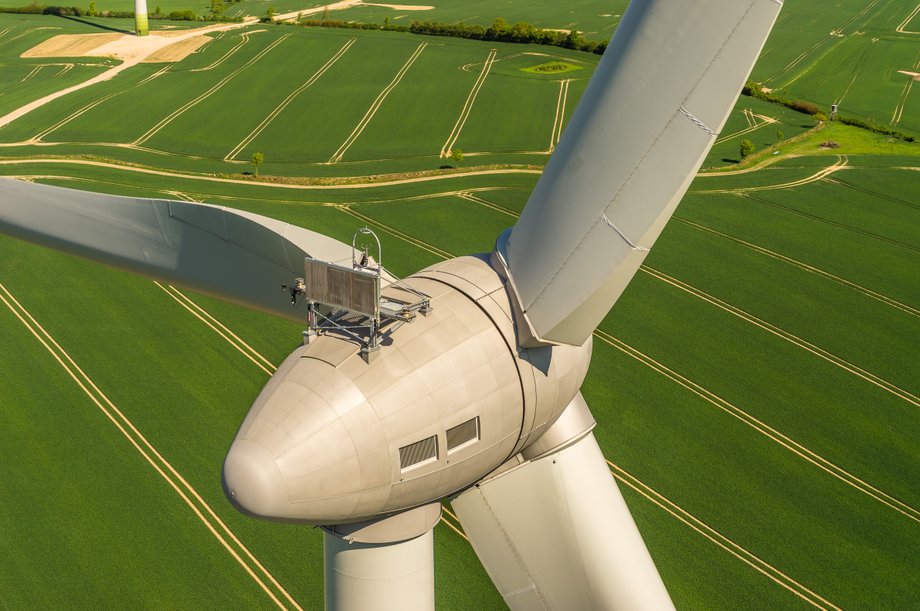
Wind turbine gondola
|
TimSiegert-batcam / Shutterstock
The ready strategy is also divided into the so-called packages, including a program package, including the formal adoption of the document by the government, a market package focused on building demand, a European package related to Poland's place in the broader onshore wind energy market, a financing package and a competence package of education and work. The scope of the document is therefore broad. The industrial awakening at the EU level together with the Polish focus on the idea of local content seem to be conducive to the strategy's goals, but they will not be achieved without ensuring easier conditions for the construction of wind farms. These simplifications, despite the promises of the Ministry of Climate and Environment responsible for the matter, are still not visible.