
Who are the “super-revolutionaries” in Iran, the group trying to sabotage a potential deal with the US

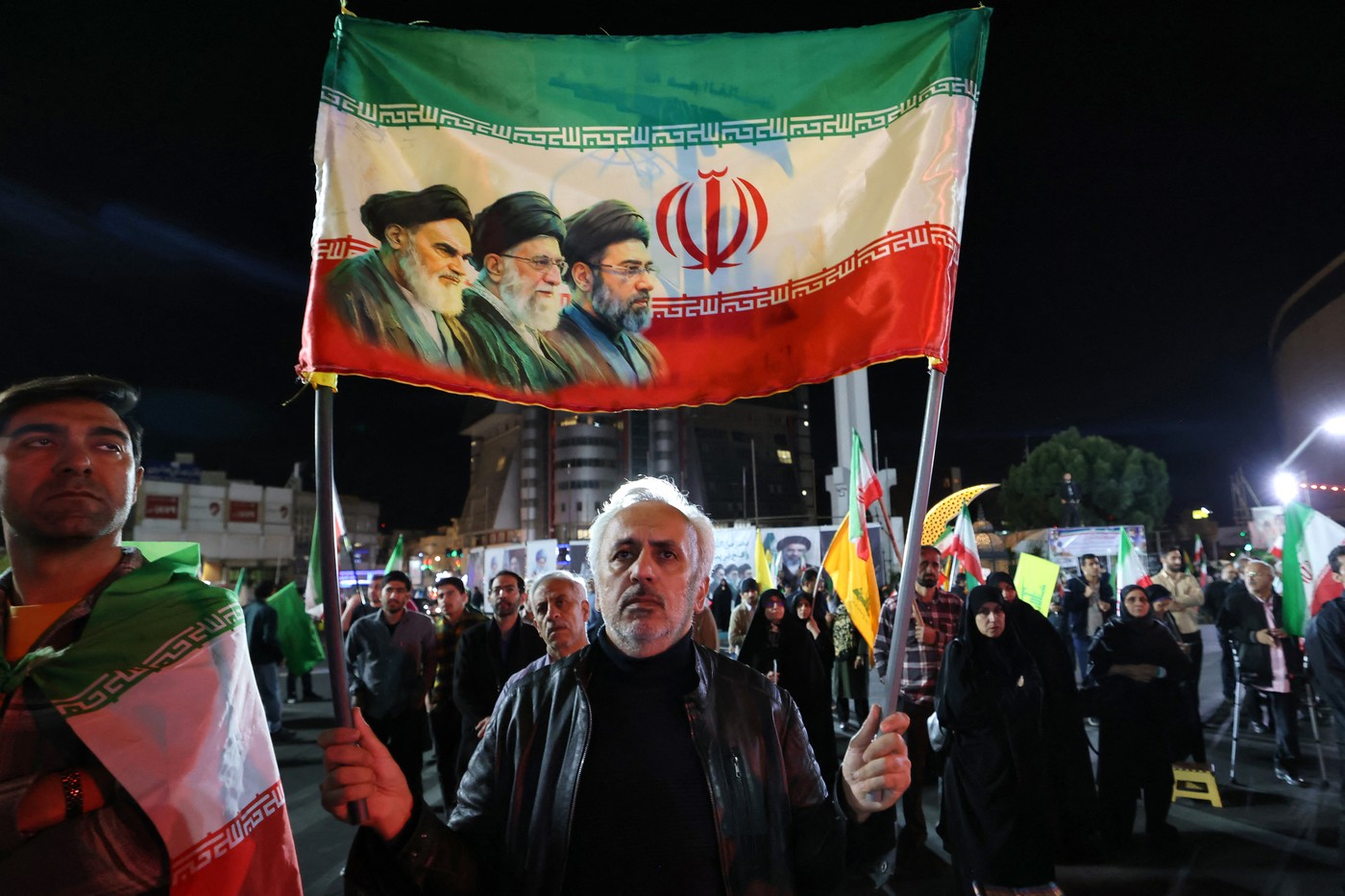
A small but influential ultraconservative group in Iran supports the continuation of the war until the clear defeat of America or until “the end of time”, according to the apocalyptic religious ideology that underlies the faction, writes CNN.com.
The group's position is even tougher than the conservative wing of the regime in Tehran, and attempts so far to temper the representatives have so far failed. Known as “Jebhe-ye Paydari” or “Resistance Front”, the members are described by analysts as “super revolutionaries” who see themselves as guardians of the values of the 1979 revolution that led to the installation of the ayatollahs' regime.
“An Eternal Struggle”
“They see resistance against the United States and Israel as an eternal struggle. They believe in a Shia state that must continue until the end of time, and they are very fanatical when it comes to this religious ideology,” said Hamidreza Azizi of the German Institute for International Affairs and Security.
In the past month, Iranian officials have tried to maintain a balance between negotiations with the Trump administration and appeasement of Iranian political factions from a diverse political landscape, including the Paydari group, which was demonstrated by including some of its representatives in the negotiations that took place in Pakistan.
But the attempt failed, with the negotiators being accused of betraying the Islamic Republic and not respecting the “red lines” drawn by the new Supreme Leader Mojtaba Khamenei, regarding the refusal to negotiate on Iran's nuclear program. Many believe that a deal with the US in itself is capitalization.
“They (US – ed.) realize that killing our leaders, commanders and loved ones costs them nothing. They understand that even after martyring our Imam (Ali Khamenei – ed.), there are still groups here willing to negotiate, shake hands with Witkoff, Vance and Kushner and smile at the killers of our martyred Imam,” said an article published in Raja News, which represents Paydari front.
Such messages are considered extremist even by Iranian conservatives, yet the group is represented in power centers and in the media in Iran, with the support of prominent religious figures.
One of the leaders is Saeed Jalili, a former head of national security and a challenger to President Masoud Pezeshkian in the 2024 elections. His brother, Vahid Jalili, holds a senior position in public broadcaster IRIB.
A leader with “apocalyptic beliefs”
The spiritual leader is Ayatollah Mahdi Mirbaqiri, a highly influential cleric who was considered a possible successor to Ali Khamenei. Hamidreza Azizi claims that Mirbaqiei has “apocalyptic beliefs” and wants to hasten the end of the world by encouraging “large-scale struggle” with the West, in a 2019 interview.
The Paydari Front accused top officials of jeopardizing Iran's security through negotiations with the US and withholding information related to them. MP Mahmoud Nabavian even demanded the removal of Foreign Minister Abbas Araghchi from the negotiating team.
Paydari gained the support of a younger generation of “revolutionary” Iranians who, after the US and Israeli attacks, became even more radical, including through street demonstrations.
The group's extremism has led Iran's other political currents, whether moderate or conservative, to take public positions critical of Jebhe-ye Paydari and attempt to isolate him.
“They are making a lot of noise and are perceived to be helping Israel and the United States in portraying Iran as facing a major internal division. Extremist radicals are being pushed back from every direction and have become increasingly isolated,” believes Mohammad Ali Shabani, editor of Amwaj.media, a website that focuses on Iran and the neighboring region.
Shabani argues that the group rather wants it to reach an agreement with the United States so as to gain more influence in the country's power structure.
“They say if we keep fighting, we can force the US to capitulate and dictate our own terms. Nobody in Iran is against a deal, but it's about how you get the deal and who gets it,” Shabani added.
Iran's war-ravaged economy
The leadership in Tehran must take into account considerations other than the religious ones, invoked by the “super revolutionaries” in Iran. The New York Times notes that Iran's economy is reeling from the vicissitudes of war.
The bombing targeted industrial sites that produce essential raw materials as well as the country's infrastructure. In addition, the US blockade of Iranian ports has prevented much of Iran's oil exports and disrupted imports.
An Iranian official, Gholamhossein Mohammadi, estimated that the war had resulted in the loss of one million jobs and the “direct or indirect” unemployment of two million people, according to the publication Tasnim.
On April 25, an Iranian job search platform reported a record 318,000 CVs submitted in a single day, 50% more than the previous record.
“A strange and overwhelming maelstrom of economic problems has emerged and continues to become more complex,” said Amir Hossein Khaleghi, an economist in Isfahan. Before the war began, Iran “was already in a very bad economic situation, facing a series of mega-crises,” Khaleghi continued.
Premises for new negotiations with the Americans
Caught between ultra-conservatives and a precarious economic situation, Iran's leadership sent through Pakistan on Sunday its response to the latest US proposal aimed at ending the Middle East war, Tehran's state media said.
Sources from both camps told Reuters that the latest peace efforts were aimed at a temporary memorandum of understanding aimed at ending the war and allowing traffic to resume in the Strait of Hormuz, while talks for a more comprehensive agreement would continue, one that would address, among other issues, lingering disputes such as Iran's nuclear program.
Iran's response through Pakistan on Sunday to the US proposal for a durable solution to the Middle East conflict focuses on “ceasing the war and maritime security”, the Iranian news agency ISNA reported.
“The central point of Iran's response to the American proposal concerns the “ceasing of the war and maritime security” in the Persian Gulf and the Strait of Hormuz,” ISNA wrote on its Telegram account, shortly after the official IRNA agency announced that Iran had sent this response expected by Washington since Friday, without giving further details.
The head of US diplomacy, Marco Rubio, says that he expects a response from Iran in the course of these days regarding “serious” negotiations for a peace agreement.
“We are waiting for a response from them. We will see what this response will show. We hope that it will be something that will allow us to enter into a serious negotiation process,” said the US Secretary of State.


