Ceausescu, Decebal and Dracula, seen by the foreigners who visit Romania: “I felt here the Dacians who sang and danced”


Former communist president Nicolae Ceausescu, King Dac Decebal and medieval voivode Vlad Țepeș (Dracula) are in the top of the most popular historical characters known by foreign tourists. The monuments related to them are also admired and controversial in Romania.
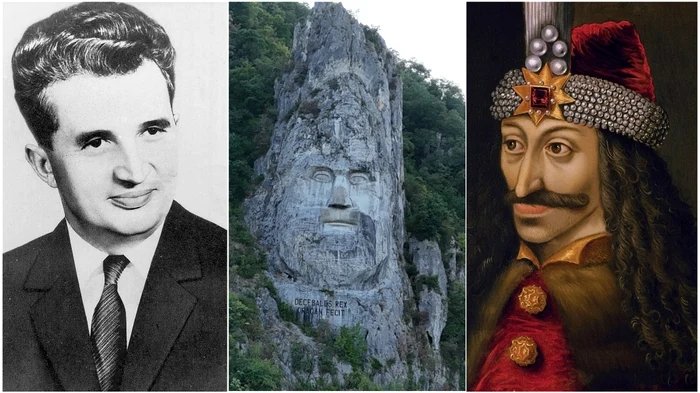
Nicolae Ceausescu, Decebalși Vlad Țepeș. Photo: Wikipedia, Truth
For many foreign tourists, the emblematic monument of the inheritance of the Ceausescu regime is the “People's House” in Bucharest, the Mega -construction in the last years of life of Nicolae Ceausescu (1918 – 1989) and completed in the 1990s.
The People's House, Ceausescu's controversial “inheritance”
In the 1980s, almost 100,000 people worked on the construction of the building, initially called the Republic House and the People's House, and at present the Parliament Palace, as well as on the boulevard in front of it.
The architectural ensemble, associated with the megalomanic plans of the former communist president, meant huge expenses and sacrifices for Romanians, but also the disappearance of historical neighborhoods in the Capital, on an area of 4.5 kilometers long and two kilometers wide.
“20 churches were destroyed, eight were translated, 10,000 homes were demolished, and over 57,000 families were evacuated. They were demolished: Văcărești Monastery, the sacred hill for Mihai Voda, Brâncovenesc Hospital, the first medical-legal institute in the world, the Senar, The Central Military Museum ”, inform the International Conference Center – Parliament Palace.
The demolitions in Bucharest included an area equal to that of Venice in Italy, and over 40,000 people were forced to move to the houses on the outskirts of the capital, some leaving their homes in which several generations had lived, estimated the architect Gheorghe Leahu in the Annals Sighet.
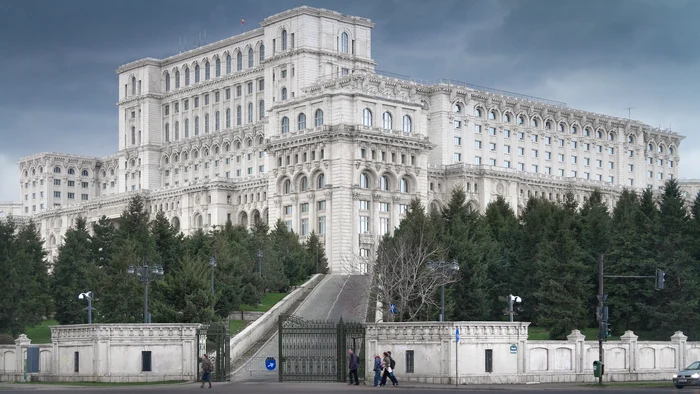
People's House. Source: Parliament Palace. Facebook
Completed in 1997, the “People's House” would have cost Romania about four billion dollars and was built in the years when the Romanians faced some of the most serious economic crises, which contributed, in 1989, to the brutal collapse of the Ceausescu regime.
“The building has an area of 365,000 square meters and occupies in the Book of Records the 1st place in the world in terms of administrative buildings (for civil use), respectively the 3rd place in the world in terms of volume; it is the hardest and most expensive in the world. Other dimensions of the building: length – 270 meters, width – 245 meters – 84 meters – built on the ground – 73,615 square meters ”shows the International Conference Center – the Parliament Palace.
Strangers, intrigued and fascinated by the people's house
Many foreign tourists refer to the People's House as a monument to be unraveled in Bucharest and declare themselves by its dimensions, but do not hesitate to associate it with the darkest years of the Ceausescu regime. A Western visitor wrote on the Reddit platform that the history of the Parliament Palace is as bleak as possible, reminiscent of the demolition of a part of the old city and the forced mutations of the locals.
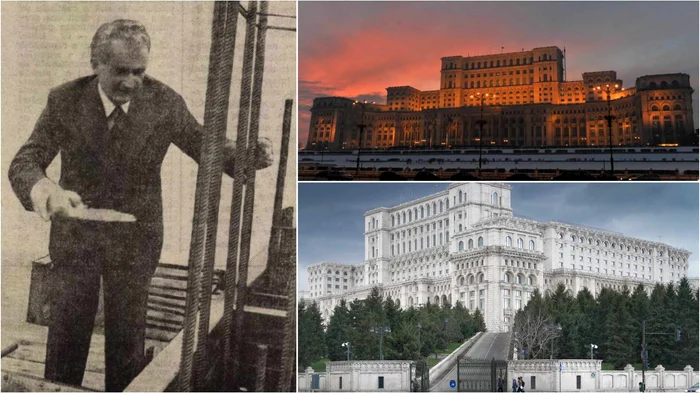
The People's House and Ceausescu. Source: Scânteia / Pixabay.
“Now it has become, in the eyes of many, a symbol of greed and inequality. It is the supreme evil when it comes to a building.”he concludes.
A Hungarian tourist tells, on the same platform, that his parents used to travel to Romania during the Ceausescu regime, and the review of the People's House reminded him of the problems of Romanians in communism.
“The mother spoke Romanian, so she was often asked how she had managed to escape from the country. Few people had cars, but even so you had to stand in line with the days, people were actually sleeping in cars to catch gas! It was shortage of anything. The last time they traveled in Romania, in 1986, in 1986, in 1986, He was coming to believe the eyes, Romania had made fantastic progress in just twenty -something ”he remembered.
Another foreign tourist tells that visiting the People's House left a deep impression.
“I took a tour of the building when I visited Romania a few years ago. It is evil on the outside, and its history is definitely evil. But what impressed me most inside was how … Fada felt, despite the grandeur. he reports.
It should be demolished, someone else concludes. “And in its place to build something beautiful (and democratic as a spirit). It is an ugly scar, left by a very bad dictator,” adds the tourist.
Dracula's castles, magnet for tourists
Vlad Țepeș (1431 – 1476) registered his name on the list of the most sad medieval rulers. For foreigners visiting Romania, the mountain voivode was most often associated with “Dracula”, a fictional character who inspired numerous legends and horror stories.
Some historians showed that Vlad Țepeș inherited the name Dracula from his father, Vlad the second, the devil, a member of the Dragon Order, and in his youth he was part of this chivalric order. The legends of the era, spread after his death, have outlined a dark personality. He was called the “son of the devil” for his sadism and “Țepeș” for the punishment of firing – inspired by Turkish and Persian practices – which he applied without hesitation to his enemies, harmfuls and prisoners.
At the end of the 19th century, the romantic story of the medieval tyrant would be known worldwide through the novel Dracula, published in London by the Irish writer Bram Stoker (1847 – 1912). The author had never visited Transylvania, the place where the action of his novel took place, and had not seen the castles and places where he lived, fought and died the real Dracula. However, he found, in the name of the medieval voivode, the ideal title for his novel.
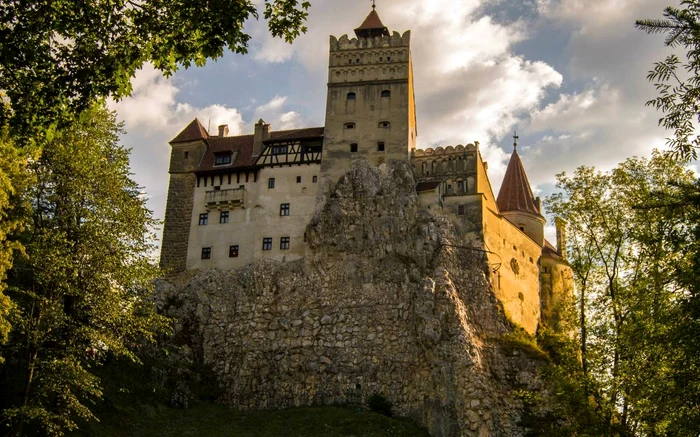
Bran Castle. Photo: Lucian Ignat
Several places in Romania are sought by foreign tourists “in the footsteps of Dracula”, which became almost synonymous with the historical character Vlad Țepeș. In the top of the fans of Dracula is the Bran Castle, built in the fourteenth century, near Brasov. Some authors considered him an inspiration for the description of the castle in the novel Dracula, but his connection with the historical character Vlad Țepeș is questioned by historians.
“It's a pretty beautiful castle even without all that story with Dracula related to it,” concludes one of the foreign tourists who have recently visited him.
The medieval city of Sighișoara, Corvin Castle and Poienari Fortress are also sought by tourists interested in “Dracula's legacy”. About the Corvin Castle is said to have been the place where Vlad Țepeș was imprisoned, and some Western journalists called him “Dracula's true castle”.
“Khrushchev arrived in Dracula's land and vampires,” The Associated Press journalists reported in 1962, relating about the visit of the former head of state of the USSR to Hunedoara.
The city of Sighișoara claimed Dracula as a tourist landmark, being the place where the mountain voivode would have been born. But the Poienari and Târgoviște cities are mentioned by medieval historians and chroniclers in the ruler's biography.
Decebal's face, the “picture” by which foreigners meet Dacia
Decebal's face, the largest sculpture ever made in Romania, was carved in the 90s and 2000s above the Danube boilers, on a rock on the left bank of the river, near Orșova (Mehedinți county).
Although the works have not been completed, the bas -relief that portrays the king if it has reached impressive dimensions. The figure is over 40 meters high, 25 meters wide, four -meter eyes, a seven -meter -long nose. The nose of the king had to be adjusted, because the rock in which the present risks was preached. It was used dynamite for its remodeling, and the adjustments were made using iron and cement reinforcement.
As in the case of the People's House, many foreigners are amazed by the dimensions of the sculpture and fascinated by the character they depict.
“The statue is undoubtedly huge, the largest of its kind, so far, in Europe. It has lasted about 10 years to carve the face of the last king in the rock of the mountain that watches over the Danube. I can only recommend that, if you arrive in the area, to make a stop to see this impressive statue.”notes a foreign tourist, in a tripadvisor review.
Foreigners are looking for Decebal at Sarmizeegtusa Regia
For other foreigners, the ruins of the ancient city of Sarmizegetusa Regia (Hunedoara County) are the place where Decebal is looking for. Here, some of them reported, lived out of the ordinary experiences.
“This is the ancient Temple of Dacia. The people if he occupied this incredible city in the mountains until the Romans arrived and completely destroyed it, removing from history the images and stories about the Dacian culture and religion. To the south, as well as with the Thracians. The unspoken love stories, the children following each other among the trees and, finally, the words of King Decebalus to his people: we are warriors.reported the New Zealand actor Manu Bennett, after visiting Sarmizegetusa Regia and danced, ritually, in the middle of the great circular sanctuary.