A personal diary kept for years by Greg Brockman, president and co-founder of OpenAI, has become one of the most unexpected pieces of evidence in Elon Musk's lawsuit against the company he helped found.
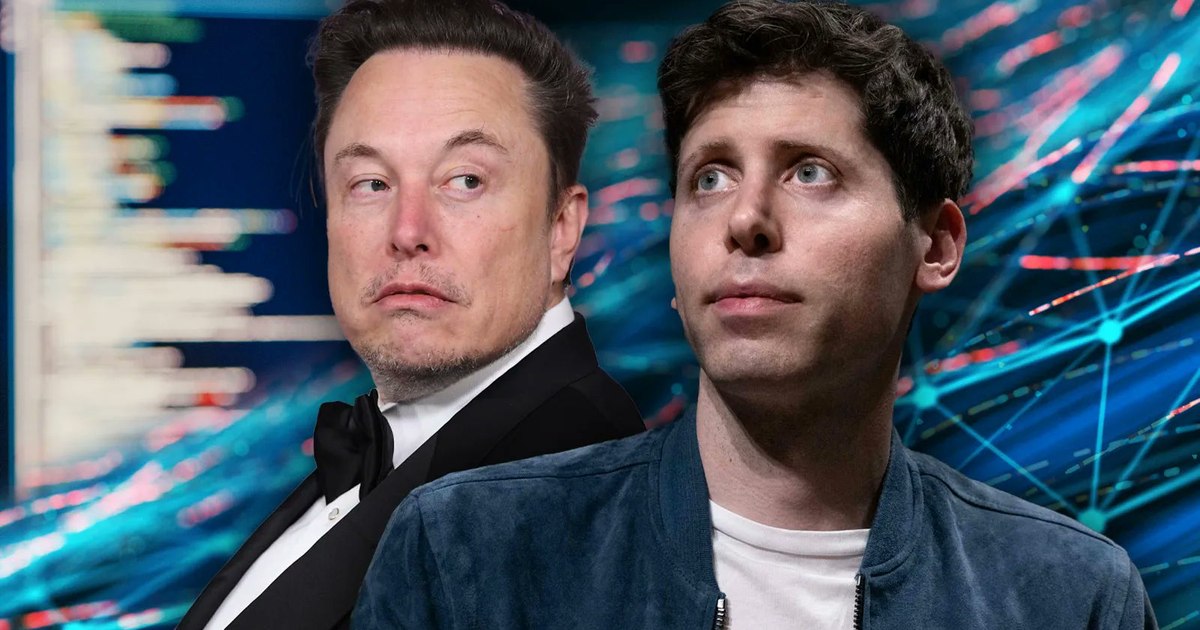
Elon Musk and Sam Altman, in front of the judge/FOTO:X
Excerpts from Brockman's private notes were read in court the other day, in a trial closely watched by Silicon Valley and the global artificial intelligence industry, writes The Wall Street Journal.
The case, which pits Elon Musk against OpenAI's management, has revealed emails, messages, internal memos and documents about the company's years defining its direction. But Brockman's diary has drawn attention in a special way, offering a personal and vulnerable perspective on one of the most important rivalries in technology.
A private document turned into evidence in court
In any other context, reading someone's diary would be considered a serious invasion of privacy. In a US civil suit, however, such documents can be obtained through a legal process called “discovery”.
The diary's existence was not publicly known until January, when Musk's lawyers revealed they had access to hundreds of pages of Brockman's personal notes and had questioned him about certain passages.
OpenAI argued that the excerpts presented were taken out of context, but the judge referenced them in the ruling that allowed the trial to continue.
As the hearings progressed, the diary became one of the most discussed components of the file.
The stakes of the conflict between Musk and OpenAI
Elon Musk accuses Greg Brockman and Sam Altman of turning OpenAI from a nonprofit to a profit-driven company, even though, he claims, the project was originally funded as a public benefit initiative.
Musk is calling for the ouster of current management and challenging the restructuring of the company, in a process that could have major implications for the artificial intelligence industry.
OpenAI denies the allegations and says that Musk supported the company's plans before he left the organization, and that the lawsuit is based on competition between OpenAI and its own AI projects.
“Very painful”
In his diary, Brockman describes years marked by uncertainty, ambition and internal conflict. He characterized his style as “chain of thought” — a phrase also used for the way AI models develop their reasoning.
In court, Brockman said the diary was intended solely for himself.
“Who did you write the diary for?“, OpenAI's lawyer asked him.
“For me”, he replied.
Musk's lawyers, however, repeatedly used the term “diary” (“intimate diary”), in an attempt to emphasize the personal nature of the document.
Brockman explained that she has been keeping a journal since 2010, when she was trying to decide what to study in college. He later dropped out, became one of Stripe's first employees, and co-founded OpenAI with Musk and Altman.
“It's something I use to organize my thoughts and make important decisions,” he stated.
A rare practice in the tech world
In Silicon Valley, the idea of a tech executive documenting his personal thoughts in detail has caused surprise and irony.
Tech commentators and investors have joked that Brockman has “maxed out” his diary, suggesting that such notes can quickly become compromising material in a lawsuit.
However, historians and business experts say the practice is not new. Andy Grove, the former CEO of Intel, also kept journals to clarify his ideas and strategies.
In other famous cases, including the trial of Sam Bankman-Fried, prosecutors used personal notes and private lists to reconstruct internal decisions and intentions.
Between technology and human vulnerability
Perhaps the most remarkable aspect of Brockman's diary is the deeply human tone of his entries.
In an industry dominated by algorithms, financial valuations and technological competition, his notes describe doubts, anxieties and personal reflections.
At the end of the hearing, Brockman was asked how he felt about seeing his diary read publicly.
“It's very painful”he said.
But he added that there was nothing in those pages to be ashamed of. Brockman also stated that he stopped writing about OpenAI in his journal in 2023. He did not explain why.