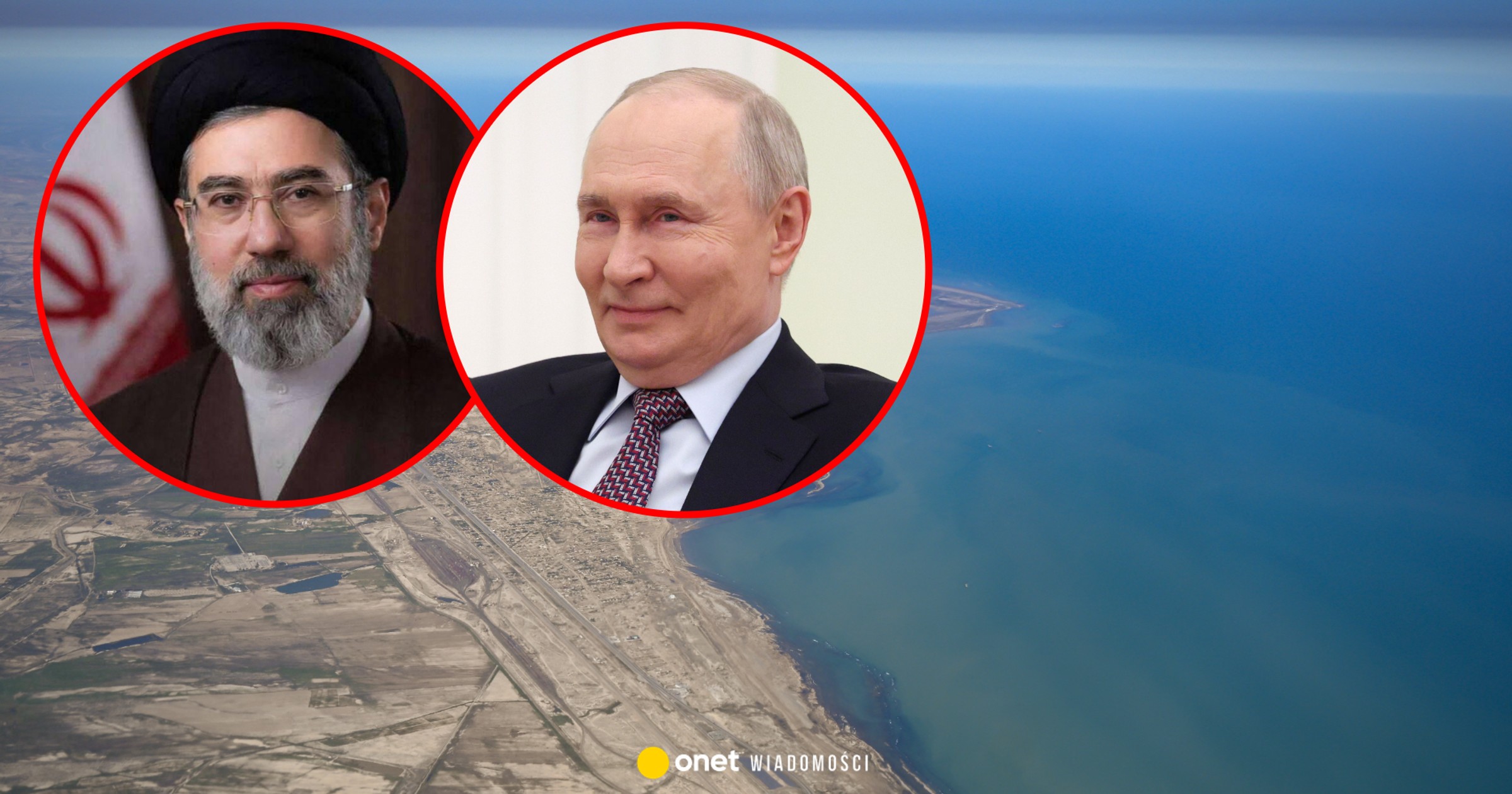
Recent reporting by the New York Times indicates that Moscow is using the waterway to transport drone parts and food supplies to Tehran, helping Iran maintain combat readiness despite the US blockade of the Strait of Hormuz.
Unlike the Persian Gulf in the Middle East, the Caspian Sea remains a diplomatic and military “dead zone” where the United States is unable to intercept shadow fleet ships, which often disable tracking signals.
According to an investigation conducted by New York daily journalists, this one the waterway is used for both overt and covert transportationallowing Iran to remain a formidable adversary in the Middle East despite overwhelming U.S. naval superiority in traditional sea lanes.
Corridor for drone technology and food security
US officials, speaking anonymously, report that Russia is using the Caspian Sea to supply Iran with key components for unmanned aerial vehicles (UAVs).
This exchange is part of the mutual defense partnership: While Iran initially supplied Russia with Shahid-class drones for use in the war in Ukraine, Moscow is now sharing its own developments and production improvements with Tehran to help the Islamic regime replenish its regional arsenal.
Four Iranian ports on the Caspian Sea are operating 24/7 to handle a surge in imports of wheat, corn, animal feed and sunflower oil.
Tehran is actively redirecting food imports that previously passed through the now-blocked Strait of Hormuz to avoid Western interference.
The Caspian Sea: the perfect route to bypass sanctions
Analysts describe the Caspian Sea (actually a saltwater lake and the largest in the world in terms of surface area) as an “ideal place” for military transport and bypassing sanctions. Because it borders only five countries (Russia, Iran, Azerbaijan, Kazakhstan and Turkmenistan), it constitutes a diplomatic “dead zone” for Washington.
Experts have observed a sharp increase in the number of shadow fleet ships in the region, which regularly turn off their responders to hide from radar.
Unlike the Persian Gulf or the Mediterranean Sea, the United States has no legal or physical ability or presence in the Caspian Sea that would allow it to board or inspect suspicious vessels.
The article continues below the video
Military cooperation extending along this route is becoming increasingly advanced. Intelligence reports suggest that Russia was considering providing Iran with advanced short-range drones equipped with fiber-optic controls that are highly resistant to electronic interference.
Additionally, Ukrainian President Volodymyr Zelensky noted that Russia shares satellite intelligence data with Tehran on Israeli civilian infrastructure, noting similarities to Moscow's attacks on the Ukrainian energy grid. “All the experience gained by Russia during the war with Ukraine is being transferred to Iran,” Zelensky said.
Although the Caspian route is not yet able to match the huge volumes of oil exports previously handled by the Strait of Hormuz, its role as a secure military and logistics center ensures that the Russia-Iran axis remains resistant to Western economic and military pressure.
I’m Ashley Davis as an editor, I’m committed to upholding the highest standards of integrity and accuracy in every piece we publish. My work is driven by curiosity, a passion for truth, and a belief that journalism plays a crucial role in shaping public discourse. I strive to tell stories that not only inform but also inspire action and conversation.