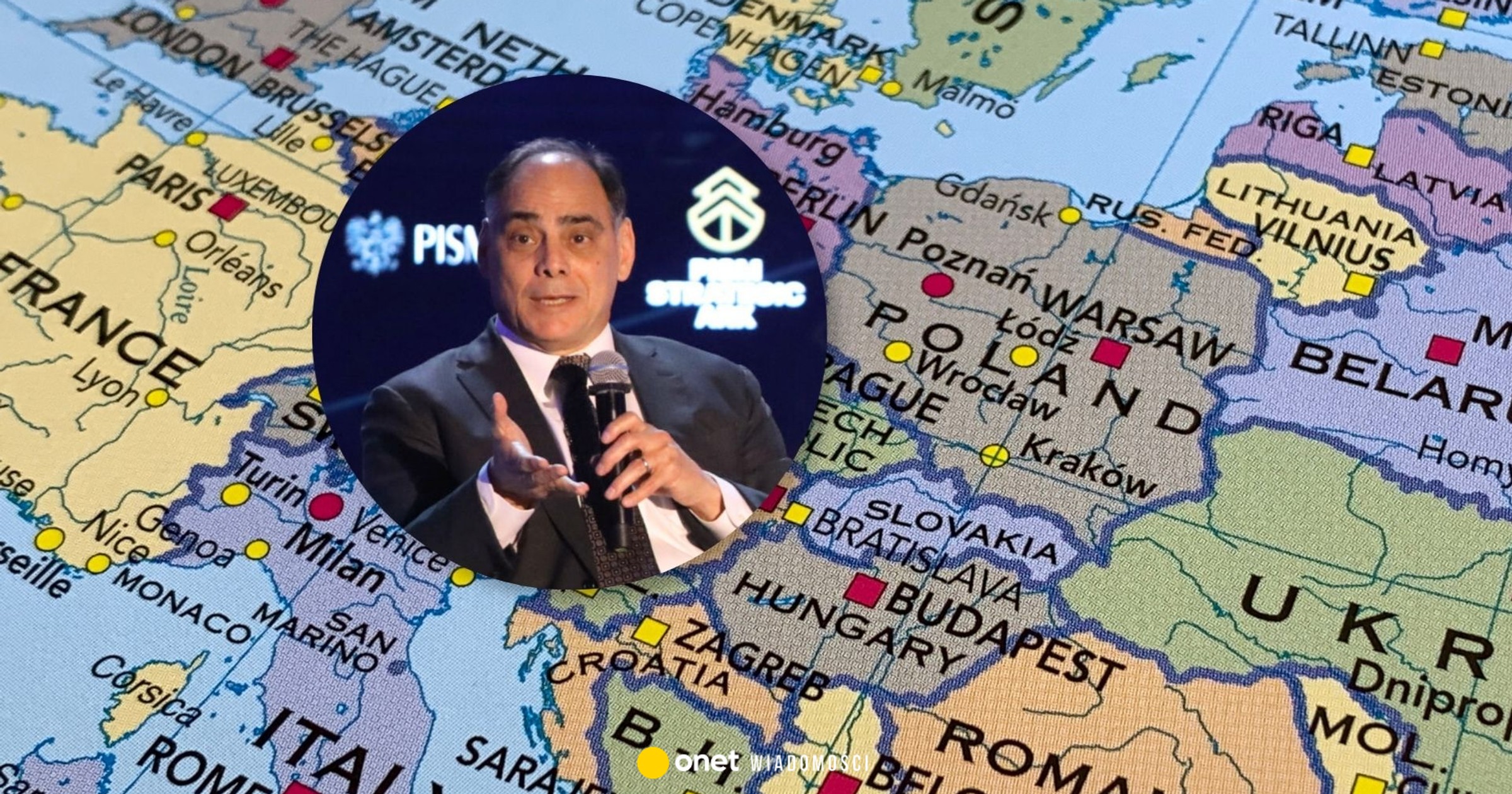
James Carafano – a 25-year veteran of the US Army, served, among others, in Europe and South Korea. Expert in the field of security and foreign policy of the United States. Former vice president for foreign policy research at the Heritage Foundation think tank, which advises Donald Trump
The Bucharest Nine are emerging as a key player in the strategic shift Europe is undergoing. If the Nordic countries join this group, it will unite all NATO members on the eastern flank, stretching from the Arctic Circle to the Black Sea.
Much of the success of this initiative will depend on Poland's leadership and the United States' interest in pursuing new partnership opportunities.
The Bucharest Nine is a relatively young and evolving international initiative that was established in 2015. This initiative was a response to the Russian invasion of Ukraine in 2014. The group includes: Bulgaria, the Czech Republic, Estonia, Hungary, Latvia, Lithuania, Poland, Romania and Slovakia.
In 2023, countries of this format, together with US President Joe Biden and NATO Secretary General Jens Stoltenberg, signed a joint declaration condemning Russia's invasion of Ukraine in 2022. In 2025, the Bucharest Nine supported increasing national defense spending to 5%.
Persistent challenges
As with other regional coalitions, ensuring long-term political coherence remains the main challenge of this format. Take, for example, the Visegrad Group, which includes the Czech Republic, Hungary, Poland and Slovakia. This coalition is relatively small and demonstrates strong cohesion in terms of national interests, geography, traditions, history and cultural ties.
However, in recent years, the political agendas of these four governments have never converged enough to build the trust necessary to take unified and decisive geopolitical action. The Bucharest Nine face even greater obstacles because they are a larger and more diverse group.
The group's size and power – it includes some of the most powerful armies in Europe – give it considerable geopolitical influence. However, this potential can only be realized if the governments participating in the format manage to create a bold and coherent agenda.
Such an agreement could significantly strengthen NATO, presenting a united front to secure the alliance's eastern flank and possibly setting the agenda for the next NATO summit in Ankara in July. Moreover, it is possible to create a common voting bloc that could wield considerable power in the European Parliament.
Warsaw's leadership ambitions
Poland plays a key role in shaping the agenda and the future of the Bucharest Nine format, given its status as one of Europe's fastest growing economies and one of its strongest militaries.
One of the main obstacles to making the Bucharest Nine a significant platform for Poland is not only the difficulty of creating a unified and influential program, but also the fact that the group is relatively unknown and not yet taken seriously.
The article continues below the video
Poland must also define its role in the Three Seas Initiative, a multinational effort to invest in infrastructure, energy and digital connectivity that includes many of the same member states as the Bucharest Nine.
The priorities of both formats could complement each other, especially if their combined efforts lead to projects increasing energy security and developing dual-use infrastructure. Such projects could contribute to economic growth while strengthening NATO's logistical forward defense framework.
However, it should not be assumed that Poland will become the natural leader of the region. The expansion of the country's military potential is not as fast as expected, and the president and prime minister are debating the future financing of defense procurement. There is also a political war going on in Poland between the president and the government, which may influence key decisions.
Washington's strategic calculations
There is no doubt that the United States would welcome a coalition of conservative, center-right European countries that are focused on strengthening their conventional deterrent forces.
The American administration generally takes a pragmatic approach to Europe, showing readiness to cooperate with anyone who is open to cooperation with Washington. For this reason, however, it is unlikely that the United States would favor the Bucharest Nine over other groups.
Instead, Washington will cooperate with those who can support American interests. The United States would be ready to engage meaningfully in this initiative — provided it proves to be more than just a platform for issuing declarations.
The prospects of expanding the Bucharest Nine are real. However, even if the new format is introduced before the NATO summit, it is unlikely to have a significant impact on discussions within NATO or in Brussels in the near future.
The Bucharest Nine risks remaining merely a useful discussion forum rather than a geopolitical player. This may result in NATO's actions on the eastern flank being less coordinated, regional economic and infrastructure initiatives lacking resources, and the common voice of the people of Eastern and Northern Europe having less influence on NATO summits and votes in the European Parliament. Washington will likely continue to operate on a bilateral basis or through established channels, rather than investing political capital in a relatively untested coalition.
However, a more likely scenario is that the importance of this format will increase in the medium term. Once an agreement is reached on the Russian invasion of Ukraine, this group may find itself in a position to assume a significant role as a European player in the near future. The next 18 months will likely be decisive in shaping the next iteration of this format.
I’m Ashley Davis as an editor, I’m committed to upholding the highest standards of integrity and accuracy in every piece we publish. My work is driven by curiosity, a passion for truth, and a belief that journalism plays a crucial role in shaping public discourse. I strive to tell stories that not only inform but also inspire action and conversation.