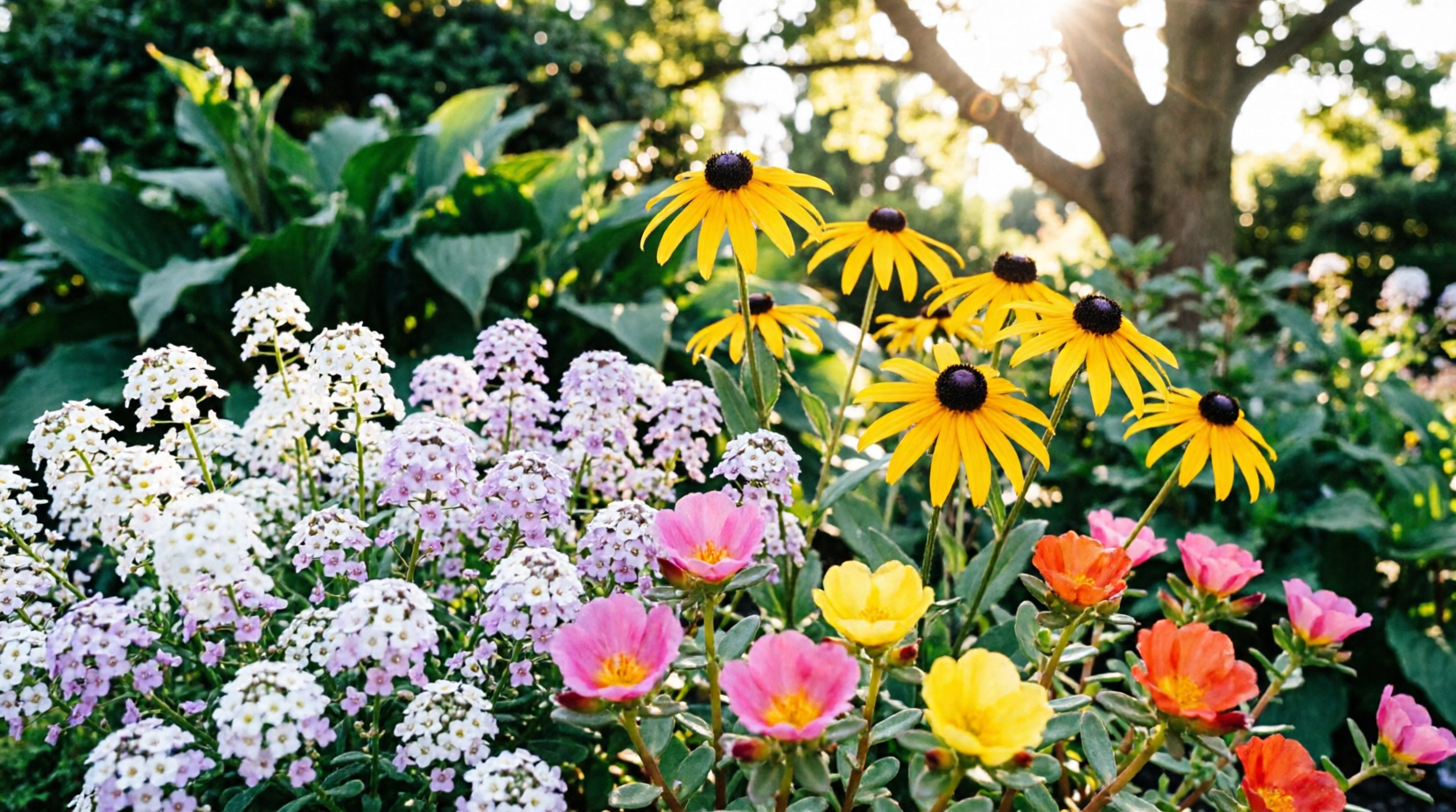
The dream of every summer resident is a flower garden that grows on its own, without seedlings and unnecessary fuss. The good news is that such plants exist, and May is the ideal time to introduce them to your yard.
Alyssum: a fragrant cloud for the lazy
Imagine a low white or lilac cloud with a honey smell. This is Alyssum (aka Lobularia). It blooms twice a summer if the wilted branches are cut off after the first wave.
Important advice for May: do not touch some of the old inflorescences at all – they will produce seeds that will germinate themselves next year. This way the flowerbed will be updated without your participation.
Iberis: spring pollen without the hassle
This low bush with pink, lilac or white flower caps is a real lifesaver. In May it can be sown directly into the ground, even if it is still cool at night. Sow once – and that’s it, you can forget about propagation, since Iberis flies away on its own like fluff. Just don’t confuse it with a weed when you weed the beds in June.
Calendula: first aid kit in the flowerbed and garden guard
Orange “daisies” of calendula are not afraid of frost, so they can be sown in open ground already in the first ten days of May. This is a medicinal flower: gargle with calendula tincture, and scratches are treated with ointment. In addition, aphids and the Colorado potato beetle do not like the smell of calendula. Plant it along the edge of the beds – and your pest neighbors will become uncomfortable.
Purslane: a sunny carpet that spreads itself
Purslane is called the “flower of the sun” for a reason. If you have a dry, hot place where other flowers don't want to go, plant purslane there. In May, its seeds are thrown directly into the ground, and in July it is already spread out with a bright carpet of yellow, red and pink stars.
An important condition: no shade – even half a day in the shade, and there will be no carpet. There is almost no need to water, but you will have to weed in the first month: purslane seedlings look like small Christmas trees and can easily be confused with grass.
Rudbeckia: tall candles until frost
Do you want orange-yellow “daisies” on meter-long stems to blaze in an empty plot of land in the fall? Plant rudbeckia. In May, its seeds are thrown directly into the ground, watered a couple of times – and that’s it. The first summer it may not bloom or produce a couple of flowers, but from the second year the real show will begin.