Google follows the blow. Even more AI, chatbots and … language translations

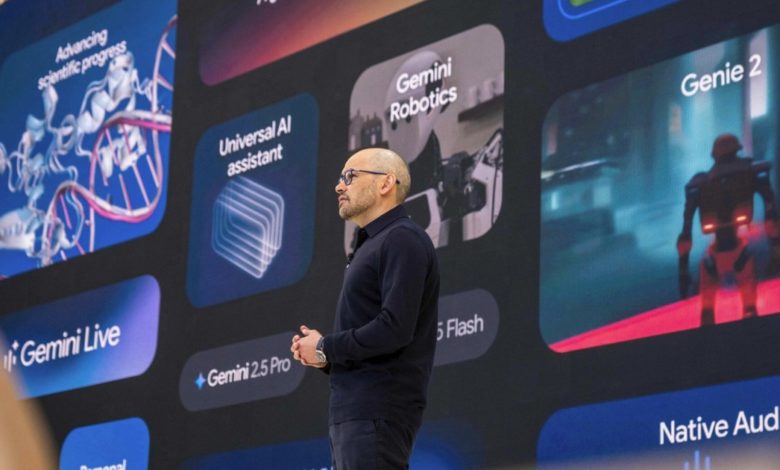
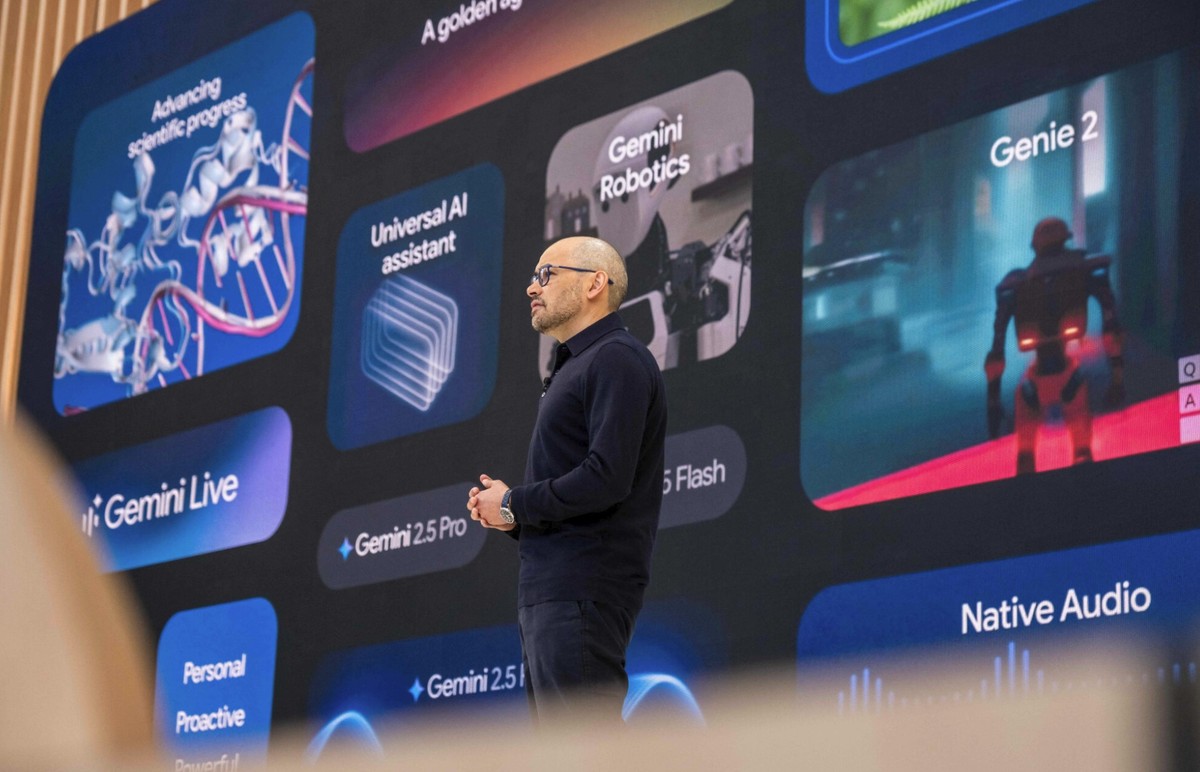
AI Mode was the most famous announcement. This New card in search engine changing Google into an interlocutor. As Pichai put it: – Ai Mode starts for all users in the USA. For employees, this means shortening research to one conversation, for companies – more precise positioning of offers, and for consumers interactive navigation after shopping. In Europe, the function is not yet available, but it will definitely appear. Companies interested in how AI Mode works, which would like to prepare for the introduction of this option in Europe, can test its capabilities using VPN servers.
Going further, the Gemini 2.5 series has gained Deep Think and Agent Mode in the mobile application. The agent can learn many activities using the “teach and repeat” method (teaching and repeat) and e.g. book apartments on behalf of the user. At work, such a function will become a digital assistant that automates routine tasks (e.g. completing CRMs), and in enterprises will allow UIPATH or Automation Anywhere programmers to build their own procedural bots from 2025.
Google also gave hard adoption indicators: a monthly volume of processed tokens jumped from 9.7 trillion to 480 trillion (height 50x y/y), and 7 million developers today create applications on Gemini (height 5x y/y). The Gemini application has 400 million active users per month. It is used not only by individual customers, but above all R&D teams that can prototype various solutions faster.
Personalized Smart Republic in Gmail, another of the news, shows how Google intends to transfer AI to daily correspondence.
Read also at Business Insider
“Thanks to personalized suggestions, I can be a better friend,” said Pichai on stage, demonstrating the answer generated in his personal style. The solution analyzes the history of emails and files in Drive to automatically create answers that match the tone of relationships – formal in B2B contacts and more free in private correspondence. For Customer-Success teams, this is a real reduction of service time, and consumers are to save minutes with each message. The system will go to Google Labs first in July, and in the third quarter of this year. for paid plans Workspace and Google One Ai Premium. Of course, all this at the expense of privacy.
Check also: Google does nothing to the authors of the content. Internet creators pay for someone else's innovation
Interview with a reference collaborator
Google Beam was announced with company communication – a commercial version of Project Starline. The 3D platform renders the interlocutor in structural light in video format and at 60 clogs per second. The novelty is to be available this year.
In addition, the Speech Translation function added in Google Meet (English ↔ Spanish) He reproduces the sound and facial expressions of the speaker and works in real time. The tests will be available for subscribers of AI PRO and Ultra packages and Workspace Enterprise customers. As the giant argues, for the corporation it is a reduction of travel costs, and for distributed teams – the language barrier practically disappears. For now, we are talking about Spanish and English, but it is easy to imagine that in the near future there will be support for many other languages, including Polish.
Consumers and media industries will also gain new opportunities thanks to Imagen 4, VEO 3 and FLOW applications. Imagen improves the rendering of text and details in AI pictures, VEO generates a video with an audio path, a Flow connects both models in a tool for building movie scenes cage cage. From the point of view of marketing studies, this means a cheaper and faster prototype of spots, while freelancers can offer a full creative package without expensive equipment. On the one hand, the entrance barrier is decreasing, on the other, competition will increase, so the money saved on hardware or software will probably have to be allocated to marketing (Google, of course, also has an offer – advertising in its Google Ads network).
In the hardware area, the company showed Android XR Glasses and an Android 16 desktop mode implemented in cooperation with Samsung. For employees, this is to be easier to transfer data or the whole work environment between the phone and the workstation, and for IT departments – a coherent device for managing devices.
TPU V7 Ironwood operates under the hood of all new products – a 42.5 Exaflops system, ensuring a tenfold increase in efficiency compared to the previous generation. This cost advantage translates into lower API prices for start-ups and large clients, and At the same time, for higher margins for Google Cloud.
There is also a new subscription structure that is to capitize the growing use of AI: Google AI Pro ($ 20/city) retains the current price, and AI Ultra ($ 250/city) adds Enterprise class limits and priority to the most powerful AI models. So if we want to use advanced artificial intelligence, Google already has the right price and it amounts to $ 250/mc (about PLN 950).
See also: Apple is considering switching to AI search engine. This may be the beginning of the end of the era defined by Google
The giant wants to dominate
Google puts on two height levers. First it is mass dissemination of AI agents in consumer products (which increases retention and collects data). Second: paid plans for companies looking for performance advantage.
The benefits are therefore unfolded. Employees get assistants shortening the duration of many tasks, enterprises gain automation and cost advantage, and consumers – more intuitive, multi -diverse interactions with the ecosystem of services.
This year's I/O confirms that Google is no longer just a search engine, but a platform for intelligent agents who are able to act and make decisions on our behalf.
However, these benefits are not without costs. The development of AI by the giant is partly at the expense of the ecosystem, from which it draws content – including publishers, bloggers or companies such as Chegg. Less revenues from advertising and a decrease in movement may weaken the financial situation of these entities. If this trend persists, paradoxically, it may turn out that although AI tools will be available with powerful possibilities, fewer and fewer companies and people will be able to afford their real implementation, because they will not have customers, budget or support to use them.
Author: Grzegorz Kubera, Business Insider Polska journalist