Your Tuesday flight may no longer exist. Europe prepares its emergency plans for summer without kerosene

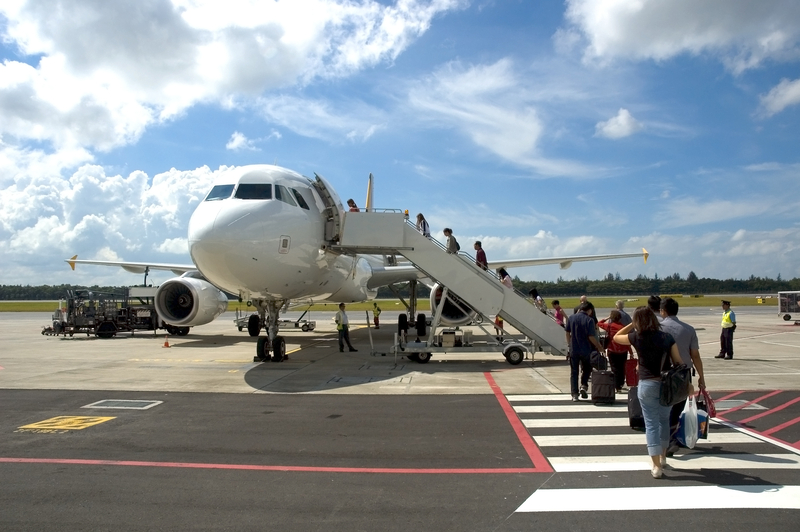
Airline contingency plans include reduced flights on Tuesday and Wednesday, cancellation of midday flights and short-haul routes
European airlines are preparing contingency plans to deal with a possible shortage of kerosene at airports.
The plans include not only a reduction in flights, but also specific cancellations, especially during certain periods and days of the week, Tuesdays and Wednesdays, with a particular focus on the islands, as explained by several CEOs and operational directors, according to Corriere della sera.
“There is nothing concrete at the moment, but with the Strait of Hormuz still closed, the supply problem is getting worse for our industry week by week,” Ryanair chief executive Michael O'Leary told Corriere della Sera on the sidelines of a press conference at the low-cost airline's headquarters just outside Dublin.
O'Leary — who heads an airline that carries the largest number of passengers in Europe and operates more than 3,000 flights a day — postponed the possibility of a fuel emergency until early June, but did not go further. He also refuses to confirm the company's plan to solve the problem of jet fuel shortages. There is the fear — shared by all airlines — of scaring passengers.
“But obviously we're doing a thorough analysis; we know where we could intervene immediately if needed,” explains O'Leary. And other managers, who requested anonymity, confirmed that they “have the parameters ready” and an initial list of routes that can be sacrificed “immediately”, underscoring the delicate nature of the situation.
“First of all, we would eliminate midday flights,” reveals O'Leary. “It would have the least impact on traffic,” add two other CEOs. “The aim is to preserve connectivity in the morning and late afternoon/early evening, particularly with a focus on business customers.”
According to Ryanair's chief executive and other colleagues, the emergency cuts would also affect “flights on low-traffic days such as Tuesday, Wednesday or Saturday”. Meanwhile, from this perspective, Monday, Friday and Sunday departures would be “untouchable” (or close). Joi is halfway between these two groups and could become expendable, especially given the widespread use of smart working as it has been during the pandemic.
The airlines' contingency plans also include significant reductions in domestic routes – within each country – “where there is an alternative such as trains, preferably high-speed”, explains O'Leary. This, however, would shift traffic pressure to the ground, with hundreds of thousands of passengers arriving at stations overnight.
“We are now in the process of eliminating the least profitable routes,” explains the chief operating officer of a legacy airline. The most affected are seasonal routes with unsatisfactory occupancy levels, secondary destinations operated at reduced frequencies and routes where competition is stronger.
But with the price of jet fuel still above $1,500 a tonne (at the end of February it was below $800) and flows from the Persian Gulf virtually zero for weeks, European airlines are facing worst-case scenarios. These, the CEOs explain, involve “protecting” at all costs the core operational centers that support the business model.
In any case, points out O'Leary and other CEOs, “flights to the islands would be protected”, perhaps by reducing frequencies, but always guaranteeing daily connectivity, given the logistical disadvantage of those who live surrounded by the sea and find ferries a non-viable alternative due to travel times.
Reducing frequencies — for example, from three flights a day to one on a given route — might work on paper. But, industry experts warn, it could be problematic for low-cost airlines: with record load rates (94%-95%), it would become difficult to relocate passengers from canceled flights.
Apostolos Tzitzikostas, the European transport commissioner, said there was “currently no evidence of a shortage of aviation fuel”. However, the European commissioner added that “the situation is quite critical and we have to be prepared — and we are — for all scenarios,” during a hearing at the European Parliament's Transport Committee. “The situation remains unstable and uncertain, and collaboration between member states is fundamental,” Tzitzikostas emphasized.Material produced with the support of Rador Radio Romania)