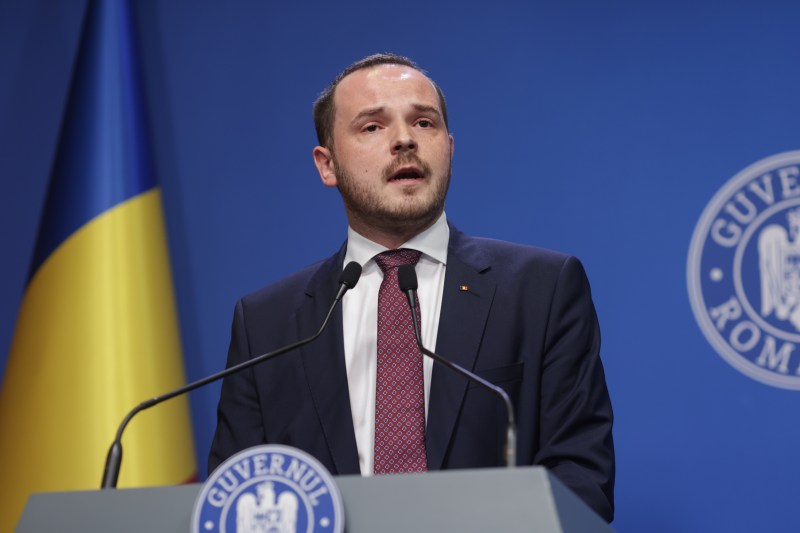
Alexandru Rogobete, Minister of Health Photo: Inquam Photos / George Călin
The Minister of Health, Alexandru Rogobete, asked the employees of the Anesthesia and Intensive Care (ATI) departments to give up jewelry, wedding rings and false nails, which he says can promote the transmission of bacteria to patients.
“Nowhere in this world are there hospitals where there is surgical activity – ATI, operating theater – where there are no infections associated with medical activity. It is important to monitor them, to detect them in a timely manner. And here, massive investments were made in 119 hospitals in Romania with money from PNRR, where the microbiology laboratories were developed and expanded precisely to be able to detect the pathogenic germ in a timely manner. The problem with us it is different. The problem is that the protocols are not respected”, said Alexandru Rogobete, on Prima TV, quoted by News.ro.
The Minister of Health gave an example of the fact that some medical personnel from the ATI departments violate the Romanian legislation that prohibits the wearing of jewelry in these departments precisely for health safety reasons.
“I'll give you a banal example and I'll also make a semi-funny parenthesis. It's not really funny, but it's in that direction. Fake nails and jewelry in ATI. According to the current legislation in Romania, ATI staff are not allowed to wear jewelry, wedding rings or fake nails. I said this publicly. Of course, they started all kinds of checks. An interesting group started in the social media area, which is obviously against me and which it's called “We don't give up the wedding ring”. I say firmly: “Give up the wedding ring or leave ATI!”. Because that wedding ring can kill a man, because it is a source of storage and transmission,” said Rogobete.
The Minister of Health asked doctors to report nosocomial infections and to take measures when such infections occur.
“In Germany, twice as many nosocomial infections are reported as in Romania. It does not mean that there are none in Romania or that we are better. It means that we do not report them”, said Rogobete.