Russia's elites grow increasingly distrustful of Vladimir Putin: 'Until recently, they assumed he had a plan'

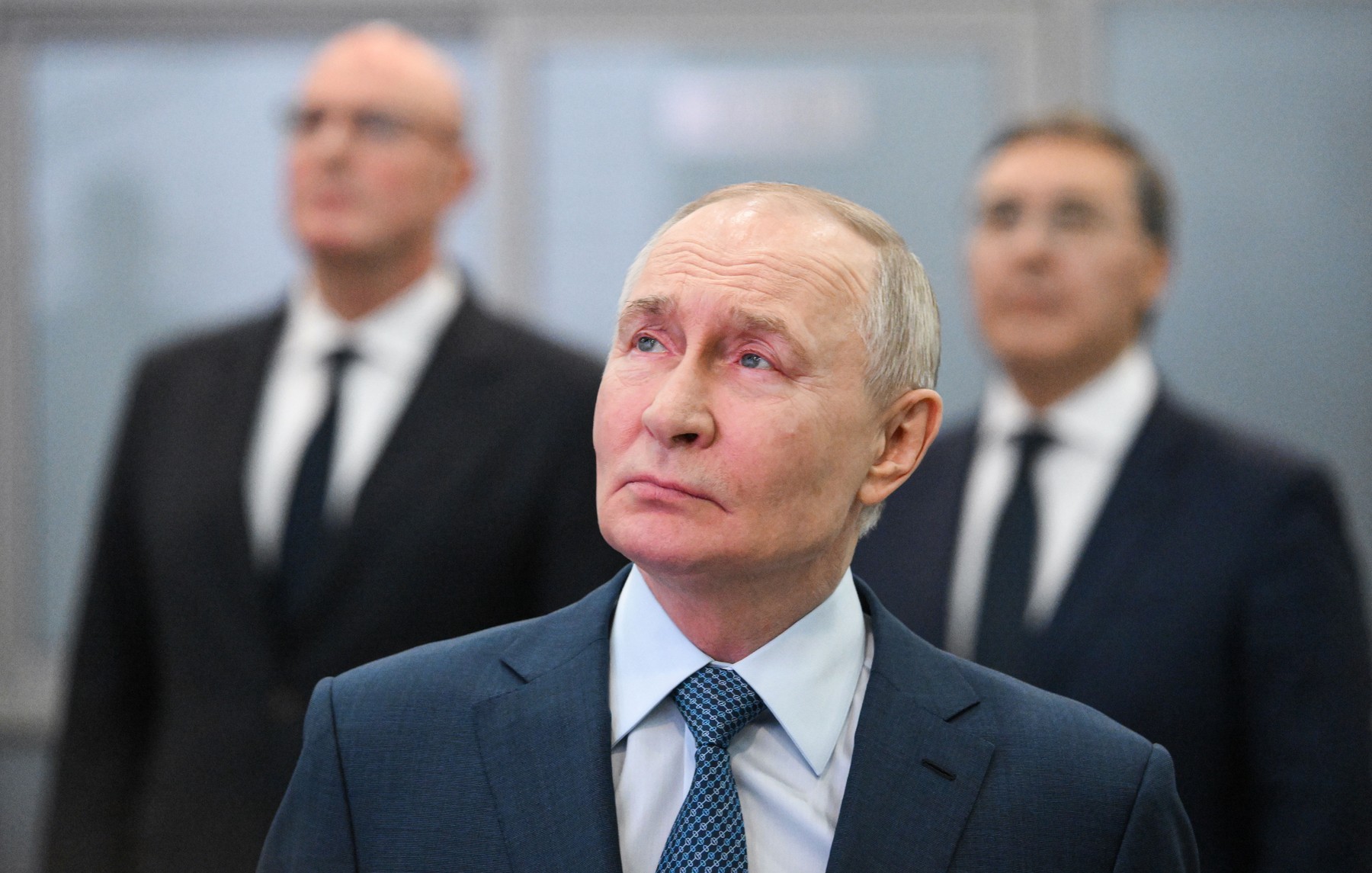
The worsening economic situation, intensifying repression and blocking of the Internet have caused a wide rift in the Kremlin's ruling circles, reports The Washington Post, quoted by the Russian-language edition of the opposition publication The Moscow Times.
Multiple sources, including one that The Post journalists say is from inside the Russian government, told the US paper that a rift between officials in Vladimir Putin's Presidential Administration, led by Sergei Kirienko, and the Federal Security Service (FSB) is escalating. According to sources, Russia's feared security service would insist on strict restrictions on internet access, believing that social networks could be used to mobilize opposition to the regime.
Mobile internet access has been widely restricted in Russia since last year due to concerns that it may be used by Ukrainian forces to coordinate their drone attacks on Russian territory.
Most recently, Russian authorities decided to partially block mobile internet access in Moscow, St. Petersburg and Kazan, due to fears that Ukrainians could launch drone attacks on Russia's May 9 festivities, when Putin's country celebrates the Soviet Union's victory over Nazi Germany in World War II.
Internet control by the FSB has hit Vladimir Putin's popularity
The official transfer of the Internet to the control of the FSB in February this year has already reduced Putin's approval rating to its lowest level since 2018. The Russian government then adopted an unpopular reform of the pension system.
A recent poll by VTsIOM, the Russian government-controlled public opinion polling center, showed that Putin's popularity had fallen to 65.6 percent at the end of April.
The shift in mood in the Kremlin is so visible that “it's as if the air in Russia has changed,” Alexander Baunov, a senior fellow at the Carnegie Center, wrote in an analysis published on April 30.
“Everywhere petty and unimportant administrative chaos reigns. A work by the editor-in-chief of RT suddenly appears among the candidates for a literary prize after the list has been published, while the great [regizor Alexander] Sokurov is invited to the Moscow festival to accept his award and does not receive it. The books written by the literary classics are full of foreboding warnings, visually equating them to the works of alien agents. Competent authorities publish long-term defense plans online and it turns out that they plan to defend against enemy drones even in 2030,” he explains.
“Attitudes towards Putin are changing. Economic optimism and the associated everyday patriotism, which celebrates survival rather than development, are disappearing. Finally, there is a recognition of the impossibility of winning a war that has changed, minimizing Russia's advantages,” the researcher points out.
“It is impossible to imagine Putin before the war”
“Recent events in Russia indicate that the system is struggling to cope with the growing pressure,” says political scientist Tatiana Stanovaia. She notes in a message published on “X” that growing internal tensions, behind-the-scenes intrigue among the elite, rumors of a coup, tighter and more reactive controls, fears of losing that control, and increasing vulnerability to Ukrainian attacks and assassinations have brought pressure on Moscow to a point where it “began to threaten the personal positions of too many participants.”
“Until recently, many assumed that Putin had a plan, even if it was simply to continue the war. Now, doubts are growing that such a plan even exists,” she added.
Criticism of the regime is atypically coming from voices the Kremlin least expected. Blogger Victoria Bonia's sudden appeal to Putin was also supported by Ghenadi Ziuganov, the long-time leader of the Russian Communists, who warned the president about the threat of a revolution like the one in 1917.
Pro-war blogger and propagandist Ilia Remeslo, a former subordinate of Kirienko, calls for Putin's imprisonment. The Russian president is “losing his magical power,” writes analyst Baunov.
“The power remains in his hands, undivided, but the magic of power fades. And his true form is revealed. People notice more and more the restless old man, with thin legs, muscles melting under his sagging suit. Now it is impossible to imagine Putin from before the war, bare-chested and riding a black horse,” he believes.
The situation in Russia, compared to that of the mid-90s
According to one of the sources of journalists from The Washington Post, the rift within the Kremlin elite reached the same proportions as in 1996, when a Boris Yeltsin whose popularity was in sharp decline was preparing for presidential elections.
Back then, the “hawks” were urging Yeltsin to cancel or postpone the election and impose martial law, while the oligarchs insisted on holding an election campaign, hoping to profit from it and exert as much control as possible.
Russia is due to hold parliamentary elections this fall.
“In a way, history is repeating itself,” a source told The Post. “Kirienko and his team are trying to convince Putin that they can control the situation in the country through political tactics. Meanwhile, the other side, the FSB, is trying to convince Putin that the only way to stabilize the country is through brutal methods and tightening the screws,” she added.