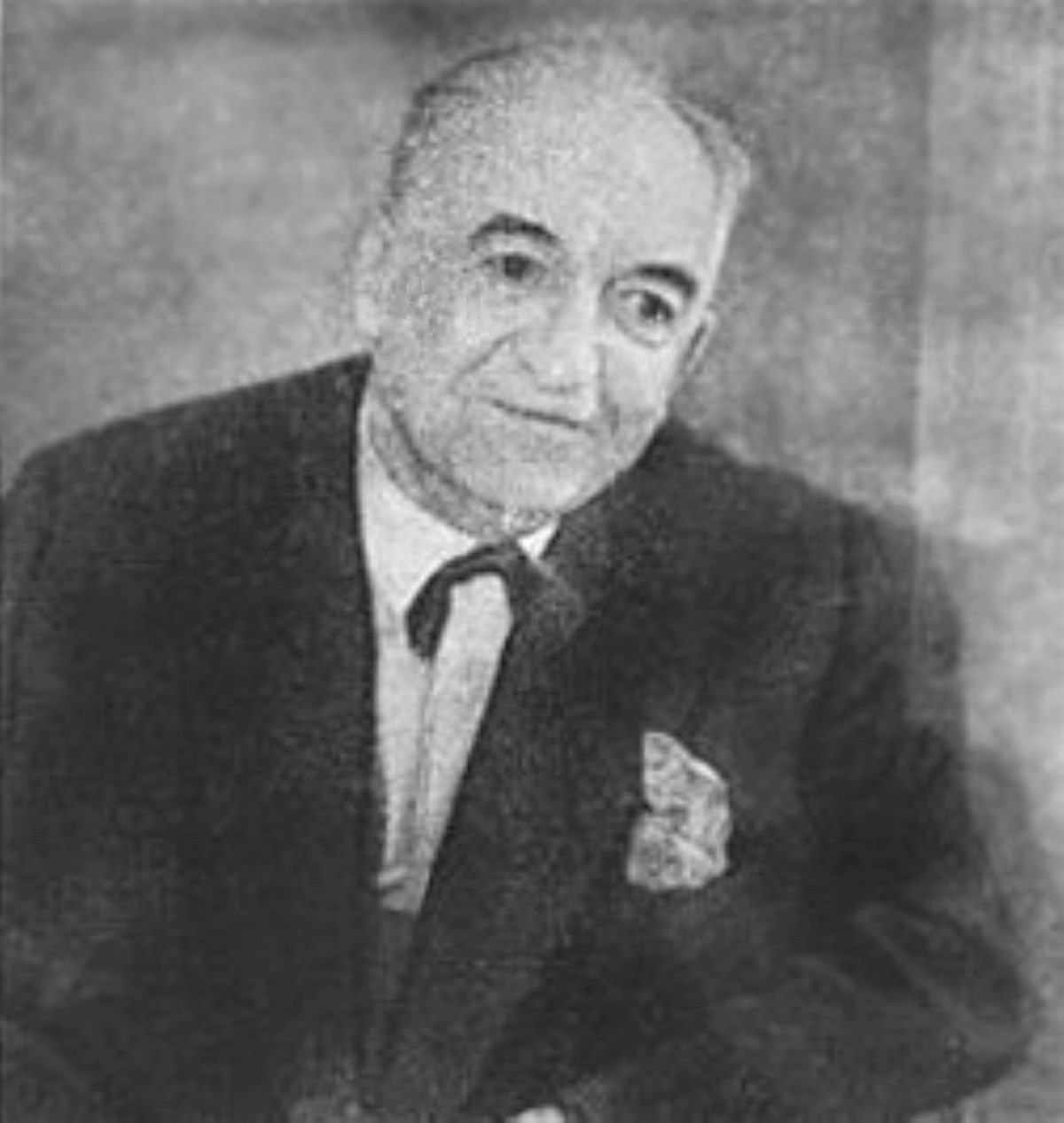
Viktor Grigorievich (Gershelevich) Fink.
Photo: From open sources
May 6, 1888
On this day, the Jewish writer Viktor Grigorievich (Gershelevich) Fink was born in Odessa. Began publishing in 1927. Arrived at Tikhonkaya station with the first trains of Jewish settlers.
In his book of essays “Jews in the Taiga” (12+) he wrote about the future of the village of Valdgeim. Author of the books “On the Road from Egypt” (12+), “Foreign Legion” (12+), “The Fate of Henri Lambert” (12+), “Literary Memoirs” (6+), the play “New Motherland” (12+), many critical and journalistic articles.
Fink died on September 19, 1973 in Moscow.
May 6, 1936
The first regional congress of consumer cooperation of the Jewish Autonomous Region opened in Birobidzhan. About 100 delegates gathered to talk about how consumer cooperation in rural areas has changed. Among the delegates of the congress were excellent traders in the countryside and Stakhanovites in the fields.
May 6, 1937
The newspaper “Birobidzhan Star” (12+) dated May 6, 1937, in its regular column “Around the city and region” wrote:
“By decree of the regional executive committee, a puppet theater for children is being organized in Birobidzhan. The summer base of the puppet theater will be in the park of culture and recreation, the winter base in the premises of the Jewish school.”
“At school No. 1, students who studied at the glider pilot school graduated. Without interruption from their studies, 14 schoolchildren learned flying and received the title of glider pilots. At the evening, students who studied in the “Young Voroshilov Shooter” circles were also awarded badges.
“Monthly courses for beekeepers have begun in the village of Ekaterino-Nikolskoye. 11 collective farmers are attending the courses. Upon completion of the courses, the beekeepers will go to the collective farm apiaries.”
In the same issue of the newspaper the article “Roll of Honor of the Best Participants in the Regional Competition of Tractor Drivers and Tractor Brigades” was published.
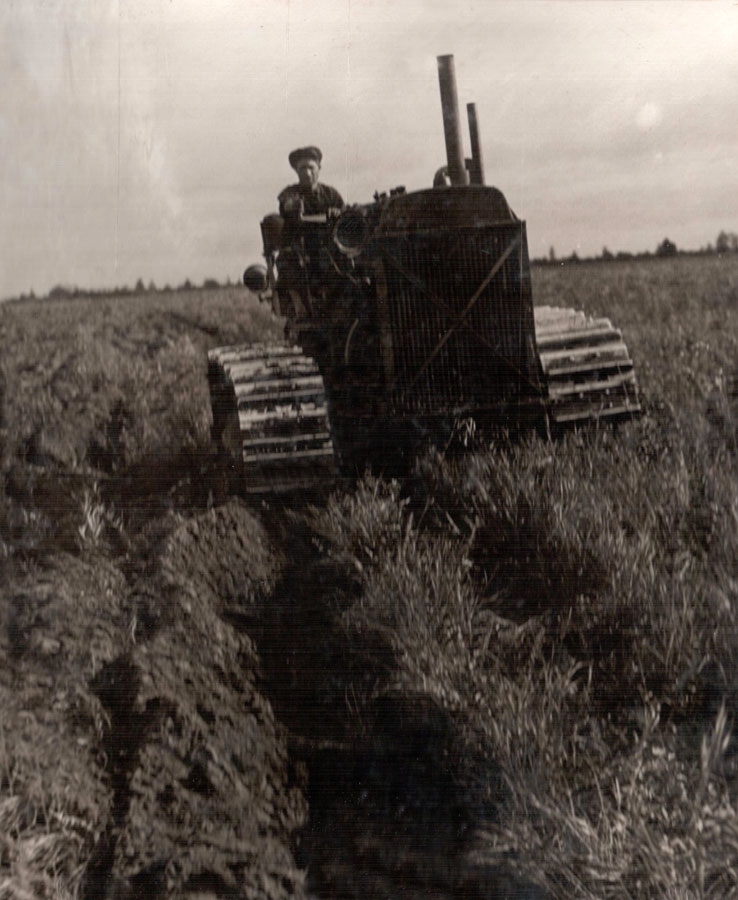
They are raising virgin soil on the IKOR collective farm. Photo: Photo: Heritage EAO
The note notes the names of the following best tractor drivers in the region:
- Solidor Elya is a tractor driver from the Jewish resettlement collective farm “Reuter Oktyabr” (Stalinsky district – now Oktyabrsky district).
- Danilov Innokenty is a young tractor driver of the collective farm “Trevoga” of the Ust-Sungara MTS (Blyukherovsky district – now Leninsky).
- Markov Nikolay – tractor driver of the collective farm named after. Mukhina (Blyukherovsky district – now Leninsky). Systematically exceeds the harrowing norm.
May 6, 1939
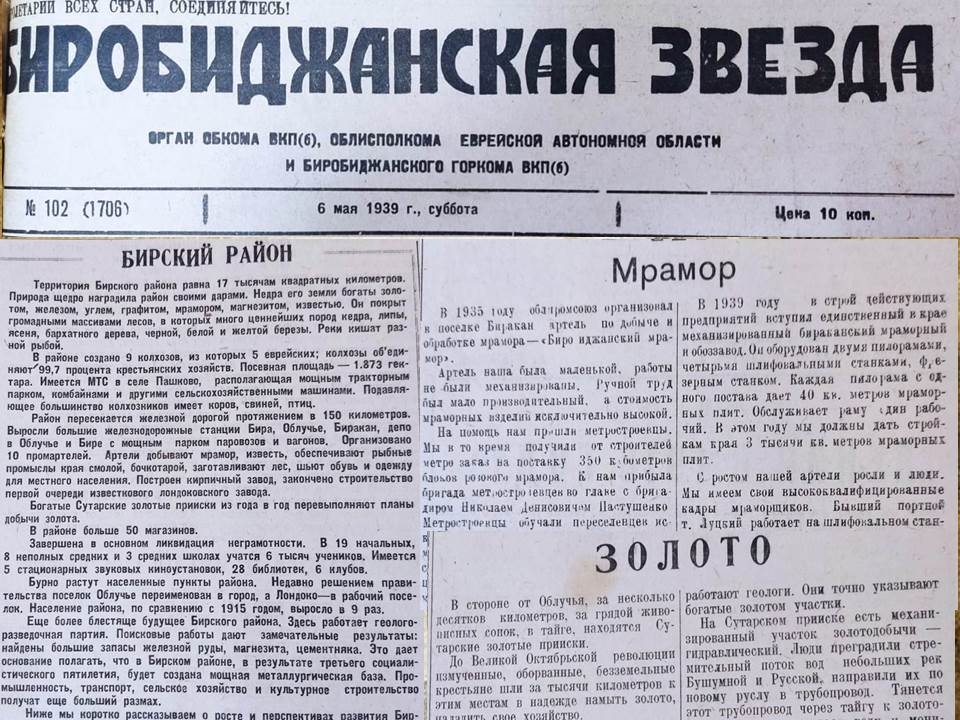
Clippings from the newspaper “Birobidzhan Star”. Photo: Photo: Regional Library
The newspaper “Birobidzhan Star” (12+) devoted the third page to the history and development of the Birsky district (now Obluchensky). The reader was presented with overview information about the region as a whole: about the territory, natural resources, collective farms, transport, artels and factories, mines, shops, cultural and educational institutions, the growth of settlements, personnel, the Kuldur spring, etc.
“Marble” is the title of an article by A. Ritz, dedicated to the work of the marble mining and processing artel, published on the same page of the newspaper issue.
This is what the head said in the article. produced by the Birobidzhan Marble artel A. Ritz:
“In 1935, the regional industrial union organized an artel in the village of Birakan for the extraction and processing of marble. Our artel was small, the work was not mechanized. Manual labor was unproductive, and the cost of marble products was extremely high.
Metro workers came to our aid. At that time, we received an order from the metro builders for the supply of 350 cubic meters of pink marble blocks. A team of metro builders arrived to us… The metro builders taught the settlers the art of mining and cutting blocks. We fulfilled the metro order and are proud that the metro station (Belorussky Station) is lined with pink marble mined in Birakan.”
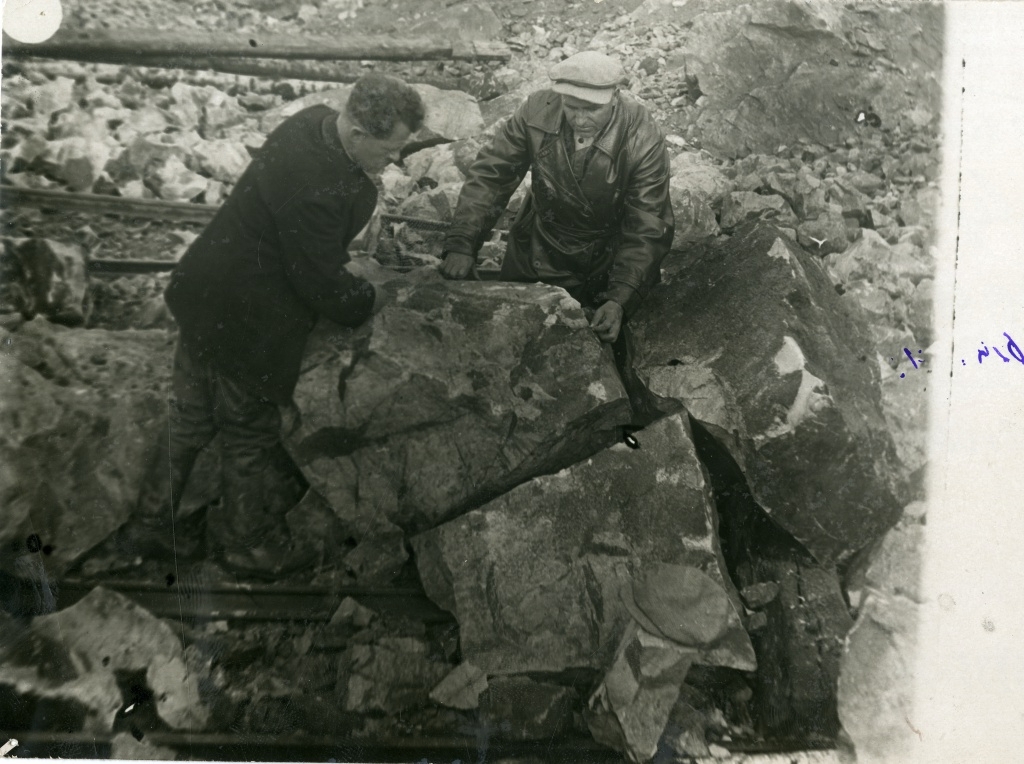
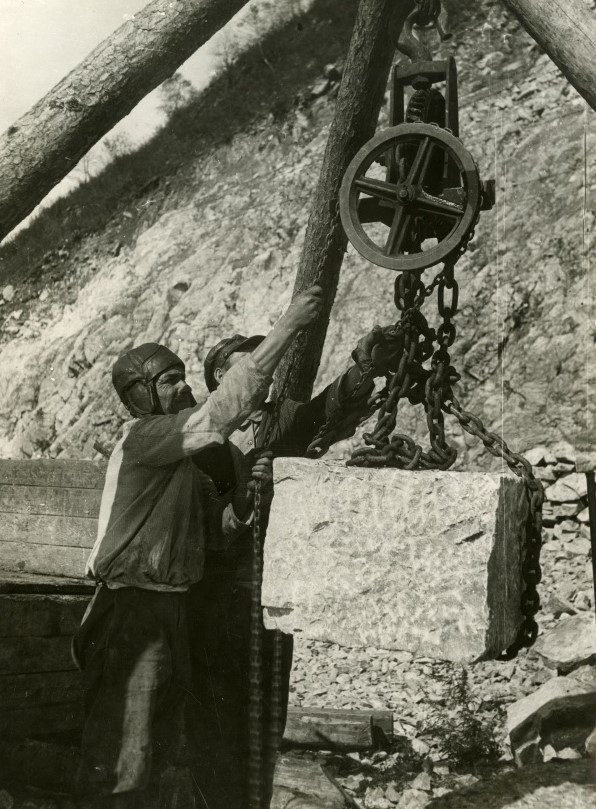
In 1939, the only mechanized Birakan marble and processing plant in the region came into operation. It is equipped with two sawmills, four grinding machines, and a milling machine. Each sawmill from one stand gives 40 sq. meters of marble slabs. The frame is serviced by one worker.
As the artel grew, so did the people. Highly qualified marble makers produced marble slabs for electrical panels, produced marble chips and marble flour.
“Our plant has great prospects. The reserves of white, pink, green and blue marble are incalculable. We are faced with an urgent task – to organize the production of artistic stationery and mosaic products, to achieve mass production of marble products in the coming years in order to decorate the cities and villages of our region with marble.”
May 6, 1944
A session of the regional Council of Workers' Deputies was held, dedicated to the tenth anniversary of the formation of the Jewish Autonomous Region.