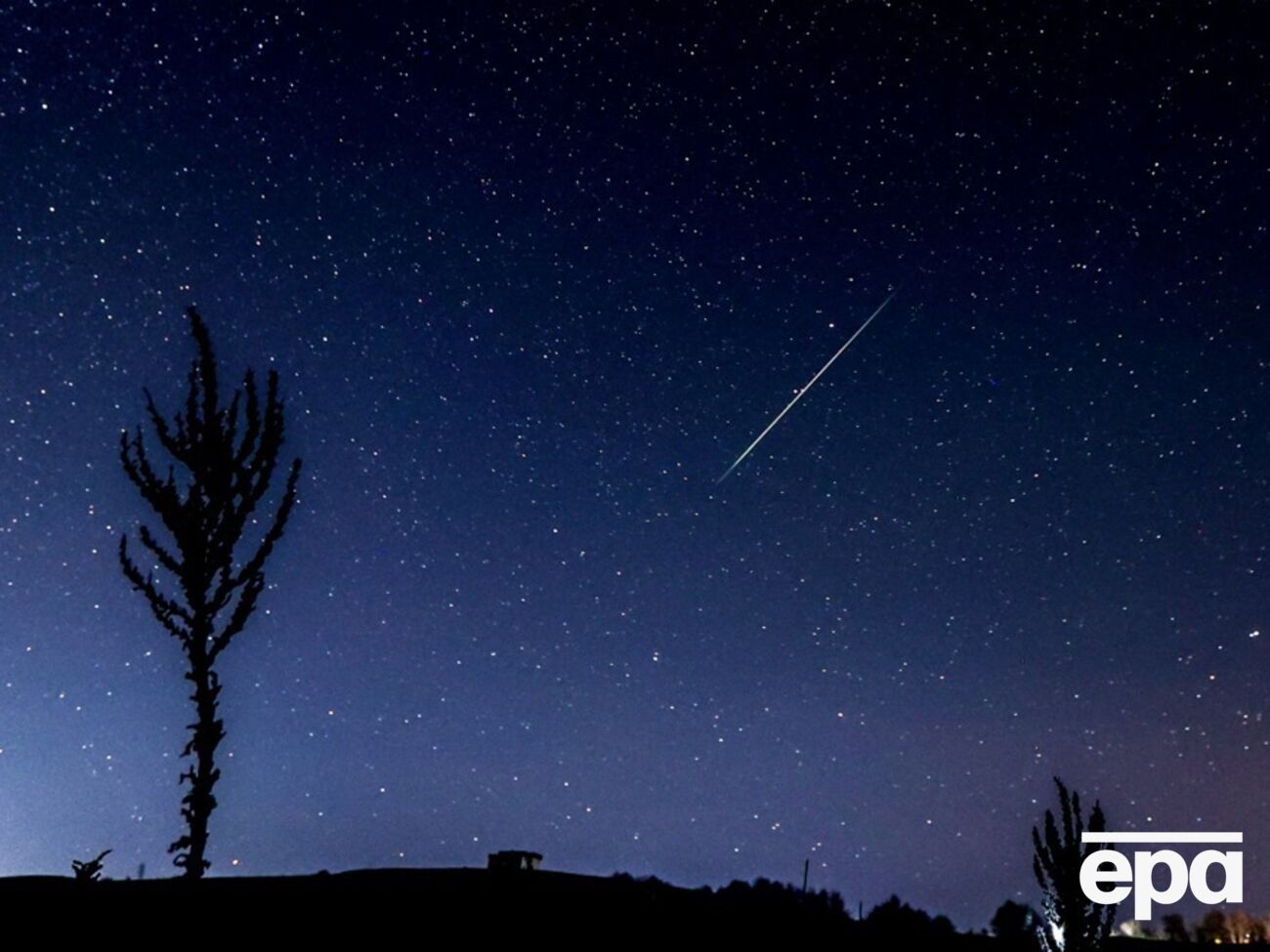
In early May, the Earth passes through debris left behind by Comet Halley's passage around the Sun. This is an annual phenomenon known as the Eta Aquarids meteor shower. The peak of the flow occurs on May 4-6, writes Science Alert.
According to astronomers, the best time to observe the meteor shower is around 4 a.m., when the radiant is at its highest point in the sky.
This year, the best viewing conditions will be in the Southern Hemisphere, where the radiant rises higher in the sky, reaching up to 60 meteors per hour. Observers in the Northern Hemisphere can expect about 10 meteors per hour, with the bright waning Moon dwarfing the faintest bursts.
As May progresses, the dimming Moon will pose fewer viewing challenges, and the meteor shower, albeit at a lower intensity, will continue until around May 27 or 28.
The Aquarids are debris left over from Comet 1P/Halley, which appears approximately every 76 years. Its radiant is close to the constellation Aquarius.
The next meteor showers are expected in July and will include three showers at once: the southern Delta Aquarids, Alpha Capricornids and the most famous meteor shower of the year in the Northern Hemisphere – the Perseids.