Nicușor Dan woke up with an orchestra – Rapid reaction after the fall of the Bolojan Government

Political science professor Cristian Pîrvulescu says, in a dialogue with HotNews, that a new crisis awaits the Romanians, in which the political leaders will have to form a new governing coalition from the members of a “dysfunctional orchestra”, in which the Romanian president will have to be the conductor. Pîrvulescu also explains how the political parties voted.
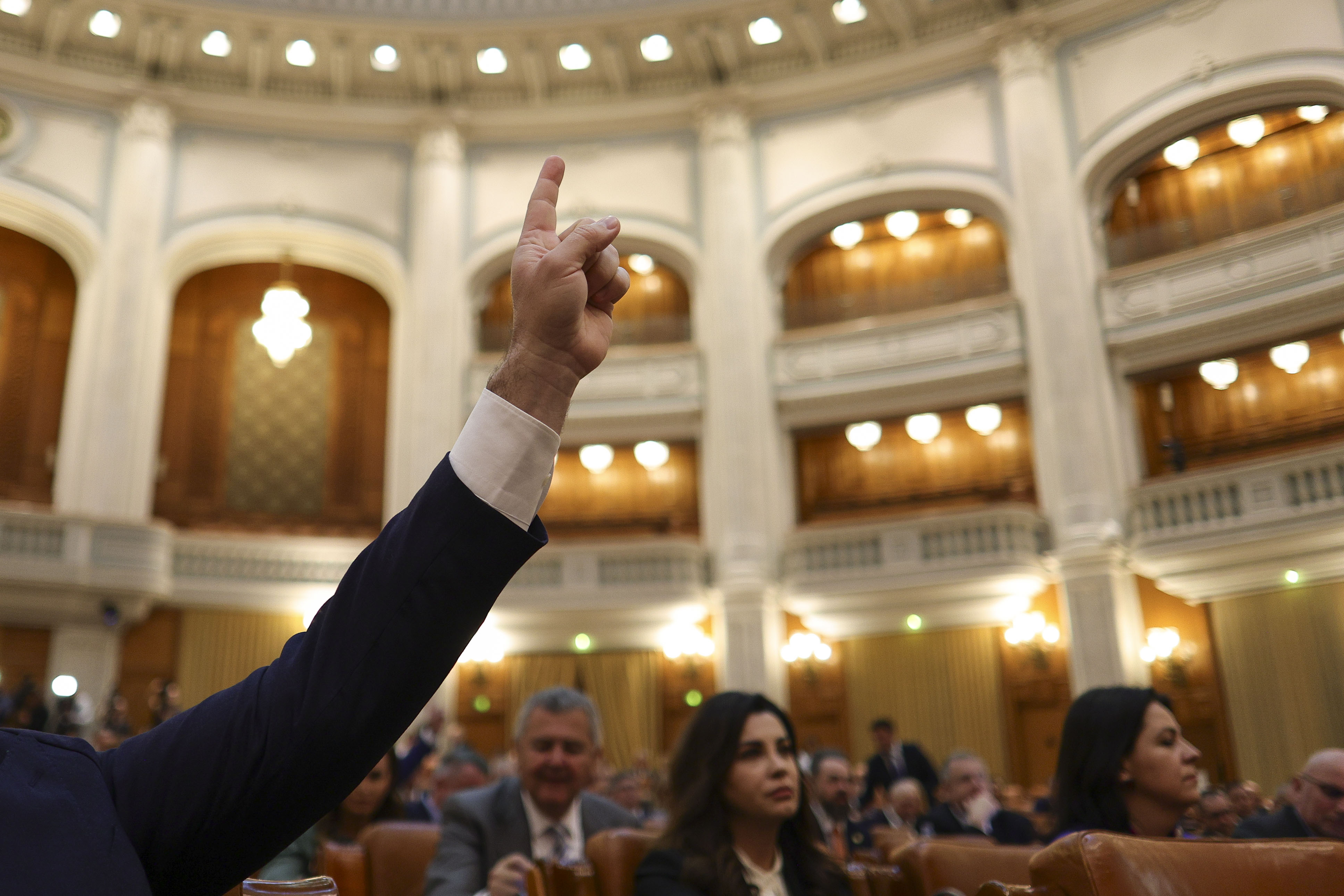
The government led by Ilie Bolojan was dismissed on Tuesday, after the censure motion initiated by PSD and AUR passed the Parliament. “The motion passed with 281 votes and only 4 against. The score is not of democracy – it is of institutional dysfunction”, says Cristian Pîrvulescu, in a statement for HotNews.
Cristian Pîrvulescu is a political science professor at SNSPA and one of the constant voices of analysis of the political sphere in Romania. For him, the motion's score is not just a parliamentary figure, but the symptom of a deeper crisis.
“Such a crushing majority, built from radically divergent interests, exactly confirms the thesis of the endemic crisis: parliamentary institutions no longer function as a space for political negotiation, but as an instrument of conjunctural destabilization”, believes Cristian Pîrvulescu.
“AUR follows the logic of troubled waters. PSD has another declared ambition”
He notes the fact that the parties that chose to vote for the motion of censure did so for different reasons and talks about the voting options of the other formations in Parliament: “AUR and PSD both voted for the motion, but from irreconcilable perspectives. AUR follows the logic of troubled waters – prolonged institutional crisis is its natural environment for growth.”
“PSD calculates differently: changing the prime minister and reconfiguring the coalition's operating rules, with the stated ambition of a pro-European coalition. Hungarians and minorities probably voted in solidarity with the motion. PNL and USR did not vote at all – an abstention that is not neutrality, but a form of institutional abandonment,” believes Pîrvulescu.
The professor of political sciences warns that the motion does not close the political crisis, but opens a new stage: the formation of a majority and a new government. “The paradox is that a censure motion won with such a majority does not solve the crisis – it moves it. The endemic political crisis is now turning into a governance crisis: who builds the majority, on what basis and at what cost for Romania's pro-European coherence. And President Nicușor Dan becomes, exactly as we anticipated, the conductor of a dysfunctional orchestra”, says Cristian Pîrvulescu.