A senior US admiral presents footage of the first day of Operation 'Project Freedom'. Sunken ships and downed missiles in the Strait of Hormuz

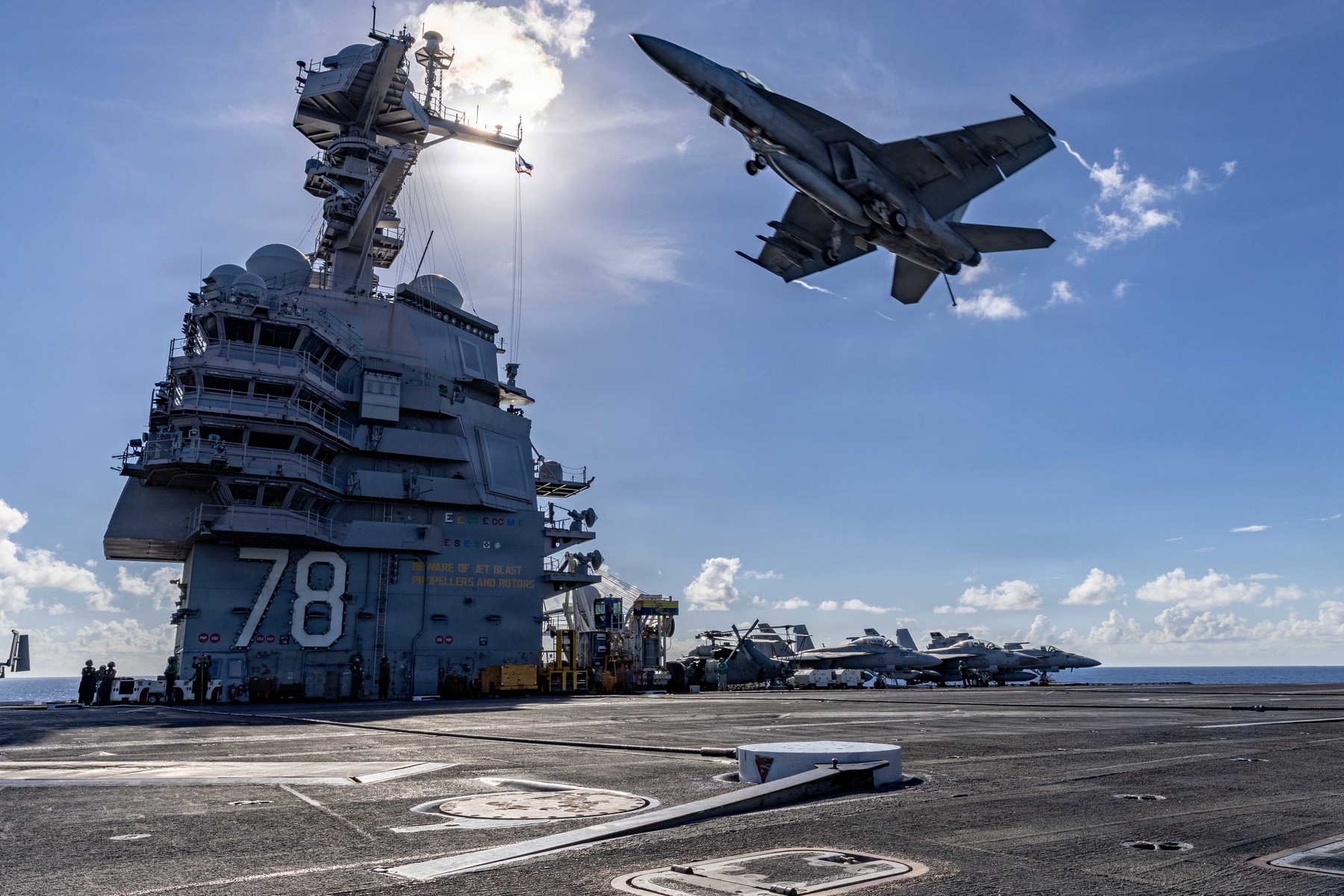
The US military announced on Monday that it destroyed six Iranian boats and intercepted Iranian cruise missiles and drones launched by Tehran, which thus tried to stop the US Navy's new naval operation aimed at reopening maritime traffic through the Strait of Hormuz, writes Reuters.
US President Donald Trump launched the operation, dubbed “Project Freedom”, on Monday in a bid for the US to seize control of the critical waterway from Iran after Tehran effectively closed the Strait of Hormuz following the US-Israel conflict on February 28.
U.S. Admiral Brad Cooper, head of the Central Command (CENTCOM), declined to comment on whether he believed the truce that began on April 8 remains in effect, as Iran launched attacks in the region on Monday, including drone and missile attacks on the United Arab Emirates.
But Cooper acknowledged the ongoing efforts of the Islamic Revolutionary Guard Corps (IRGC) to “interfere” with Trump's operation.
“The IRGC has launched multiple cruise missiles, drones and small craft at the ships we protect. We have defeated each of these threats through the precise use of defensive munitions,” the US admiral said.
Cooper added that he “strongly advised” Iranian forces to stay away from US military assets as Washington launches the operation, which he said involves 15,000 US troops, US Navy destroyers, more than 100 land-based and naval aircraft (including maritime drones) and submarine assets.
“US commanders on the ground have all the capabilities to defend their units and protect commercial shipping,” the admiral said.
A South Korean ship was hit by an explosion and fire in the Strait of Hormuz on Monday, but Trump noted in a post on his Truth Social social network that the South Korean ship was not targeted by the US military operation and that it may have to join US efforts to protect naval traffic near Iran. Trump estimated that the US had sunk seven Iranian speedboats.
The US operation to unblock the Strait of Hormuz involved several stages, including the initial clearing of a passageway of Iranian mines. The US then demonstrated the safety of the route on Monday morning by sending two US-flagged merchant ships through the strait.
Iran's Revolutionary Guards have instead claimed that no commercial ships have crossed the strait in the past few hours and that US claims to the contrary are false. Iranian state media also denied reports that the US had sunk Iranian ships.
Cooper: “We have a much more effective defensive strategy”
Cooper said the US operation went beyond a traditional escort mission. Instead, he said it was a larger, multi-tiered defensive arrangement that included ships, helicopters, planes and even electronic warfare to defend against Iranian threats.
He claimed that Iranian speedboats were sunk by American Apache and Seahawk helicopters.
“If you're escorting a ship, you're in a one-on-one situation. I think we have a much more effective defensive strategy in that context,” the admiral said. “We have a much more comprehensive defensive package than what you would get if you were just escorting.”
Operation “Project Freedom” is Trump's latest attempt to end disruptions in international energy supplies caused by Iran's blockade of the strategic strait, through which a fifth of the world's oil and liquefied natural gas (LNG) transited before the Middle East conflict broke out.
Cooper also said the US military is encouraging ships to pass through the strait despite Iran's threats to use military force, which has so far effectively blocked ships from 87 countries in the Persian Gulf.
“In the last 12 hours, we have contacted dozens of ships and shipping companies to encourage traffic through the strait,” Cooper said.
“This news has been received with great enthusiasm and we are already beginning to see movement,” the admiral added.
According to Cooper, the US embargo on Iran, which prevents ships from heading to Iran or leaving Iranian territory, also remained in place and exceeded expectations.