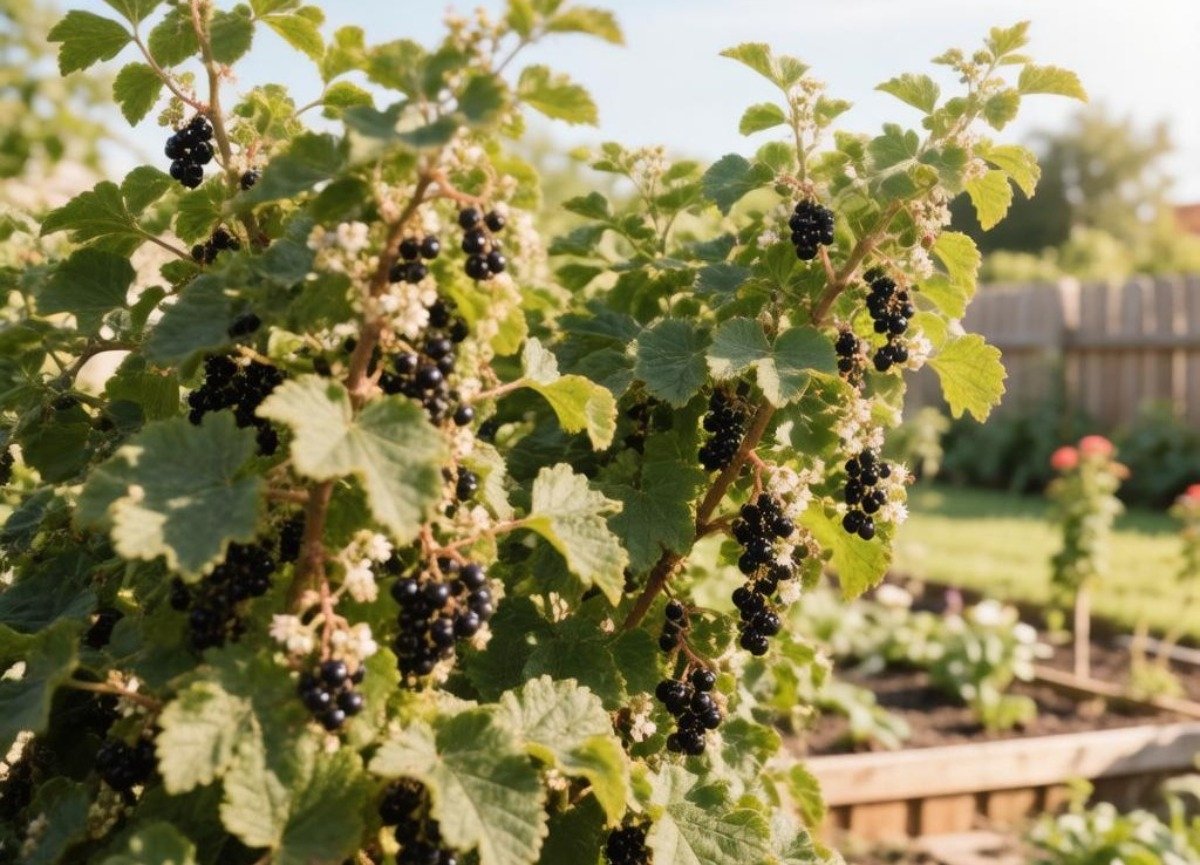
In May, black currants actively grow and form ovaries. It is during this period that the plant especially needs care. Skip important procedures – and you can lose a significant part of the harvest or get small sour berries.
What to do:
- Trim the excess: Remove frozen tips of shoots and cut out old branches lying on the ground. This will give the bush more air and light, preventing the development of fungal infections.
- Feed: Use nitrogen fertilizers or mullein infusion. In May, the plant needs strength to grow green mass and form large clusters.
- Water: Currants love moisture, especially during the period of flowering and filling of berries. Water deeply, but rarely, so that the water penetrates deep to the roots, avoiding surface moisture.
- Protect from pests: Inspect the undersides of leaves for mites or aphids. If signs of damage appear, treat the bushes with biological products or infusion of garlic with laundry soap.
If you pay a little attention to currants in May, you will soon notice how the bushes become more powerful, and the berries become larger and sweeter. Good care will make your harvest truly rich.
Question and answer:
Do I need to water currants during flowering?
Yes, lack of moisture during this period leads to shedding of flowers. Pour warm water under the root, being careful not to get it on the inflorescences, so as not to wash off the pollen.
What is the best way to feed currants in May?
At the beginning of the month, nitrogen fertilizers (urea or ammonium nitrate) are applied for shoot growth. In the second half of May, before flowering, potassium-phosphorus complexes are added for fruit set.