The Russians were stuck on the front. The figures that confirm the failure of the offensive and the crisis in Putin's aviation

Russia no longer has the same offensive momentum, troop momentum has noticeably slowed, while the success is, in part, “beautified” by a new tactic used on the battlefield. Moreover, even if on paper there is better equipment in aviation, in reality there is no one to use it, Russian war correspondents argue.
Moscow's troops have suffered a net loss of Ukrainian-controlled territory, a first since Kiev's military incursion into Russia's Kursk region in August 2024, according to an analysis of the situation on the front by the Institute for the Study of War.
Russian troops, slow down on the front
The data analyzed by ISW indicates a change of pace on the front. After months of slow but steady progress, the Russian army is beginning to lose ground amid increasingly visible problems.
The Institute for the Study of War says it has identified evidence that Russian forces lost control of 116 square kilometers in April 2026, not including areas where Russian troops may have infiltrated.
Furthermore, ISW estimates that the pace of Russian advance is steadily decreasing: 2.9 sq km/day in the first four months of 2026 compared to 9.76 sq km/day in the same period the previous year.
And in the longer term, the difference is clear, with ISW noting evidence that allows it to estimate that Russian forces captured 1,443.35 square kilometers in the last six months (November 2025 – April 2026), compared to 2,368.38 square kilometers captured in the same period in 2024-2025.
Why are the Russians advancing more slowly?
Analysts at the American think-tank pointed to several reasons that overlapped and slowed the Russians' pace of advance on the battlefield, which has steadily declined over the past half year.
Continued Ukrainian ground counteroffensives, Ukrainian medium-range attacks, Moscow's February 2026 blockade of Starlink terminals in Ukraine, and the Kremlin's restriction of the Telegram app have exacerbated existing problems within the Russian military. The blocking of the application founded by Pavel Durov affected the coordination and communications of the troops at the front.
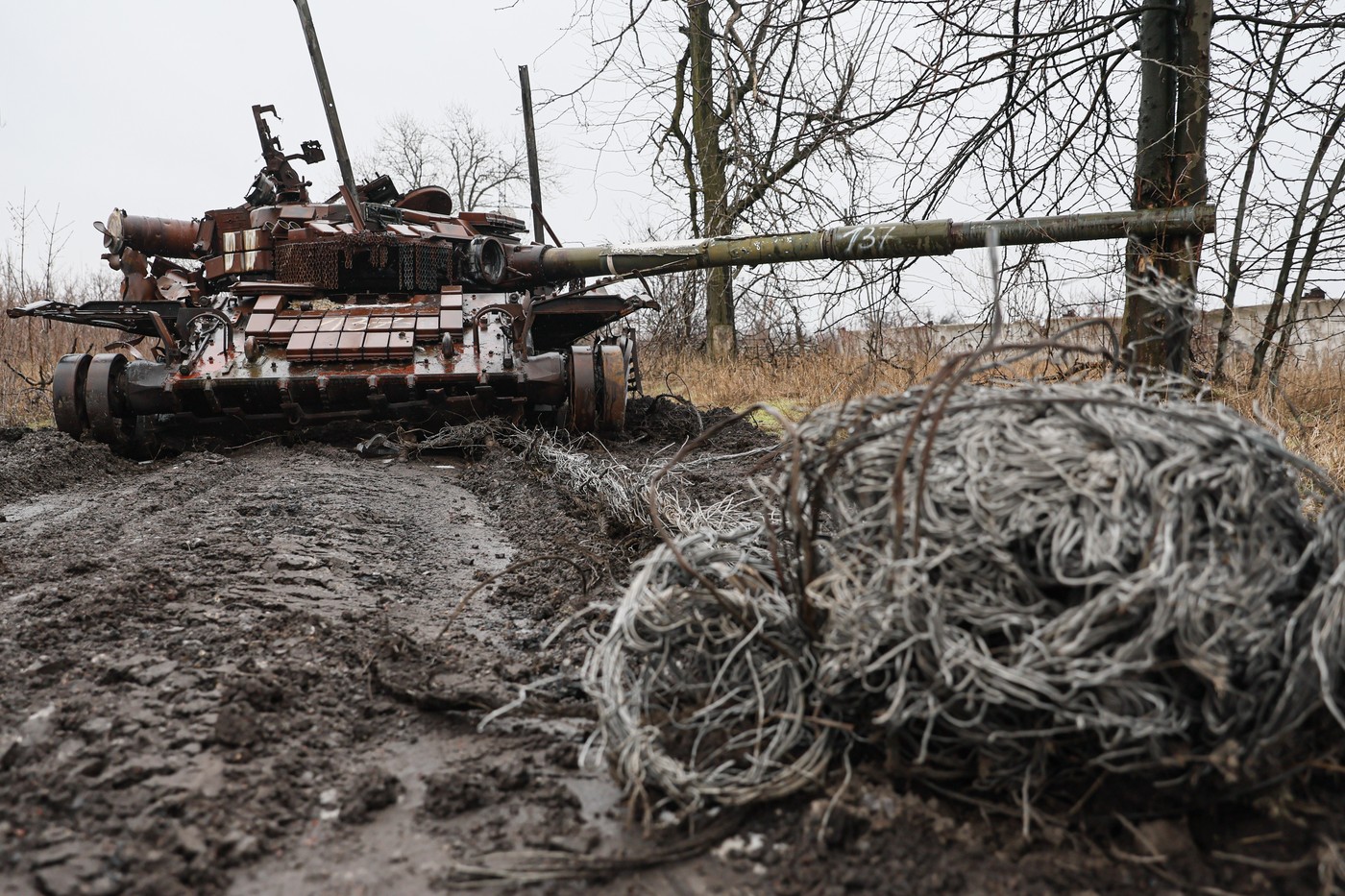
A factor that could have affected the conduct of hostilities on the front is the mud, which would make it difficult for armored vehicles to move and reduce the mobility of troops.
This does not exclude that the rate of advancement will increase in the future. In other years, Russia recovered Monday in May-June, when the land was drying. It is not clear whether the same will happen in 2026.
How the Russians inflate their success on the front
According to ISW, the Russians are using an artifice to claim various battlefield successes. Instead of clear conquests, Moscow's troops resort to infiltration.
Small groups enter certain disputed areas and claim to have conquered them, without actually having control over the territory.
Analysts estimate that Moscow has “occupied or infiltrated” 1,716 square km in the past 6 months, but in reality controls only 1,443 square km of Ukrainian territory.
The analysis also points out that the difference in terrain is represented by the so-called “grey areas”, where Russian troops do not have stable control or their positions are mixed with Ukrainian ones.
The institute concludes that the Kremlin uses these infiltrations to create the impression of continuous advance and to fuel information warfare.
Problems for Russian aviation
The Russian air campaign does not bode well either. Russian military bloggers have identified problems and assessed that Vladimir Putin's forces may not be able to take advantage of the increased bombing capabilities being talked about in the pro-Kremlin information space.
A Russian millblogger reported the combined use of two types of guided bombs on Sukhoi Su-34 aircraft and the possibility of increasing the strikes to 15,000–16,000 / month.
But aviation is facing major problems. There are many trained pilots, but the Russians lack aircraft and maintenance personnel, and engineers are sent to the front as infantrymen or sent to guard airfields.
A Kremlin-affiliated Russian military blogger argued that Russian forces will have difficulty taking advantage of this additional bombing capability because they are not effectively prioritizing attacks and wasting ammunition on minor targets, such as basements housing isolated infantrymen.
The war correspondent also complained that Moscow's forces frequently changed target sets without meeting their original objectives.