An artist from Focșani moved to South Africa and is preparing a book there about her childhood in Romania: “I loved growing up in the country”

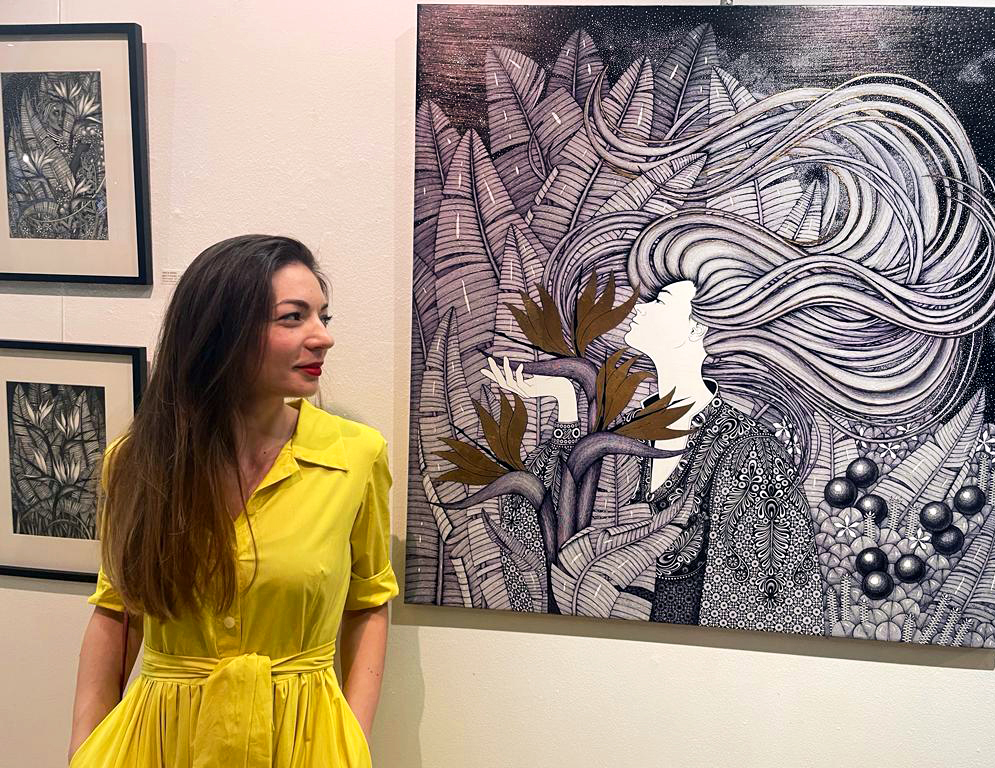
“I loved nature, the trees and the dirt on the road, the wooden fences, the animals, the numbness from lunch when it was hot, the grandparents who took care of the household, the children I played with, the fruits I ate from the trees,” says Anca Popa. From Cape Town, South Africa, the visual artist remembers her childhood with her grandparents.
Born in 1985, in Focșani, Anca Popa discovered her interest in art since childhood. He attended the Art School in his hometown, and later studied architecture at the “Ion Mincu” University of Architecture and Urbanism in Bucharest. His works can be found in private collections around the world, and his practice includes diverse collaborations, from the music industry (he illustrated album covers for The Amsterdams, Lizabett Russo or Ada Kaleh) and live visual productions, to illustration and publishing.
After almost 15 years spent in Bucharest, Anca Popa moved to Cape Town, where the new cultural and natural context deeply influenced the direction of her works. From the other end of the world, Anca is preparing for this year the release of a book with illustrations about childhood in Romania, entitled “Childhood Memories”.
“Everything was already outlined and drawn inside me; it absolutely had to be translated into physical form. And I love the fact that I can remind people of my childhood, of a world now gone”
Anca admits that moving to Cape Town was quite an impulsive move. “I wanted to move from Romania for several years, but I never thought that it would be in Cape Town, at the end of Africa. I flirted with the idea of going to Australia, where my best friend already lived, but my soul was not 100% convinced. And life created this opportunity to move to Cape Town and I did not hesitate. And I did well, because I fell irreparably in love with this city from the first days,” he says her.
“I felt at home very soon after moving to Cape Town”
Integration in South Africa was easier than she expected, thanks to an open and welcoming environment, she says, even though she didn't know anyone at first except the person she was in a relationship with at the time. After the period of isolation from the pandemic, however, he managed to really integrate and connect close friends. What surprised her the most is the diversity of South African society and the openness of the people, which creates a strong sense of acceptance. She also noted the active lifestyle of the locals and the spectacular natural beauty of Cape Town, which continues to inspire her.
Without exaggerating, I felt at home very shortly after moving in. It's an absolutely gorgeous city. And I am not an isolated case. Time and time again, I have spoken to people who, like me, are immigrants to Cape Town and share the same feeling of being home even though they haven't been here for a long time. But I must clarify: Cape Town is not all of South Africa. Cape Town is very different from other cities. I think integrating into other parts like Johannesburg is a completely different experience,” she says.
In everyday life, he combines the work of art director at a design company and immersive experiences with personal activities such as running on the Atlantic Ocean, meeting friends, hiking on Table Mountain and participating in cultural activities.
How he returned to his childhood in South Africa
Contact with the South African environment gave Anca clarity and a new sensibility for childhood themes, while local influences, such as specific flora, stimulated her artistic exploration. The experience led to significant growth as an artist and making work on a larger scale.
“For a while I was obsessed with strelitzia (No. exotic flower), which I drew and painted in absolutely any work. But what I can say for sure is that I have grown a lot as an artist since moving to South Africa. I started doing everything on a different scale.”
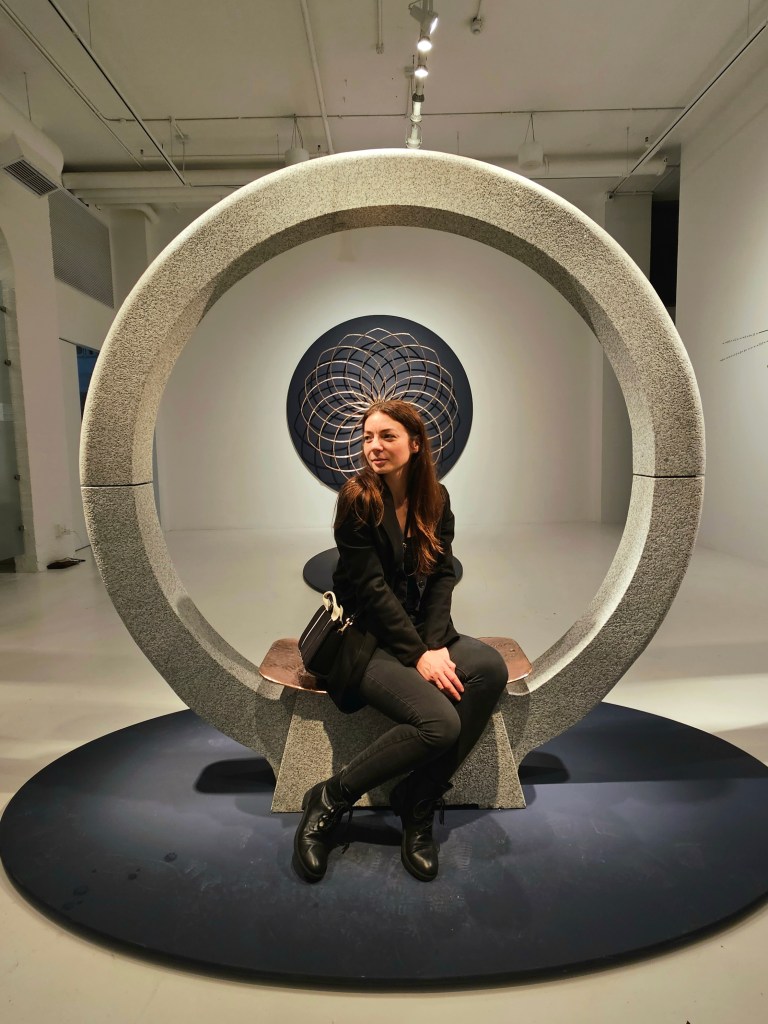
The book “Childhood Memories” did not start as a project. The illustration series started 9 years ago.
“I remember perfectly that night when I couldn't sleep and I had a flashback (No. sudden memory) very strongly with a moment from childhood. I had to write it down. So the first form of expression was in writing. Then I also did the illustration, because I had a very clear image in my mind. And so it all began. Then I made the second memory. I was posting on social media and people's reaction was very strong. It was absolutely amazing that so many people found themselves in my drawings and stories. I continued like this without a definite plan until about 5 years ago, when I had already published quite a lot and people were asking me when I was releasing an album. And so this project was born. At one point I wrote the structure for the entire book, I wrote the texts in draft form, I saw how many drawings I still had to make and, slowly, slowly, I kept working on this project so that now I have almost finished the last illustration”, says Anca.
“It's incredible to see how we all seem to have had the same childhood”
Childhood in the “country” is a strong landmark for Anca, because it was then that her first impressions of life were formed and she was a child who felt strongly. “An ignorant child, of course, but who felt every emotion in his whole body; I think that's why it's so easy for me now to put the memories of that time on paper. I loved growing up in the country. I loved nature, the trees and the dirt on the road, the wooden fences, the animals, the numbness of lunch when it was hot, the grandparents who took care of the household, the children I played with, the fruits we ate from the trees, the back gardens where there was the big walnut tree and where I was often alone and I could see far away in people's yards, because they only had a wire fence, the books that I read on the screen. Everything for me feels like a cartoon, a cartoon with a taste of happiness and nostalgia, like a breeze that you feel on your face sitting in a field and looking down at a house that you will never visit again,” says Anca.
Among the memories that were deeply imprinted on his mind is that of the village in mourning. “It would definitely be the funeral scenes, either of the village people or of the grandparents, a bit later.”
The book he is preparing to release this year in South Africa contains only illustrations and stories about his childhood spent in the country, at his grandparents, during the summer holidays. “The texts are written in a very simple and personal manner, naive, I could say. I'm not trying to give any unnecessary weight to the works; it's simply the experience of a child in the Romanian countryside from the beginning of the 90s. This is the main theme and there will be nothing about childhood in the city”, says Anca.
Even though it has some darker sides, she says it's also suitable for children. “People from the area of Eastern Europe, or even Europe and Russia, are going to find themselves a lot more in the events presented in the book. It's incredible to see how we all seem to have had the same childhood.”
“Home is a feeling you build inside”
He says that he is not yet in discussions with any publishing house in Romania. “I haven't decided whether I'm going to publish with a publishing house or on my own. I have a few plans in mind, including maybe collaborating with a sponsor, but I haven't started the steps in this regard. To be honest, I'm curious if I'll be approached by someone interested in investing in this project. I'm convinced that it will be a very valuable project, which will continue to increase in value over time,” she reveals.
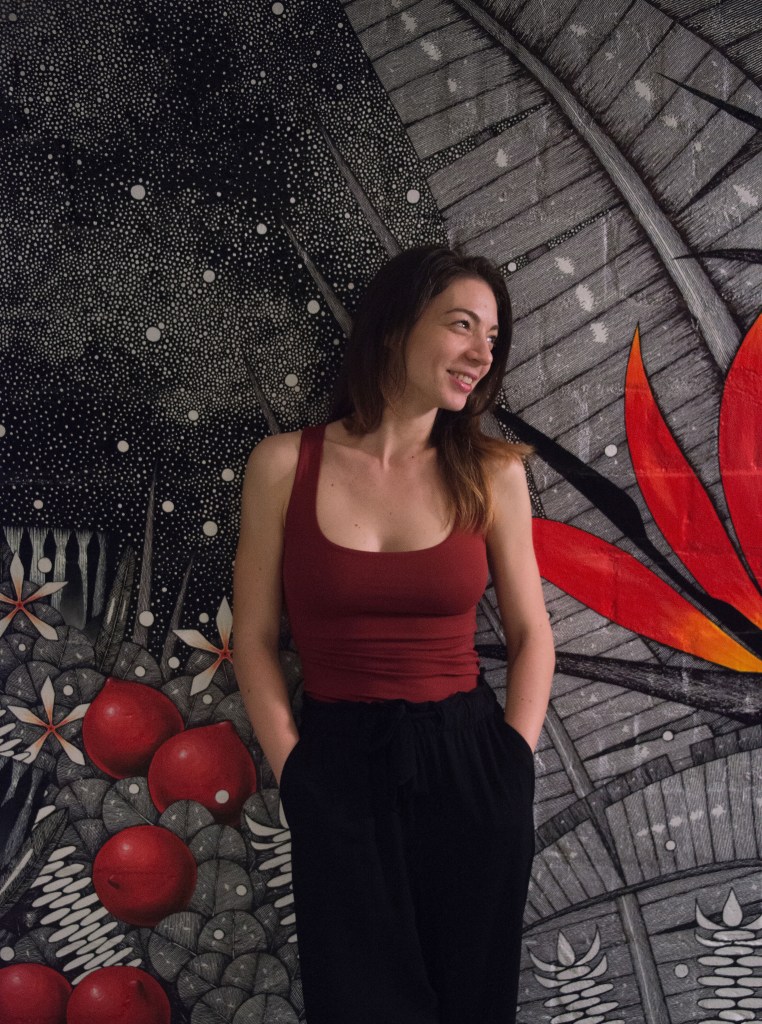
After the launch, Anca plans to organize exhibitions of the original works and explore new themes on larger formats, with the possibility of a second volume on childhood, this time in the city. As for living in Cape Town, although she has lived there for over seven years and loves the city, she remains open to new experiences and locations, including the possibility of living temporarily in other cities such as Tokyo.
I'm curious to know where home is for Anca Popa and her “childhood memories”: “Home is me. And when I say 'me', I don't even mean me per sebecause I clearly feel that I am only a very small part of life, as we all are. Home is a feeling you build inside, when you can really look at yourself and feel that you are part of a whole that is, in fact, home. I think home is about conquering your fears. I know it sounds very abstract or esoteric and this is not the place or time to debate this, but when you are no longer afraid, you are at home anywhere, even when you will no longer exist as a physical representation,” she replies.
A cultural difference
From South Africa, the artist says that she perceives Romania differently than she did before, noticing more clearly the negative attitude and constant criticism of the people, which contrasts sharply with the openness and positive spirit of South Africa. The change in perspective was a gradual process, but the culture shock felt highlights this difference to him. “And what I find sad is the fact that Romanians don't even realize that they are doing this. And how could you, when everything around you is the same? That is normality in Romania.”
I asked Anca Popa what was really behind the decision to leave Romania after almost 15 years in Bucharest: was it a departure “from something” or “towards something”? “I love this question. I think it was actually towards something rather than from something, although it wasn't really clear to me at the time,” says Anca. “The truth is that, for some time, I no longer felt ok in Bucharest or in Romania. I felt. many times. that I was suffocating”, confesses Anca.
for her Romania is now what Focșani was after she moved to Bucharest: the place where she comes from, the place where she grew up, the place where she still has many friends and family, a place to which she is connected by many things and memories. “But it's a place I just want to visit, for shorter or longer periods. I can't necessarily say it's a break, but it's clearly a stage that was. Maybe I'll come back, I don't know what the future holds, but for now, I don't feel like I'm part of the landscape anymore,” she adds.
Anca confesses that all her life she will recommend herself as an artist from Romania. “But beyond that, honestly, these things don't matter to me. I don't feel like I belong to any scene in a particular country. And that's maybe also thanks to the Internet, where now these borders are quite blurred.”