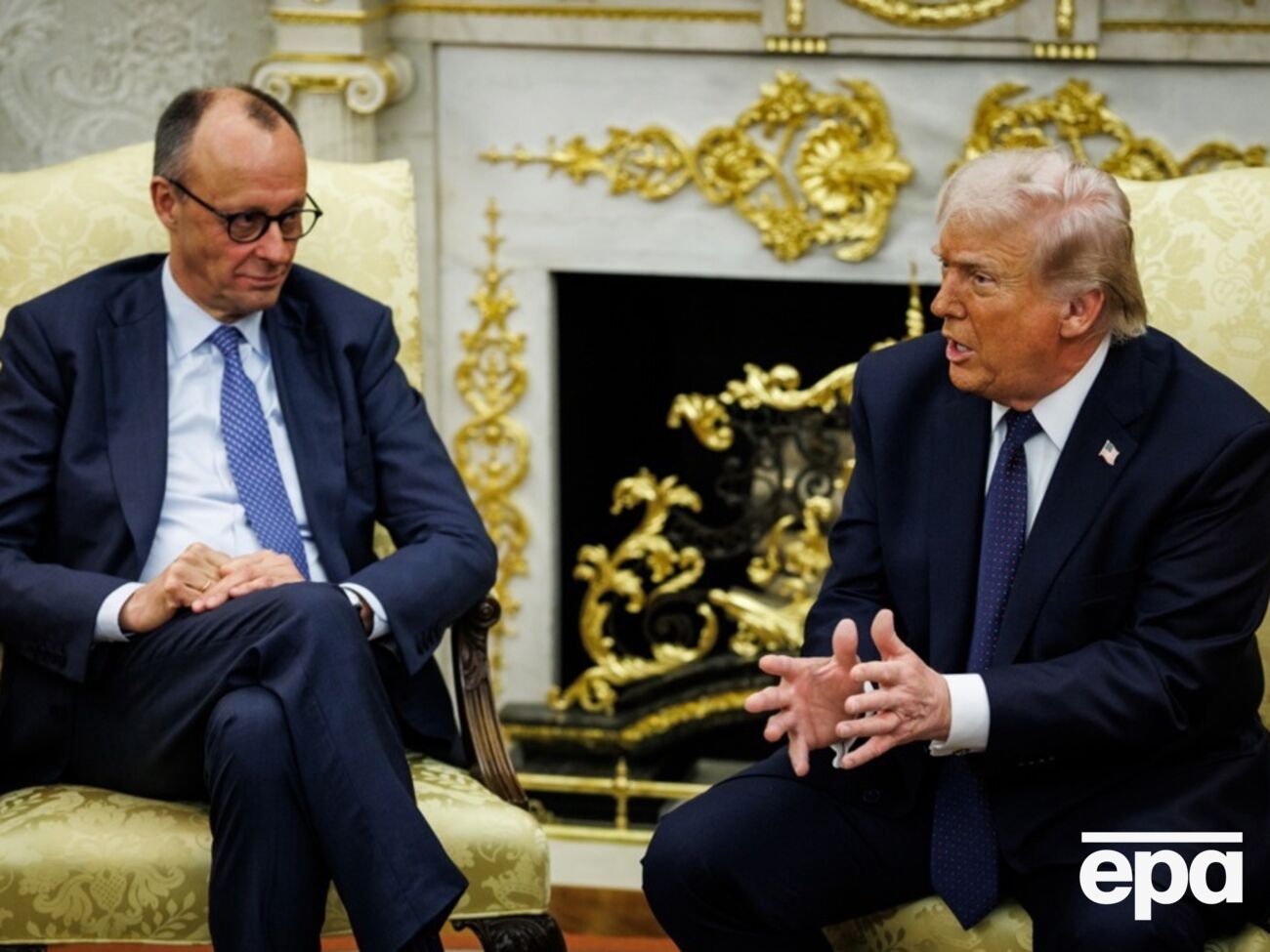
Trump vs. Merz: how the dispute between the leaders arose
Tensions between the leaders of the countries increased gradually. On April 16, the head of the German government said that Germany is ready to join in ensuring security in the Strait of Hormuz, but only with an international mandate, writes Radio Liberty.
Relations worsened on April 27, when Merz criticized the US war in the Middle East. He indicated that he sees no prospect of ending the war, “since the Iranians are obviously stronger than expected,” and Washington has no strategy in dealing with Iran.
“An entire nation is being humiliated by the Iranian leadership, especially by the so-called Revolutionary Guard,” Merz said, referring to the United States.
The next day, Trump indicated that Merz “doesn't know what he's talking about.” Later he threatened Germany with a reduction in the American contingent.
“The United States is studying and analyzing the possibility of reducing the number of troops in Germany, and a decision on this issue will be made soon,” the head of the White House wrote in Truth Social.
A senior Pentagon official told Reuters that the German remarks were “inappropriate and unhelpful.”
“The President is responding fairly to these counterproductive remarks,” the official said, commenting on the decision to withdraw troops from Germany.
Politico writes that the German chancellor has been balancing his relationship with Trump for months, but now appears to have slipped.
Merz tried to remain in Trump's good graces as a strategic necessity. However, with his statement about “humiliating” the United States, he seriously offended Trump, the media notes.
The Chancellor probably hoped that the conflict would calm down and tried to soften it publicly. As Die Zeit wrote, Merz told reporters that personal relations between them remain “consistently good.”
He added that, at least from his side, this is so. “We, as before, are engaged in a constructive dialogue with each other,” Merz emphasized.
But Trump, as Politico points out, was still “seething with anger,” although he had previously called Merz a friend and praised his policies.
“The German Chancellor should spend more time ending the war with Russia/Ukraine (where he was completely ineffective!) and rebuilding his broken country, especially in the immigration and energy areas, and less time interfering with those who are getting rid of the Iranian nuclear threat, thereby making the world, particularly Germany, a safer place!” Trump wrote on Truth Social shortly after Mertz's comments.
The publication believes that the chancellor may have gone too far with his words about “humiliation,” which could threaten to break relations with the president.
How Trump decided to “punish” Germany
The Pentagon said the troop withdrawal is expected to be completed within the next six to 12 months. According to Reuters, there are approximately 35 thousand US military personnel in Germany: more than anywhere else in Europe. That is, Trump decided to withdraw a fifth of the American contingent from the country. In particular, the American combat brigade currently stationed there will leave Germany. Also, a battalion of long-range fire weapons, which the previous presidential administration planned to deploy in the country at the end of this year, will not be sent to the region.
One official told Reuters the reduction would return the number of U.S. troops in Europe to roughly pre-2022 levels, before Russia's full-scale invasion of Ukraine prompted then-President Joe Biden to ramp up its military presence.
The official also explained this decision by the Trump administration's desire to make Europe the main guarantor of security on the continent. However, this is another clear reminder of the White House’s readiness to respond to the likely disloyalty of its allies, Reuters believes.
Trump has long wanted to reduce the presence of American troops in Germany, the media writes. At the end of his first presidential term, he insisted on reducing troop levels by about 12,000, but this was never done. After winning the election, Joe Biden reversed Trump's plan.
Trump's announcement that he was reviewing the number of US troops in Germany surprised German military officials who spoke to Reuters. They called meetings at the Pentagon earlier in the day constructive.
They argue that Germany has done more than other allies to support the US war in Iran, including by allowing the use of bases and allowing overflights of its territory.
However, this did not stop Trump. In addition, on May 1, he announced a decision to increase duties on cars from the European Union from 15% to 25%, from which Germany will suffer the most, writes Reuters.
Bloomberg explained that German automakers like BMW and Mercedes-Benz have manufacturing facilities in the U.S. to make SUVs (Trump has said tariffs won't be levied if the cars are made in U.S. plants), but they continue to bring other models to America, such as the BMW 3 Series and Mercedes-Benz S-Class.
What other countries are under threat of “sanctions” from Trump?
Last week, Reuters reported on an internal Pentagon email outlining options for “punishing” NATO allies that Washington believes did not support US operations in the war with Iran. According to the agency, we are talking, in particular, about the suspension of Spain's membership in the Alliance and a review of the US position regarding British claims to the Falkland Islands (the United States recognizes that the islands are under the control of Great Britain, but Argentina also claims them).
On April 30, the US President said that he was considering the possibility of reducing the number of American troops in Spain and Italy. He said Italy was “not helpful at all” to the United States, and Spain behaved “absolutely terrible.”
Last month he threatened to impose a full US trade embargo on Spain, which has said it will not allow its bases or airspace to be used to attack Iran.
Trump also criticized Italian Prime Minister Giorgia Meloni for not supporting the United States in the war against Iran. In April, the US President said that Meloni, who had previously been his supporter, did not show enough determination and allegedly let Washington down.