Tom Clifford is an Irish journalist who has been working in the Far East for years. During his thirty-year career, he witnessed many rapid changes.
The fight is not only about the future of Ukraine. The future of the continent is at stake.
Viktor Orban's defeat in Hungary triggered a wave of mutual congratulations in European capitals. While this should be celebrated, the importance of this event should not be overstated. Orban was corrupt and inept. He had unwittingly done Europe a huge favor, provided this one will draw conclusions from this. It showed how weak Europe is in the face of the threat of authoritarian rule.
Ukraine, too, is teaching the continent a lesson that is difficult to fully grasp: Europe must be united and ready to fight to fend off the Russian threat.
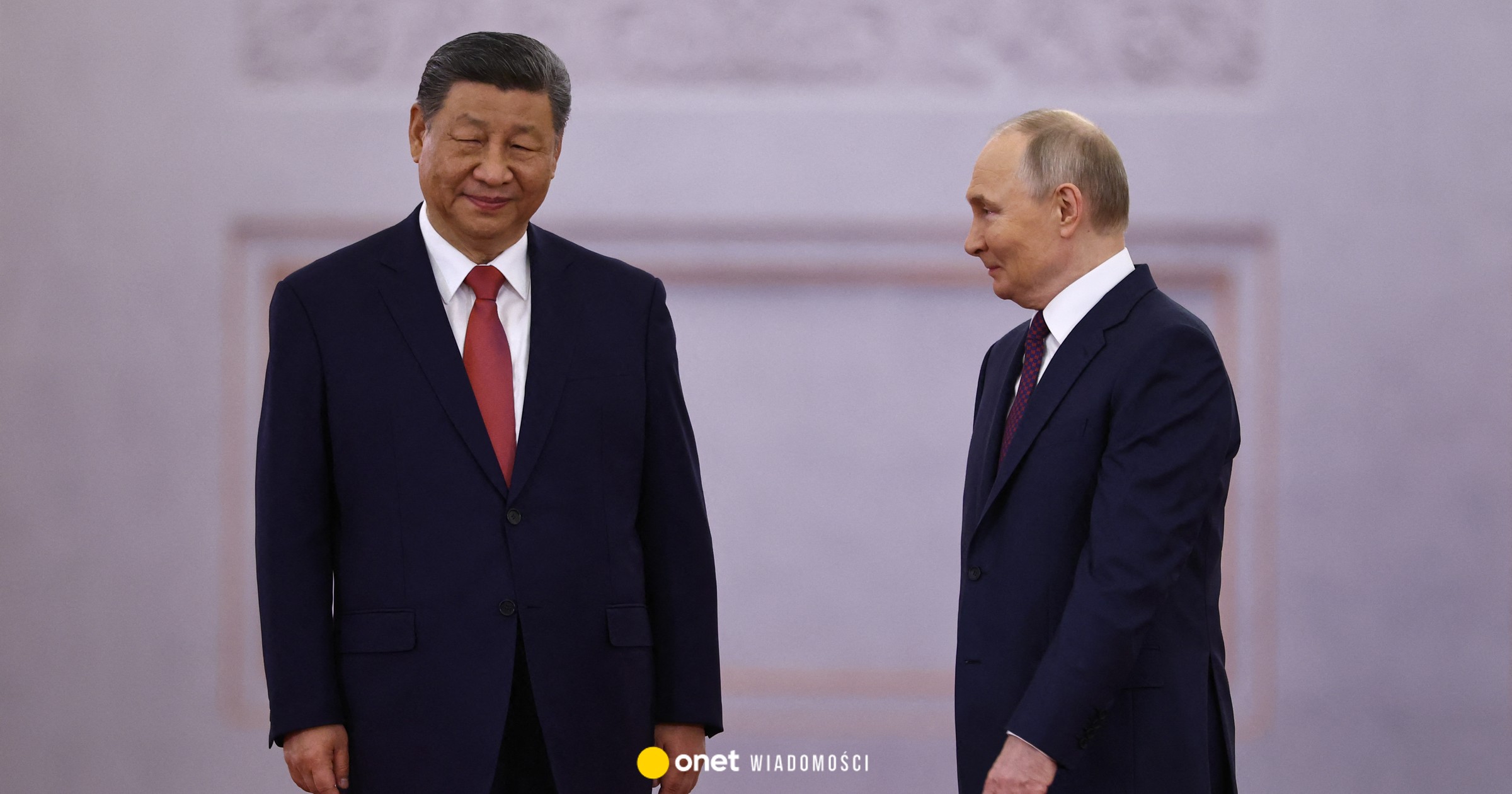
Ideology does not drive Vladimir Putin.
His driving force is the pursuit of his own aggrandizement, which can be seen in his suits, sweaters and watches costing thousands of euros apiece. The average monthly salary in Russia is the equivalent of approximately $860. (according to the current exchange rate: PLN 3.1 thousand).
Putin staying in power depends on obedient army. The economy, even with higher oil prices, has been devastated by corruption and weakened by sanctions.
Power politics
We live in strange times. The leaders of Russia, the United States and China rely to varying degrees either on direct military success or on the threat of military force.
Russia is throwing its poorly trained soldiers into a meat grinder. Donald Trump discovers and exposes the limits of US power in the Middle East. Xi Jinping in China has his eye on Taiwan, but the war with Iran has shown him that the use of air power alone is not enough to defeat the enemy. Infrastructure can be bombed, key bridges and transport links blown up, and even power plants destroyed. However, even all this does not guarantee victory, as Iran has shown. Ground troops are needed.
China may have abandoned its one-child policy, but many of the soldiers who would be sent to Taiwan to fight and die there would be only children. In addition to great sadness for the family, the death of each soldier has a political cost. In a country with a weak social welfare system, elderly parents depend on their children to provide for them.
Mission completed successfully
Ukraine's resistance to aggression protects Europe, but this should not mean that its leaders have secured the continent against aggression.
— I want to wake up those who live in illusions. Russia is preparing for further acts of aggression – said Polish Prime Minister Donald Tusk after the informal meeting of the European Council in Cyprus this month.
Many considered it too alarmist. As Iran dominated the international headlines, the situation in Ukraine was pushed off the front pages of newspapers and from top stories on websites.
Tusk's warning should not be so quickly dismissed as a false alarm.
The article continues below the video
No one in the Trump administration was brazen enough to say that Ukraine was a distant country that we knew little about. But the desire to make concessions to Putin seems to fit too well into the mindset of Washington's decaffeinated latte-sipping political cafes.
Putin, as we know, has two extraordinary military successes to his credit. Georgia and the 2008 war are now largely conveniently forgotten in the West. This six-day war, which was a brutal conflict, never involved South Ossetia or Abkhazia. Its main aim was to ensure that the use of the Black Sea port of Poti was never an option for an enlarged NATO, and to keep Georgia under its control. Mission completed successfully.
Lack of European decisiveness
I was in Georgia during those hot August days. A Russian officer politely asked me at gunpoint to take shelter under the tank to, as he put it, escape the sun. I agreed. Two hours later I was released. The roadblock where I was stopped was a half-hour drive from the key naval base at Poti. Let's not forget that Crimea was occupied by Russia without much opposition.
Putin is not crazy. He may lack ideology, but he is cold and calculating.
He knows there is less opposition to his actions in Europe than there should be. He thought that it would be weak in Ukraine, but he was wrong.
The great Czechoslovak dissident and statesman Vaclav Havel was always keen to remind journalists that Central and Eastern Europe was the incubator of two world wars. He was deeply pessimistic about Russia's intentions and Europe's lack of decisiveness.
In the twilight of his life, when he quit smoking, he regularly met with journalists in his office, located in a converted church crypt in Prague. He never tired of telling stories about pants to help illustrate the difference between communism and democracy. During communism, he said, when a man got up, he had one pair of pants to put on. Under capitalism he had a choice. But what to wear? Will it be hot or cold? Is he going somewhere fancy? Will the color of the pants match the jacket or shoes? Are they fashionable and maybe even comfortable? It's very confusing, Havel said, but it's still better to live in a democracy. He skillfully used humor to present his point of view. When the laughter subsided, he moved on to his life's purpose.
I’m Ashley Davis as an editor, I’m committed to upholding the highest standards of integrity and accuracy in every piece we publish. My work is driven by curiosity, a passion for truth, and a belief that journalism plays a crucial role in shaping public discourse. I strive to tell stories that not only inform but also inspire action and conversation.