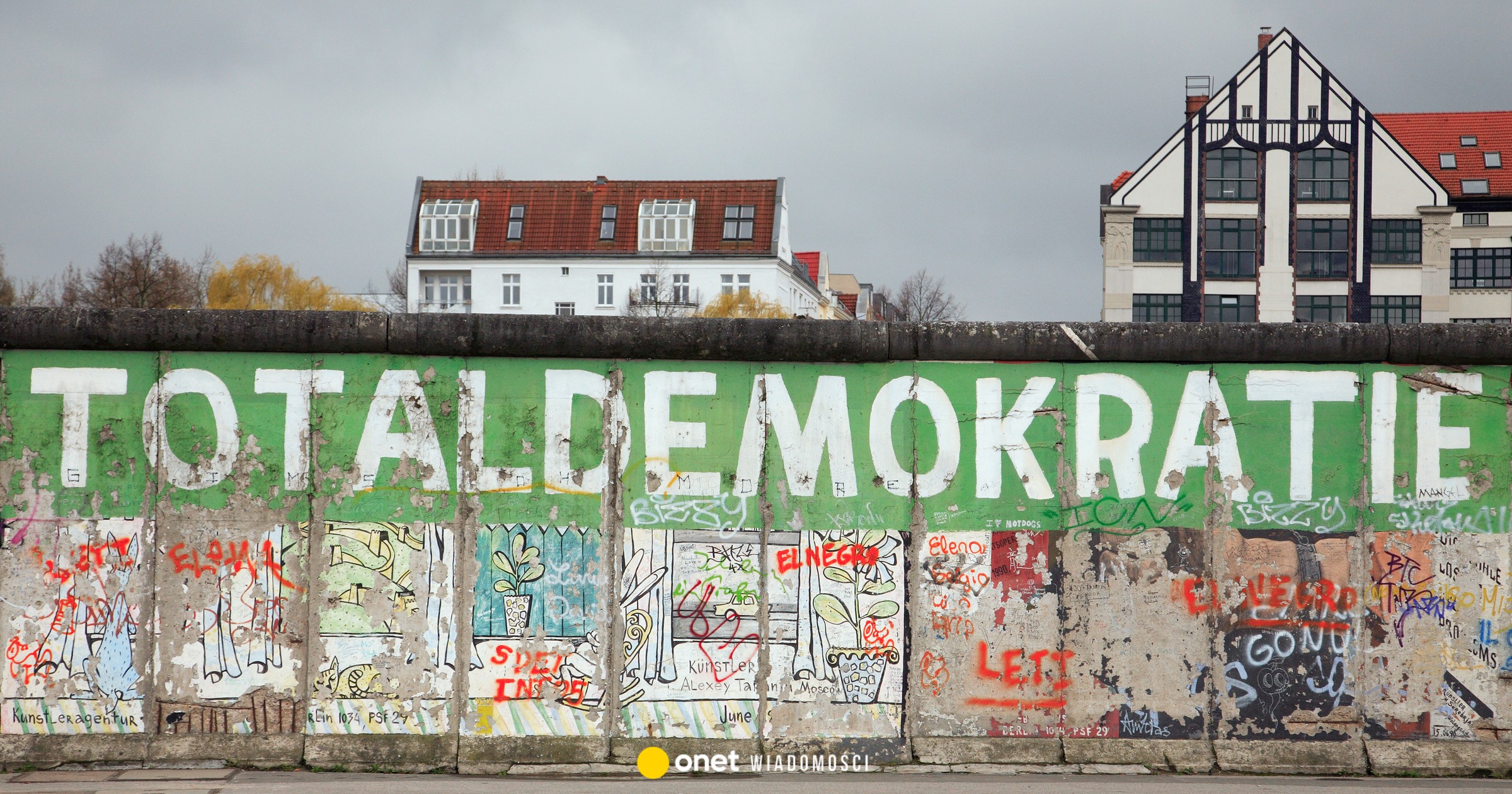
What does it mean to be East German today? The simplest answer would be misleading. Because East German identity is no longer just a matter of origin or geography. Today it is an expression a common space of experience, biographical and mental formationthat has survived in families, circles of friends, regions and generations. It is the knowledge of change, loss, adaptation and new beginnings.
East German nostalgiais often exaggerated in journalism. For younger generations, the GDR is just a chapter in their parents' stories. Similarly, it would be wrong to talk about eastern Germans as a homogeneous group – here too the society is diverse and pluralistic. However, the biographical shocks of the 1990s became the foundation of a new identity: The change in the system brought freedom and democracy, but also a sudden depreciation of CVs, professional careers and everyday facts. What had previously been considered an achievement suddenly became less valuable – and some things to be proud of were treated as burdens.
These experiences are still present in families and connect people. They explain why East German identity is still characterized today particular sensitivity to inequalities, the need for recognition and social tensions. This, of course, has to do with the feeling of injustice. But not only that. It's also about judgment, skepticism about big promises, and realism based on experience. Anyone who knows from experience that history does not proceed smoothly, but can suddenly turn life upside down, is more cautious when it comes to political slogans about the lack of an alternative.
The world is getting complicated. Old, simple answers are not enough
Describing eastern Germany solely as a region of deficits would be shallow. Yes, economic and structural differences with the West still exist – anyone who denies this is ignoring the facts. However, the victim narrative would be equally wrong. Because something has changed: more and more eastern Germans, especially young ones, no longer see their origins solely through the prism of exclusion, but also through opportunities. The East is beginning to define itself not only in relation to Western patterns, but also by its own experiences.
The article continues below the video
This has political and cultural significance. Anyone who sees themselves only as the wronged remains a hostage to the reaction. Those who treat their own experiences as competences gain room for action. Therein lies an opportunity: Eastern Germany has particular experience in dealing with uncertainty.
Even before 1989, improvisation and limited resources were commonplace. After 1990, new challenges arose that simply had to be overcome somehow. Many people had to reinvent themselves. It was often painful, but it also brought resilience and a pragmatic approach to problem-solving.
The entire society today finds itself in a state of increasing chaos. Old certainties are disappearing, the economy is reeling, and political divisions are deepening. The world has become more complex – both on a global and immediate scale. The more this complexity increases, the less simple answers and quick promises work.
It's possible that eastern Germany is more resistant
New issues revolve around values. They are existential in nature and concern global issues. There are disputes about borders, justice, security, Europe, wars and world order. Such a diverse society needs more nuanced answers. Not every region, social group or individual responds to the same challenges in the same way. Anyone who doesn't notice this only deepens the frustration. Politics often fails precisely because it does not also take difficult questions seriously. Particularly in eastern Germany, there was a deep-seated feeling that those affected by change were not always listened to.
There are also political forces that build their position on division and isolation, thus trying to reduce the feeling of being overwhelmed by growing problems. There are those who gain political attractiveness through primitive populism. Where disappointment, feeling of lack of representation and hurt persist for a long time, empty promises appear more easily.
Therefore, the AfD's success in the east is not – as is often said – due to the democratic immaturity of the inhabitants, but from a mixture of protest, distrust, resignation and the need for someone to express their moods out loud. This feeling is increasingly spreading to the West as well. However, whether such choices have even the slightest chance of bringing constructive progress and the desired prospects raises considerable doubts. No lasting future comes from populism.
Inauguration of the AfD election campaign, January 25, 2025, Halle in Saxony-AnhaltHENDRIK SCHMIDT / DPA / dpa Picture-Alliance via AFP / AFP
Moralizing sermons in the media are not enough as an answer. There is a need for seriousness and political attention, as well as a more resilient social attitude in which – despite differences – there is a place to talk on equal termsand difference is not treated as a defect and is not automatically discredited.
There may be an underestimated power in this – because such a change in perspective could make the ferment in the East a starting point for a new definition of identity: not as a space of deficits, but as a field of experience with the future.
East Germany should not place itself in opposition to the rest of the country either politically or mentally isolate itself. Their strength may lie in using the experience they have already gained from the systemic break to renovate German society. This may be a place where new forms of coexistence are tested.
The East knows the fragility of expectations, the need to look for new paths and the power of small, specific solutions. Especially in municipalities, associations, schools, workplaces and families, we see it every day: where there are no large aid programs, real life is often born. This is where the future begins.
Solutions to society's challenges are not about everyone being the same. Rather, they arise when we listen to each other, negotiate on equal terms and create a vision of the future together. A future where diversity of views is not a problem, but an opportunity. The East does not need a reduced tariff or constant diagnosis. He needs respect for his differences and space for his possibilities.
I’m Ashley Davis as an editor, I’m committed to upholding the highest standards of integrity and accuracy in every piece we publish. My work is driven by curiosity, a passion for truth, and a belief that journalism plays a crucial role in shaping public discourse. I strive to tell stories that not only inform but also inspire action and conversation.