No sooner had local authorities announced that they had finally contained the fire that had raged for days at the oil refinery in Tuapse, a port city on Russia's Black Sea coast, than the fire broke out again.
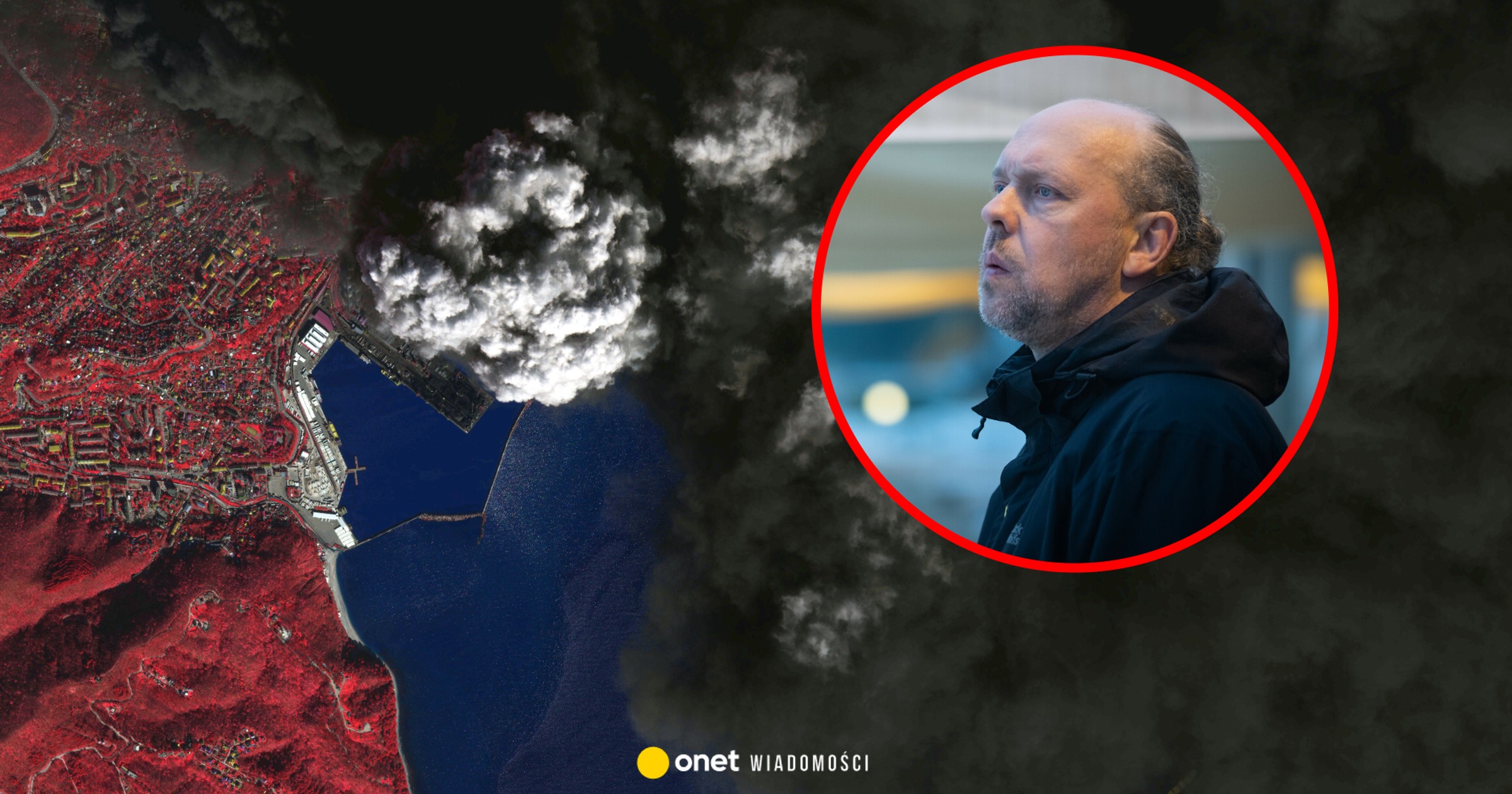
The fire can be seen from distant Sochi and even from space. Satellite images show extensive oil slicks spreading across the sea surface. On the Internet, volunteers publish recordings of dead sea animals, including dolphins, whose bodies are covered with crude oil.
How much oil has already been leaked: hundreds of tons, maybe thousands? Apparently no one knows.
President Vladimir Putin said on Tuesday that “there are no serious threats in Tuapse and people are coping with challenges on the ground.” As he stated, this information was provided to him by Governor Veniamin Kondratyev.
This is not the first time Putin has faced a catastrophe — nor is it the first time he has downplayed it. However, it is worth taking a closer look at what is really happening.
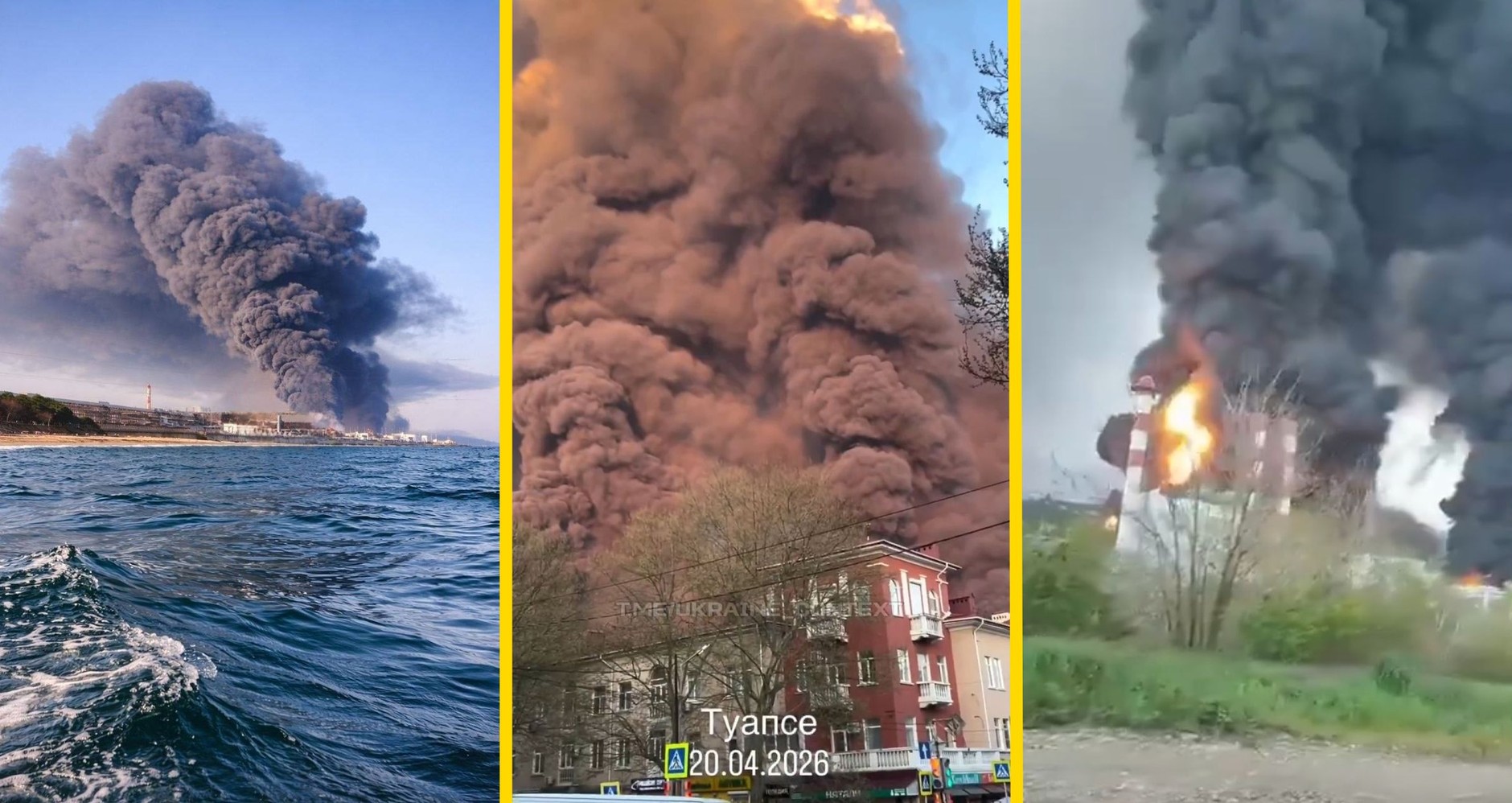
The fire first broke out last week. Storage tanks filled with petroleum products burned, sending columns of black smoke into the sky visible from over 100 km away.
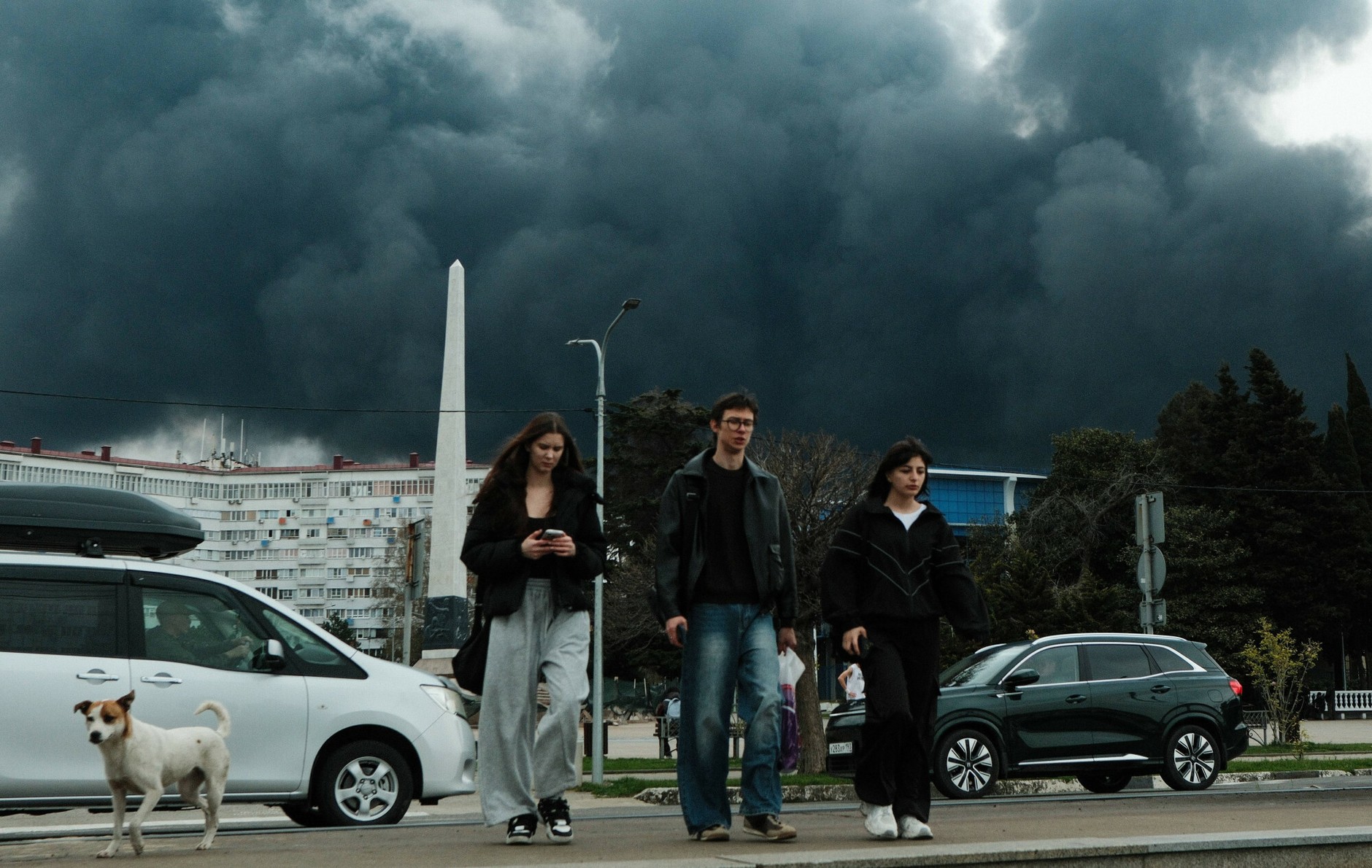
The amount of combustion products released into the atmosphere was so enormous that Tuapse experienced a phenomenon that residents called “oil rain” – it looked as if the entire city was doused with oil. A greasy, oily layer has settled on the streets, plants, people and pets and strays that found themselves outside at the wrong time.
Fire in Tuapse after drone attacks, April 16, 2026 (stock photo)Gallo Images/Getty Images
This layer contains a toxic mix of pollutants, including carcinogens such as benzene. As the fire continues, dangerous concentrations of these substances remain in the air. So the “black rain” may still fall.
Officials say the levels of harmful substances are two to three times higher than those considered safe.
There is no reliable, independent data, but it is difficult to imagine that concentrations near the fire would be only two or three times higher than the permissible limits. More likely than not they exceed them dozens, perhaps even hundreds of times.
About 60% of it burned last week. plant storage capacity. Now the fire spread to the rest.
Ukraine's attack on the oil refinery in TuapseX/NOELREPORTS/MilitaryNewsUA/Clement Molin
The emerging clouds of soot and carcinogenic substances are particularly dangerous for children, the elderly and people with cardiovascular and respiratory diseases. People in poorer health are already feeling the effects. The increase in cancer rates will come later – that's how these types of exposures work.
And when the fire finally goes out, the disaster will not end. Toxic residues from fires and oily precipitation will remain in the environment, entering human bodies again and again.
The silent drama of the Black Sea
The damage is not limited to the air. At least several hundred tons of petroleum products entered the Tuapse River and the Black Sea. Already last week, satellite images showed extensive oil slicks; this week the leak continued. The effects on marine and coastal ecosystems will be severe. Contamination of drinking water is a very real threat.
To understand what may happen next, just remember the Black Sea spill at the end of 2024, when thousands of tons of petroleum products were released into the environment. Fish, mollusks, dolphins and birds died en masse then.
Just like then, now volunteers are trying to react in panic, while Putin and Governor Kondratyev convince the country that there are no serious problems.
Do you remember those videos of birds being cleaned of oil? Well, most of them die anyway. This is not to say that washing the birds makes no sense – some of them will survive. Just not much.
Even if the visible oil is removed from the beaches, the problem will continue for years. Each storm will bring buried petroleum products back to the surface. Effective, repeated cleanup efforts require sustained resources and political determination – both of which are in short supply amid the war in Ukraine and the global oil crisis.
This is just the beginning – it will only get worse
In over 35 years of working in environmental protection, I do not recall a single case in which the Russian authorities were prepared for a crisis situation. They always need a lot of time to decide what to do at the beginning of a crisis – and that's when every moment counts.
The article continues below the video
A proper response to such a serious refinery fire should start with clear messages to residents:
stay at home,
close the windows,
limit contact with polluted air.
It should include the distribution of effective protective equipment – not surgical masks, but respirators capable of filtering fine particles – and, crucially, early evacuation to areas with clean air.
Effects of the fire at the Tuapse refinery, April 21, 2026.Boris Morozov / East News
On Tuesday, there were sudden reports of evacuations. In fact, residents of several streets were moved to a nearby school, still located in the contamination zone, instead of being taken to where the air was not polluted with carcinogens.
This disaster is part of the broader consequences of the senseless and bloody war that Putin unleashed more than four years ago. He doesn't care about the hundreds of thousands of dead Russian and Ukrainian soldiers for whose deaths he is directly responsible, so it would be naive to expect him to care about a burning refinery and a poisoned sea.
And this is just the beginning – it will only get worse.
I’m Ashley Davis as an editor, I’m committed to upholding the highest standards of integrity and accuracy in every piece we publish. My work is driven by curiosity, a passion for truth, and a belief that journalism plays a crucial role in shaping public discourse. I strive to tell stories that not only inform but also inspire action and conversation.