Europe could be heading for an aviation crisis. Romania has the necessary levers to overcome it, but the cost for drivers would be huge

The price of kerosene in Europe has doubled since the start of the Iran war, prompting more and more airlines to announce a number of canceled flights, which will significantly affect summer holidays. Romania has the necessary levers to solve this crisis, but the costs for Romanian drivers would be huge.
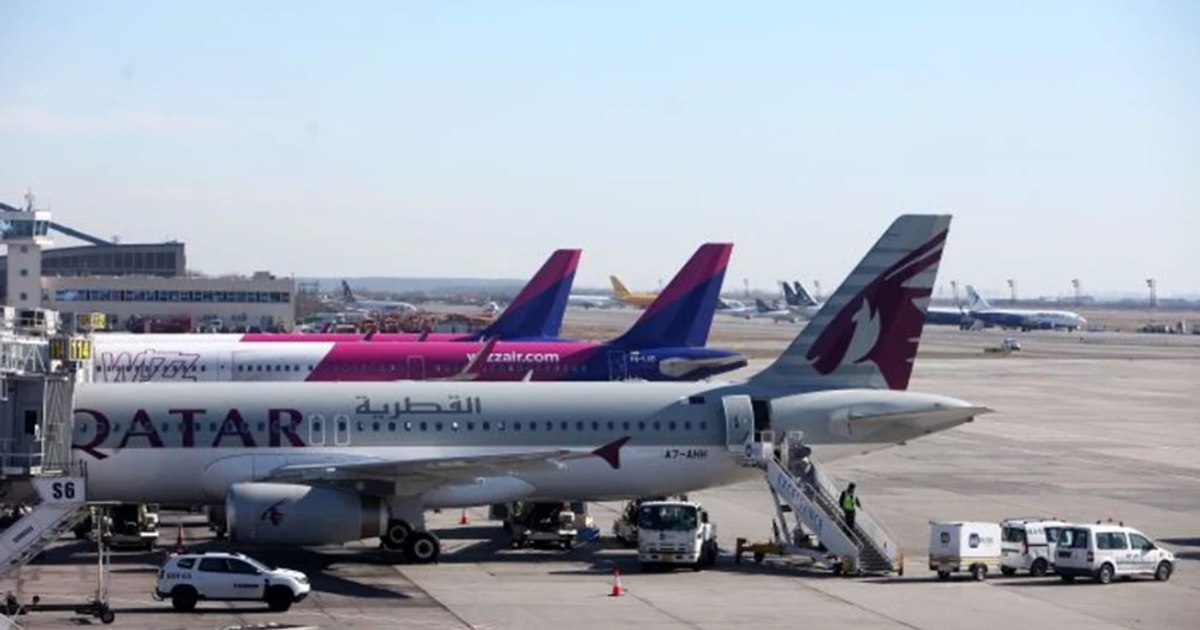
Europe could be heading for an aviation crisis. Archive photo
A warning by the head of the International Energy Agency that Europe's kerosene demand could be met for just six weeks sparked strong reactions in the markets. Officially, the European Union was quick to say that supply is currently unaffected. However, the mere appearance of this scenario was enough to generate volatility and tensions in the stock markets, a sign that investors are counting on a rapid deterioration of the situation.
Although the term “six weeks” may sound alarming, it must be seen in the context of logistical limitations. Airports operate largely on a “just-in-time” system, with low inventories and constant deliveries, making any disruption felt immediately. Even so, the European aviation industry is not in a comfortable position, especially after the successive shocks of recent years.
The conflict is prolonging pressure on supplies
The duration of the conflict in the Middle East is decisive. Blockages in the Strait of Hormuz affect a vital artery for global energy: about 20 percent of the world's oil and up to 30 percent of aviation fuel flows transit this route. In addition, the type of oil in the region is particularly suitable for refining into kerosene, which complicates its rapid replacement.
Some alternative estimates, including from the Netherlands, suggest that if strategic reserves are included, Europe would actually have 5-6 months of coverage. However, this figure is critically dependent on the ability to replace lost flows. In industry scenarios, a replacement rate of 75% would push a deficit into August, while a level of just 50% could lead to problems as early as June.
This “shortage” would not mean a complete stop to flights, but it would lead to a harsh prioritization: profitable and essential routes would be maintained, while secondary destinations would be temporarily removed.
The market is already starting to adjust
The first balancing mechanism is the price itself. Doubling the cost of kerosene in Europe is forcing airlines to rethink their networks. Lufthansa has already announced the reduction of more than 100 flights a day until the autumn, a measure designed to save significant amounts of fuel.
In parallel, the demand starts to decrease naturally. Remote destinations become less attractive and tourists adjust their plans. According to Deutsche Bank, global air capacity (excluding the US) could fall by more than 2% during this period. However, these estimates could be exceeded if tensions persist or expand.
The price differences between the regions also become relevant: while Europe reached around 1,484 dollars/ton, in the USA the price is lower, around 1,322 dollars/ton. This gap could attract fuel flows across the Atlantic, but not enough to fully offset the shortfall.
Summer flights in danger: two airlines warn of flight cancellations
Airlines are not affected in the same way
The degree of protection differs significantly between companies. In Europe, hedging is common practice, with 60–90% of fuel requirements hedged 12–18 months in advance. Thus, operators such as Ryanair or Lufthansa are partially protected in the short term.
In the US, where domestic production is greater, this practice is less used. But if price differentials become attractive and exports increase, even American companies will not be completely immune to pressure.
In the medium term, however, no operator can avoid the reality: higher costs will be transferred to ticket prices or reduced flight capacity.
Romania, between opportunity and political cost
XTB's strategy consultant, Claudiu Cazacu, shows that, in this context, Romania has a rare advantage in the region: internal refining capacity and flexibility in the production mix. Refineries could increase kerosene production by diverting some of the flows to diesel.
“Romania is in a favorable situation, having the ability to cover its consumption. At the same time, the structure of some refineries would allow the modification of production ratios. A reorientation of refining towards more kerosene could be economically viable, given the higher percentage increase compared to that of gasoline and diesel. The cost would be, however, the reduction of diesel quantities, a measure that would not be easily accepted by consumers. A compromise solution could be a limited adjustment of the mix of production.
For travelers, an option to consider would be to purchase plane tickets at prices not yet adjusted. However, the risk of flight cancellations and the need for new tickets on other routes, dates or significantly more expensive ones is relatively high. The opening of the summer holiday season could come with a harsh reality this year if kerosene supply is not resumed by then. The natural adjustment of transport demand may prove insufficient. Airlines may resort to additional flight cancellations. Without a prior resumption of fuel deliveries via Hormuz, in the current estimate, June could usher in a suite of route adjustments and flight cancellations of historic magnitude.”emphasizes Claudiu Cazacu.
Plane tickets are getting more expensive. List of airlines that have announced increases
Summer could bring major turbulence
For passengers, the next period comes with high uncertainties. Early purchase of tickets may seem advantageous, but the risk of cancellation or rescheduling is significant. In the absence of a resumption of flows through the Strait of Hormuz, the summer could mark the beginning of a period of massive adjustments in aviation.
Cutting flights, raising prices and reconfiguring routes could become the new normal, at least temporarily. If the situation does not stabilize, Europe could face one of the most serious aviation crises in recent decades, and the effects will be felt not only by tourists, but by the entire economy.
In fact, several airlines around the world have reported that they will have to raise the prices of plane tickets as a result of the significant increase in fuel costs. After the escalation of oil prices on international markets, the cost of kerosene – the fuel used in airplanes – has increased sharply, and this increase is directly reflected in the expenses of air operators.