A seemingly simple question remains largely unanswered: What would a victory over Iran actually look like?
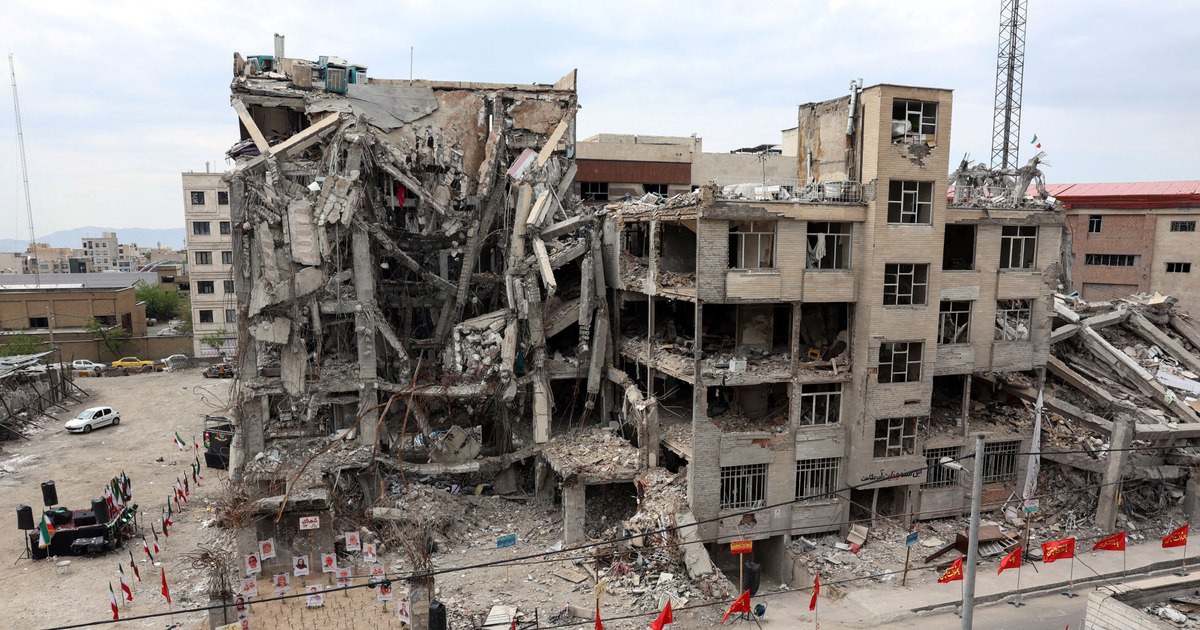
Destruction in Tehran following the American-Israeli attacks/PHOTO: AFP
In Washington and Jerusalem, the goals are couched in stark terms: eliminating Iran's nuclear capabilities, limiting its regional influence, and possibly changing political leadership. It is the language of a decisive war with a well-defined end.
In Tehran, however, the perspective is different. For Iran, victory means survival. This asymmetry influences the entire dynamics of the conflict. In such wars, the side that needs less to claim success often starts with an advantage – and currently, Iran has a much lower threshold, writes The Conversation.
Military superiority, limited results
The United States and Israel have superior military capabilities, repeatedly demonstrating precision and efficiency in striking strategic targets.
However, the tactical successes did not translate into a decisive political result. The structures of the Iranian state remain intact and its networks – military and regional – continue to function. Even sensitive areas such as nuclear expertise seem to resist external pressure.
A different strategy
One of the miscalculations appears to be the assumption that Iran is pursuing the same goals as its adversaries. In reality, Tehran is not trying to directly defeat the US or Israel, but to complicate their actions and increase the costs to a point where they become unsustainable.
This approach is visible in the expansion of the conflict beyond the conventional battlefield into trade routes, energy markets and regional alliances. The disturbances in the Strait of Hormuz, for example, have global implications.
Iran's strategy is not to dominate, but to prolong and complicate the conflict.
The risks of escalation
In deadlock situations, the temptation is to escalate military action. But Iran has shown it is willing to respond, including by taking action against states in the region.
An escalation could extend the conflict beyond current borders, affecting critical infrastructure and destabilizing entire regions.
In addition, there are logistical constraints. The United States is estimated to have already used a significant portion of certain missile stockpiles, raising questions about the ability to sustain a prolonged escalation.
Impact on the region and the global economy
The consequences would not be limited to the military. Attacks on energy and water infrastructure could make certain areas difficult to live in, generating massive population movements.
Why the US-Iran negotiations risk failure. “I don't see any major progress in the near future”
At the same time, the conflict is affecting global markets. Energy routes are vulnerable, and industries dependent on supply stability – such as transport and manufacturing – are exposed to increased risks.
What started as a regional conflict is gradually taking on systemic dimensions.
Divergences between allies
Another complicating factor is the differences in strategy between the United States and Israel. While Israel appears to be pursuing more radical goals, including deeply weakening the Iranian regime, the American position oscillates between pressure, deterrence and negotiation.
These differences reduce strategic coherence and complicate the achievement of a common outcome.
A conflict without a clear end
The conflict appears to be falling into a repetitive pattern: strikes followed by periods of lull, temporary truces and limited negotiations.
The extension of these truces reflects constraints rather than progress. In this context, time becomes of the essence – and for Iran, delay can be a strategic advantage.
Who actually has the advantage?
From a military point of view, the superiority of the US and Israel is obvious. But the outcome of a war depends not only on capabilities, but on the relationship between objectives, costs and time.
In this equation, Iran's position appears more solid than appearances suggest. He doesn't need a classic victory, just preventing his opponents from achieving their goals.
A war of resistance
Under these conditions, the original question returns: can this war be won?
If victory requires fundamental changes in Iran, the answer becomes increasingly difficult to sustain.
What remains possible is managing the conflict—limiting the extent and controlling the effects. But this is not a victory, but a form of adaptation to a prolonged conflict.
The main risk is not defeat, but the persistence of the belief that further escalation could change the outcome. If this assumption is wrong, then the conflict is not headed for a resolution, but for an indefinite duration.