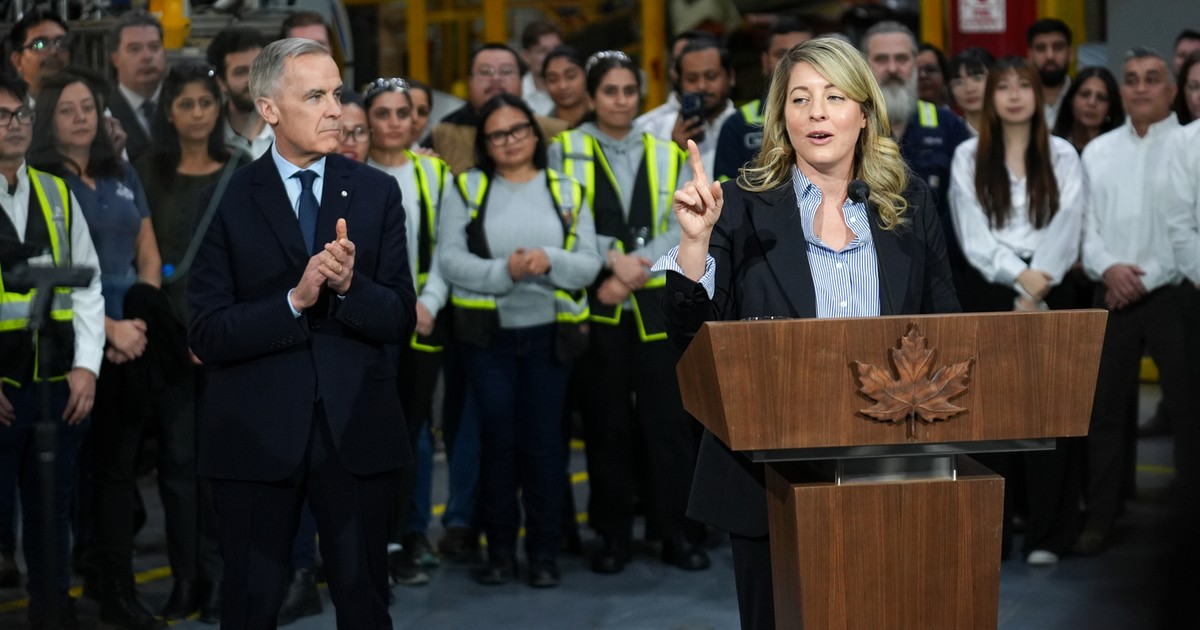
As the Canadian minister said, this is part of a broader strategy of the government of Prime Minister Mark Carney seeks to make the economy independent from the USA and China by strengthening ties with the so-called medium powers.
Read also: An investment portfolio without sleepless nights. These are the safe havens in 2026.
Synchronization is the key to success
The European Union recently presented the provisions of the Industrial Accelerator Act (IAA) – a package known as “Made in Europe”. Its aim is to protect strategic sectors, such as clean energy and heavy industry, against unfair competition (mainly from China). The program assumes limiting access to subsidies and public contracts for non-EU companies.
However, there is a loophole: countries with trade agreements with Brussels can be included in the system as long as they offer EU companies mutual access to their public procurement markets. This is the direction Ottawa has chosen.
— Our goal is to engage the EU in developing a mutual approach. We need to be in sync for our businesses to compete and thrive – declared Canadian Industry Minister Melanie Joly in an interview for a British daily.
Bloc of “middle powers” against hegemony
These actions are a direct response to the appeal of Prime Minister Mark Carney, who during this year's summit in Davos called on countries with medium economic potential to create a common counterweight to the US and China.
Read also: Airlines lost billions of dollars. What about the Polish “raisin”?
Minister Joly emphasized that the construction of such an “economic bloc” is aimed at combating protectionism and limiting the influence of global hegemons. Canada, which signed a free trade agreement with the EU (CETA) in 2016, now wants to level the playing field in strategic sectors.
Ambition versus reality
However, as described by the Financial Times, the negotiations will not be easy. Canada currently has its own “Buy Canadian” policy, which favors domestic companies in the defense, health and infrastructure sectors.
In turn, in Europe itself, the “Made in Europe” program is controversial. German manufacturers fear that new regulations will create trade barriers, and Great Britain and some EU members fear that excluding trading partners from subsidies for electric cars will hit the labor market.
Goal: doubling exports
The stakes are high for Canada. Ottawa has set itself an ambitious goal: doubling exports to countries other than the U.S. by 2035. The government hopes to obtain approximately USD 300 billion. from new agreements in Asia and Europe to reduce the current extreme dependence on trade with America.
EU officials confirmed in an interview with the newspaper that they are open to talks with third countries. Decisions on whether to allow Canada to benefit from “Made in Europe” benefits may be made before the end of this year, when the IAA Act is finally adopted by Brussels.