Why it's not good to protect your child too much: “They don't develop perseverance or tolerance for sustained effort”

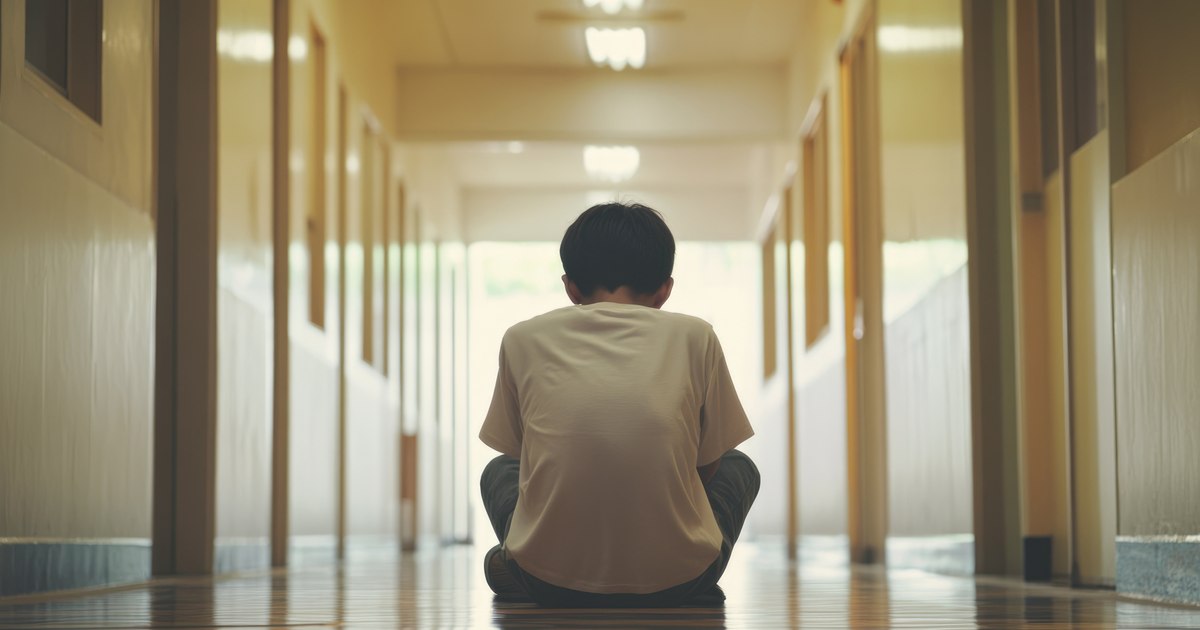
Why is it not good to protect your child from any problem? Many parents believe that they are helping their children by solving their problems. In reality, experts say, this type of overprotection can have extremely negative long-term effects. What is there to do?
Photo source: Pixabay
“Life cannot be completely controlled. No matter how hard we try, our children will inevitably face frustration, failure, rejection, or uncertainty. These experiences are not only inevitable, but necessary. They are the context in which resilience, frustration tolerance, and the ability to make decisions and solve problems develop.” Gabriela Răileanu, an Adlerian psychotherapist, explains for “Adevărul”.
According to him, when a parent constantly intervenes – solves conflicts for the child, does homework, negotiates every discomfort or anticipates every obstacle – the child no longer has the opportunity to practice these skills. Instead, they create beliefs like “I'm not able to handle myself” or “Somebody's Gotta Come Save Me”.
At the same time, she adds, the child is not learning an essential lesson about life: that things are achieved through effort. “Without direct experience of trial, frustration, and overcoming obstacles, he does not develop perseverance or tolerance for sustained effort. Over time, he may come to avoid work of any kind—academic, professional, or emotional in relationships—because effort is foreign to him, and the discomfort associated with it becomes something to be avoided, not endured.” confesses the psychotherapist.
This repeated avoidance of discomfort does not disappear with age. It transforms. Without practice in dealing with difficult situations, the child becomes the adult who does not know how to handle uncertainty, rejection, or failure. And here the direct connection with mental health appears, Gabriela Răileanu draws attention.
From excessive authorship to mental health issues
“The moment the child does not learn to tolerate frustration and solve his own problems, the world becomes an unpredictable and threatening place. Thus, over time, anxiety can appear – because any new or uncertain situation is felt beyond his own capacity -, social anxiety, in the context in which the child has not learned to manage difficult interactions and begins to avoid them, depression, fueled by the feeling of helplessness, and even avoidant personality disorder”she claims.
This is because in such cases, the parent tries to reduce the child's suffering, but in the long run, it decreases the child's ability to cope with the inevitable suffering. And the lack of this ability is one of the most important factors of psychological vulnerability.
Moreover, the ability to solve problems develops through practice. So is self-confidence. When the child is not allowed to try, make mistakes and correct, he does not build his sense of competence.
“In the office, I often meet teenagers who say: I don't know what to do, I'm afraid of making a mistake, I don't think I can handle it. Behind these statements is not a lack of intelligence or potential, but a lack of experience in deciding and dealing with the consequences. Moreover, when everything is done “for you”, a diffuse feeling of futility appears. score this one.
There is a good intention in almost every gesture a parent makes. “The desire to protect, to prevent suffering, to smooth the path of the child. It is easy to judge, but it is more important to understand that behind this behavior is often the parent's anxiety – the need for control to prevent any form of suffering of the child -, guilt, especially in the context of a busy schedule, compensated by the tendency to “do everything”, the social pressure that promotes the idea that a “successful” child should not have difficulties, as well as one's own experiences of parents who, being once neglected or over-responsible, can oscillate towards the opposite extreme”believes Gabriela Răileanu.
How extra pounds affect your financial future
How do you unwittingly raise a helpless teenager
In his opinion, to raise a helpless teenager it is enough to resolve his conflicts with peers, to intervene immediately when discomfort arises, to completely organize his schedule, to make decisions for him “because you know better” or avoid letting him suffer the consequences of his own choices.
“That's how you end up with a teenager who doesn't take responsibility, avoids decisions, avoids effort and is afraid of making a mistake. The conversation is not about withdrawing support, but about giving it differently. Replace solutions with questions: 'How could you solve this?', 'What options do you see?' It normalizes the mistake. Let the consequences take their toll. Within safe limits, they are the best teachers. It provides gradual autonomy,” the psychotherapist recommends.
Depending on the age, the child can make more and more decisions and have tasks in the house. “Validate the effort, not the result. That builds real confidence, not perfectionism. Protecting your child from any problem actually means protecting him from life. And life cannot be avoided, only learned. The role of the parent is not to remove obstacles, but to teach the child how to overcome them. With emotions, with effort, with hesitations, sometimes with mistakes – but with the feeling that it can. Because, in the end, the most valuable thing we can give our children is not a road without difficulties, but the confidence that they will know how to walk it themselves.” concludes the specialist.
“The key to success is learning to take rejection”
The same phenomenon has become the subject of public debate in the United States. New York University (NYU) professor Scott Galloway, bestselling author, talked about parents removing every obstacle from their child's path on Craig Melvin's TODAY podcast, “Glass Half Full.”
What must a couple establish before the child arrives, so that they do not end up in divorce
Galloway cited research by social psychologist Jonathan Haidt and San Diego State University psychology professor Jean Twenge that discusses an alarming increase in depression and self-harm among teenagers. According to Galloway, there are two main factors that explain this trend: social media and the style in which some parents turn their role into a full-time support service – they are not raising children, but managing their lives.
“If a child gets a low grade, we call the teacher, we hire a meditator. We do everything to make his life free of obstacles. The result is a kind of “princess sleeping on the pea” syndrome: we use so many disinfectant wipes in our children's lives that they no longer develop their own immunity.” Galloway said.
He pointed out that students who arrive at NYU without ever experiencing rejection, academic failure, or emotional disappointment are the most vulnerable to mental health crises. From his own experience—rejected from college initially, accepted to only one master's program out of nine applications, and hired after thirty CVs—Galloway claims that these very failures shaped him: “Every time I got a rejection, the next day I felt a little better. The third day I was fine. That's how you build calluses. That's how you learn to deal with rejection.”